 뒤로
뒤로Histology Basics - Anatomy & Physiology
 03:32
03:32
이 집합의 용어 (24)
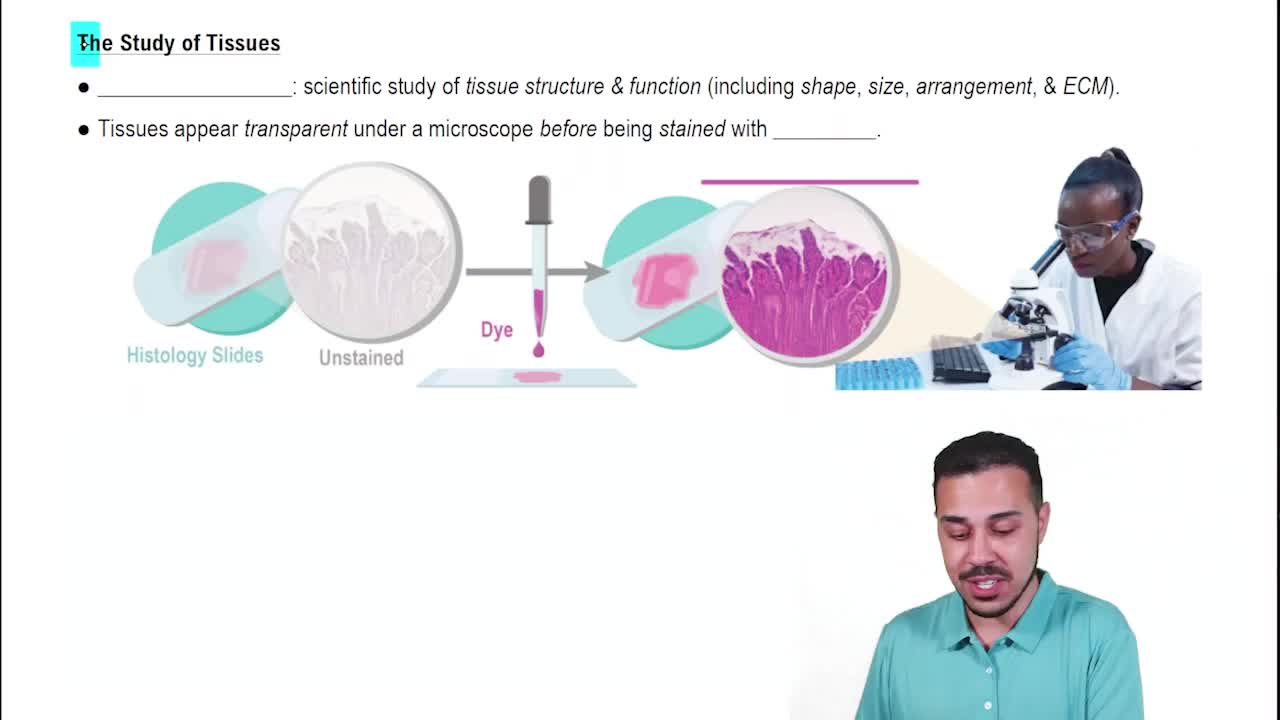
Histology is the study of tissues and their structure under the microscope.
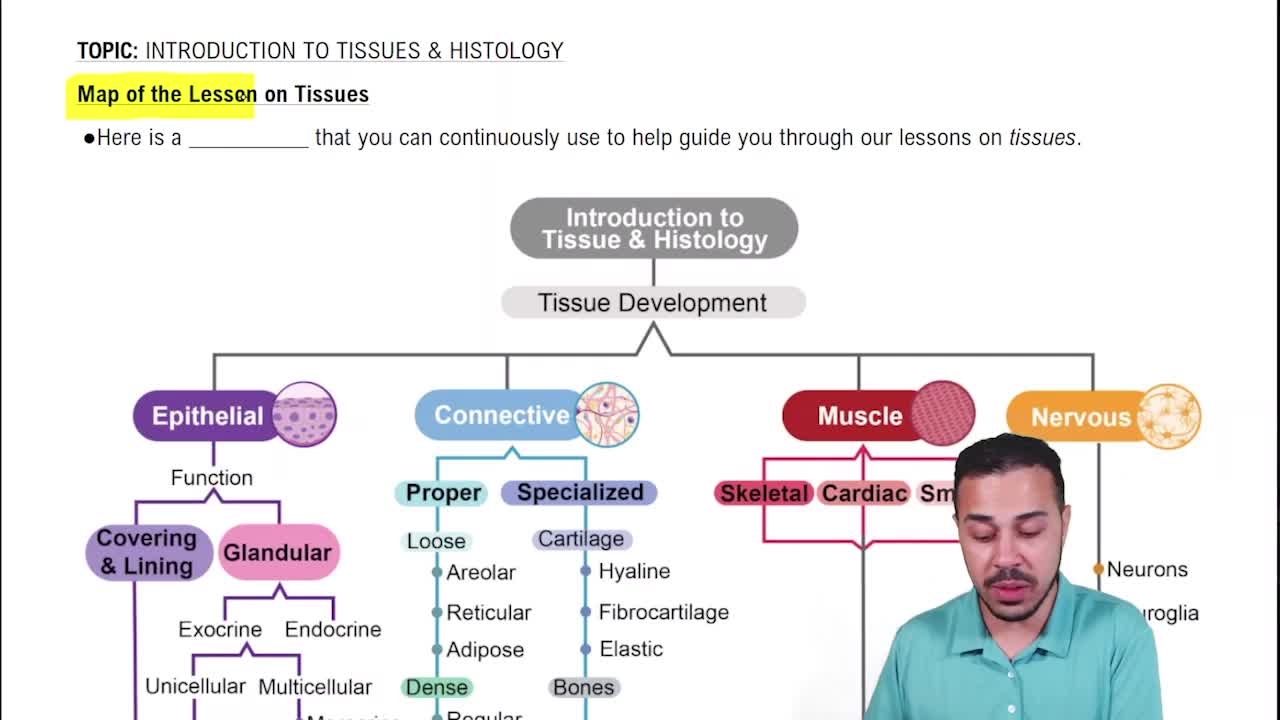
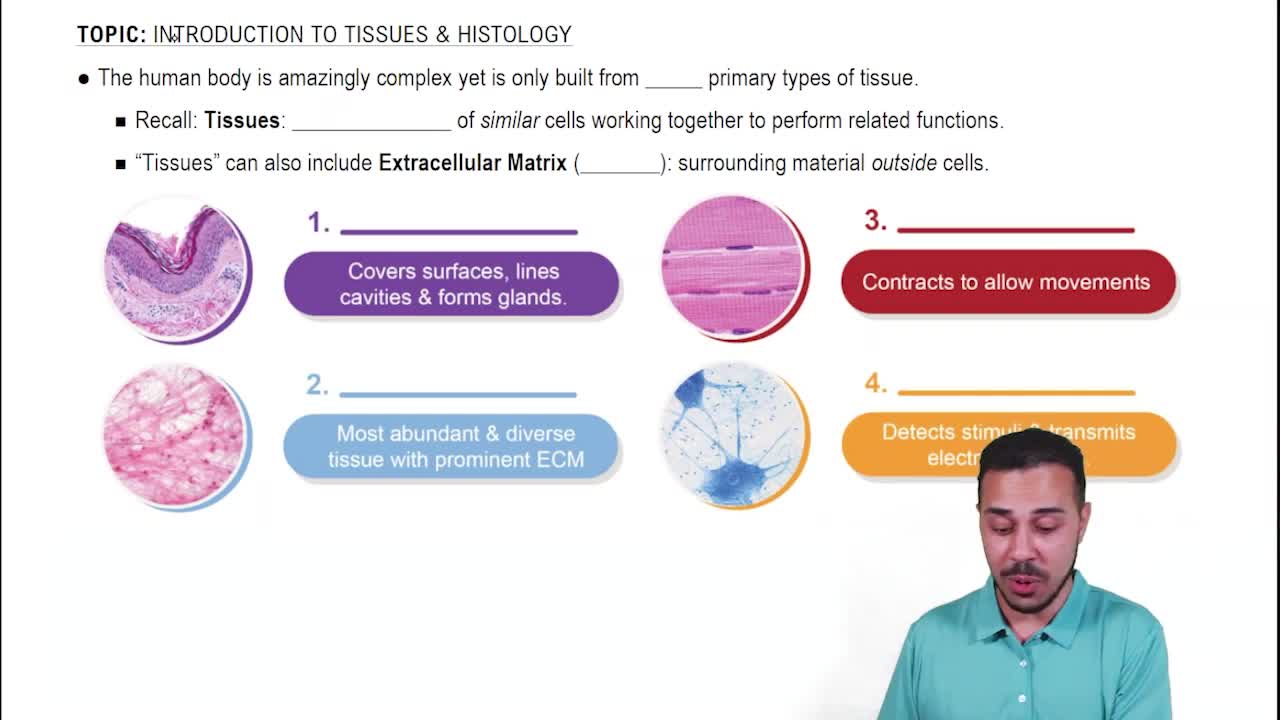
The four major tissue types are epithelial, connective, muscle, and nervous tissues.
Epithelial tissue covers body surfaces, lines cavities, has tightly packed cells, and functions in protection, absorption, and secretion.
Connective tissue supports and binds other tissues, has cells scattered in an extracellular matrix with fibers, and functions in protection and transport.
Muscle tissue is composed of cells specialized for contraction to produce movement.
Nervous tissue contains neurons and supporting cells, responsible for transmitting electrical signals and processing information.
Epithelial tissues are classified by cell shape (squamous, cuboidal, columnar) and number of layers (simple or stratified).
Simple squamous epithelium is found in areas for rapid diffusion like alveoli of lungs and lining blood vessels.
Simple cuboidal epithelium functions in secretion and absorption, found in kidney tubules and glands.
Simple columnar epithelium absorbs and secretes mucus, located in the digestive tract lining.
Connective tissues include loose connective, dense connective, cartilage, bone, and blood, classified by matrix and fiber types.
Loose connective tissue cushions organs, holds tissue fluids, and provides support.
Dense connective tissue provides strong attachment and resistance to tension, found in tendons and ligaments.
Muscle tissue types are skeletal (voluntary movement), cardiac (heart contraction), and smooth (involuntary organ movement).
Skeletal muscle moves bones voluntarily and maintains posture.
Cardiac muscle contracts the heart to pump blood involuntarily.
Smooth muscle controls involuntary movements in organs like intestines and blood vessels.
Nervous tissue contains neurons that transmit electrical impulses and glial cells that support neurons.
Body membranes include mucous (lines cavities open to outside), serous (lines closed cavities), and cutaneous (skin).
Exocrine glands secrete products through ducts to surfaces; endocrine glands release hormones directly into the blood.
Examples include sweat glands, salivary glands, and digestive glands.
Examples include the thyroid, adrenal glands, and pituitary gland.
Tissue repair stages are inflammation, organization (new tissue formation), and regeneration or fibrosis.
Epithelial, muscle, and connective tissues arise from the three germ layers: ectoderm, mesoderm, and endoderm.