 뒤로
뒤로Hypothalamus and Pituitary Gland Endocrine Functions
 7:06
7:06
이 집합의 용어 (21)
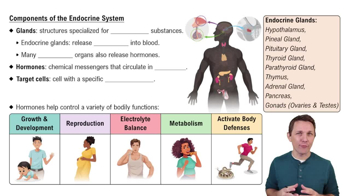
The hypothalamus regulates hunger, thirst, fluid balance, body temperature, sleep/wake cycle, and reproductive functions. It controls the pituitary gland via the infundibulum stalk.
The anterior pituitary (adenohypophysis) is glandular tissue that secretes hormones. The posterior pituitary (neurohypophysis) is nervous tissue that stores neurohormones made by the hypothalamus.
Antidiuretic hormone (ADH or vasopressin) and oxytocin are stored in the posterior pituitary but made in the hypothalamus.
ADH regulates body fluid osmolarity by increasing water reabsorption in the kidneys and can cause vasoconstriction to raise blood pressure.
ADH release is stimulated by increased blood solute concentration, decreased blood volume or pressure, pain, and certain CNS disorders.
Diabetes insipidus causes extreme thirst, dehydration, and high blood solute concentration; treated with synthetic ADH.
ADH decreases urine production by increasing water retention in the kidneys, acting as an antidiuretic.
Oxytocin stimulates uterine contractions during labor and milk ejection from mammary glands via myoepithelial cell contraction.
Oxytocin release is stimulated by infant suckling (positive feedback) and can be inhibited by emotional stress, fright, ethanol, or sympathetic excitation.
Tropic hormones include TSH, ACTH, LH, and FSH; they regulate hormone secretion from other endocrine glands.
Growth hormone (GH) and prolactin are non-tropic hormones that act directly on target tissues.
Hypothalamic neurons secrete releasing and inhibiting hormones into the portal system, which regulate anterior pituitary hormone secretion.
Negative feedback loops maintain hormone levels by regulating hypothalamic, pituitary, and target gland hormone secretion.
Thyrotropin-releasing hormone (TRH) stimulates release of thyroid-stimulating hormone (TSH) and prolactin (PRL).
ACTH stimulates the adrenal cortex to release glucocorticoids like cortisol, affecting glucose metabolism.
FSH promotes gamete production; LH triggers ovulation and sex hormone secretion in females and androgen production in males.
Growth hormone-releasing hormone (GHRH) stimulates GH release; targets include muscle, liver, bone, cartilage, and adipose tissue.
GH promotes lipolysis, gluconeogenesis, and inhibits glucose uptake by muscles, increasing blood glucose and fatty acids.
GH induces IGF production, stimulating protein synthesis, cell division, bone growth, and muscle development.
Gigantism occurs before epiphyseal plate closure; acromegaly occurs after, causing enlarged bones and organs.
Pituitary dwarfism is short stature with proportional limbs caused by GH deficiency or insensitivity.