 뒤로
뒤로Introduction to Anatomy & Physiology
 3:06
3:06
이 집합의 용어 (28)
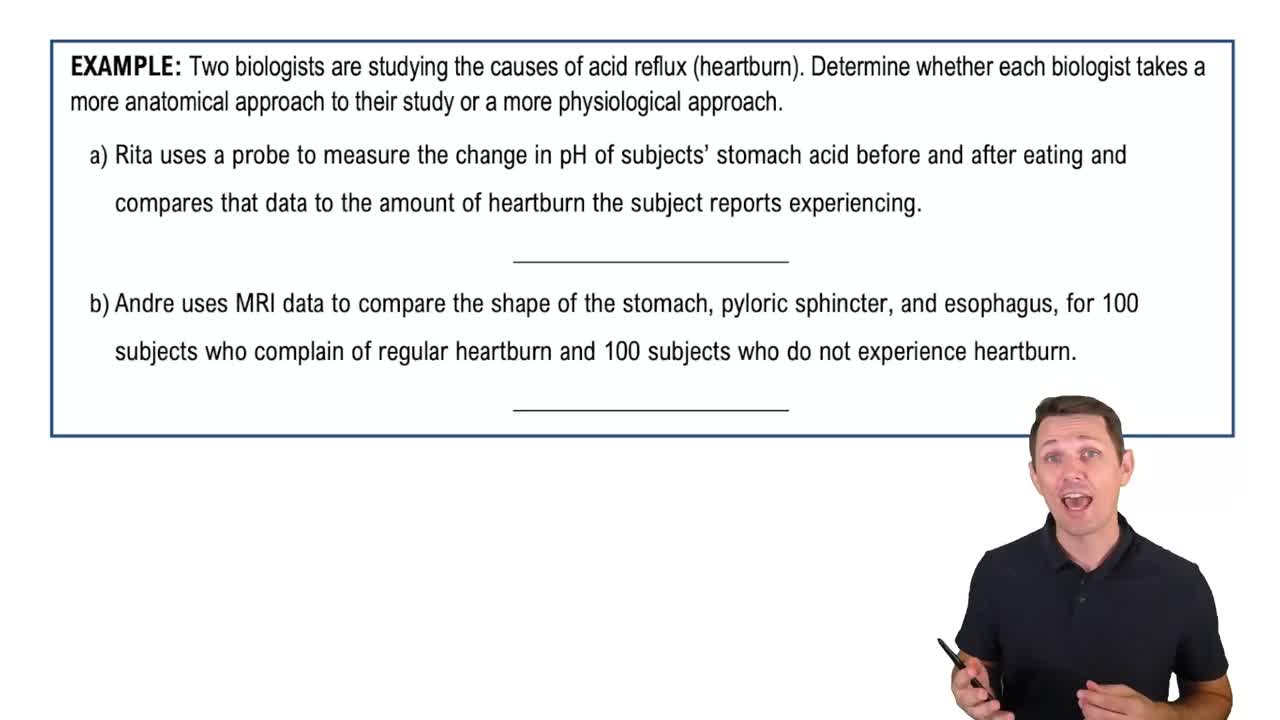
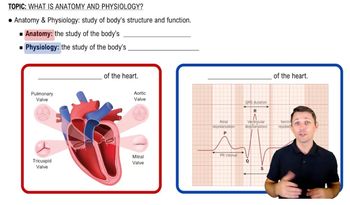
Anatomy is the study of the structure of body parts and their relationships to one another.
Physiology is the study of the function of body parts, both individually and as part of a system.
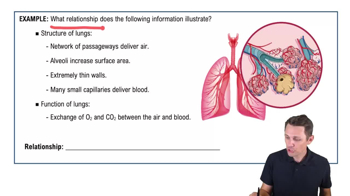
The structure of a body part suits its function; form and function complement each other.
Study of large, visible body structures, including regional, system, and surface anatomy.
Study of structures too small to be seen with the naked eye, including cytology (cells) and histology (tissues).
Study of anatomical and physiological development throughout life, including embryology (before birth).
Physiology is studied by organ systems and focuses on cellular and molecular levels, involving chemical and physical principles.
Function always reflects structure; what a structure can do depends on its specific form.
Chemical, cellular, tissue, organ, organ system, and organismal levels.
Atoms combine to form molecules, which make up cells.
Cells are made up of molecules and are the basic unit of life.
Tissues consist of groups of similar cells performing a common function.
Organs are made up of two or more types of tissues working together.
Organ systems consist of different organs that work closely together.
The human organism is made up of many organ systems functioning together.
Maintaining boundaries, movement, responsiveness, digestion, metabolism, excretion, reproduction, and growth.
Maintenance of relatively stable internal conditions despite continuous environmental changes.
Receptor (sensor), control center (brain), and effector (responder).
Response reduces or shuts off original stimulus to return variable to normal; most common feedback mechanism.
Regulation of body temperature or blood glucose levels by insulin.
Response enhances or exaggerates the original stimulus, often causing a cascade effect; controls infrequent events.
Enhancement of labor contractions by oxytocin and platelet plug formation in blood clotting.
Nutrients, oxygen, water, normal body temperature, and appropriate atmospheric pressure.
It is required for the release of energy from foods; the body can survive only a few minutes without it.
It is the most abundant chemical, provides the environment for chemical reactions, and is the fluid base for secretions and excretions.
Rates of chemical reactions are affected, which can disrupt normal body functions.
It is needed for adequate breathing and gas exchange in the lungs.
Increases risk of disease, contributes to aging changes, and may cause destructive positive feedback if negative feedback fails.