 뒤로
뒤로Introduction to Anatomy & Physiology
 3:06
3:06
이 집합의 용어 (25)
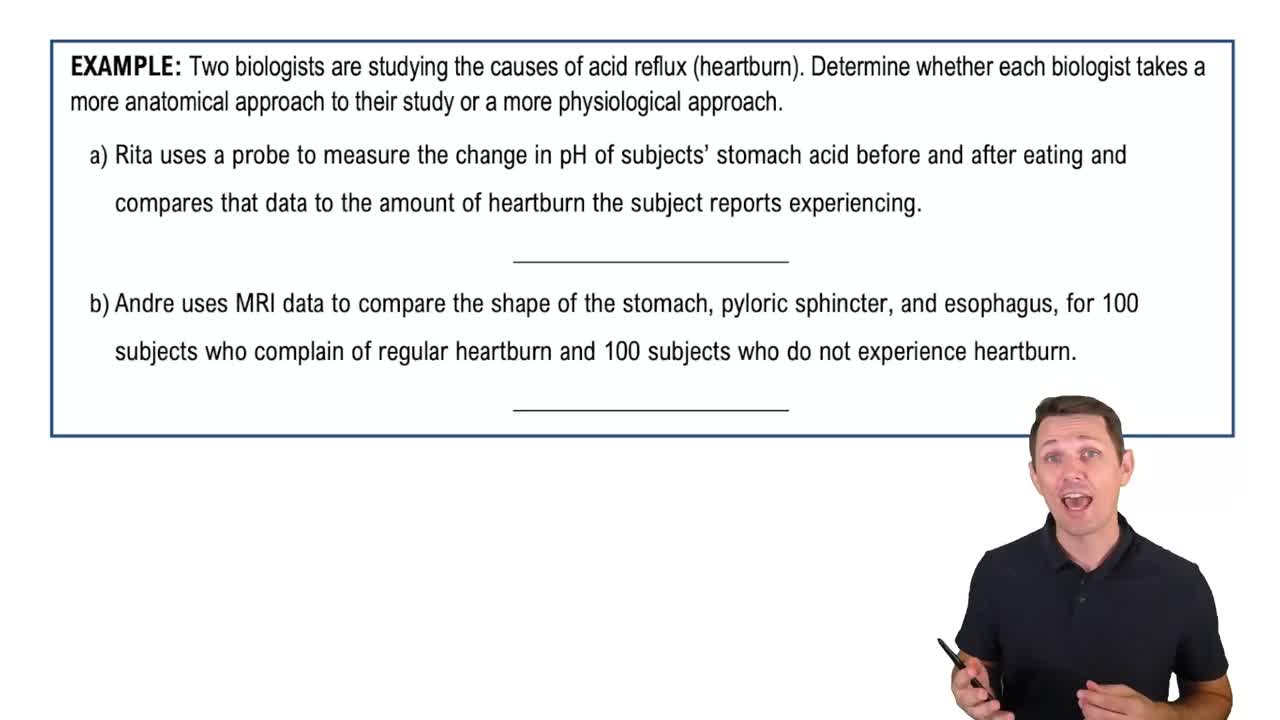
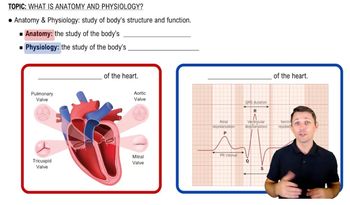
Anatomy is the scientific study of the body’s structures or form, including internal and external parts and their physical relationships.
Physiology is the study of the chemistry and physics of the body and how its structures function together to support life.
Gross anatomy (large structures visible to the naked eye) and microscopic anatomy (structures requiring magnification).
The examination of large body structures visible without magnification, including surface, regional, and systemic anatomy.
The study of structures too small to be seen without magnification, divided into cytology (cells) and histology (tissues).
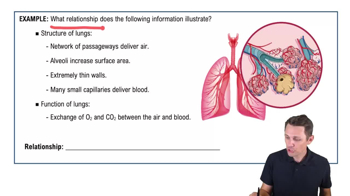
Physiology studies the function of body parts and systems, which is closely interrelated with anatomy, the study of their structure.
Chemical, Cellular, Tissue, Organ, Organ system, and Organismal levels.
Organs: Skin, hair, nails. Functions: Protection, temperature regulation, immune barrier.
Support, protection of organs, movement framework, blood cell formation, and mineral storage.
Skeletal muscles and tendons; functions include locomotion, support, and heat production.
Detects and processes sensory information and coordinates responses by controlling other organ systems.
Secretes hormones that regulate body processes by acting as chemical signals.
Heart, blood, blood vessels; transports nutrients and wastes, regulates body temperature.
The maintenance of a stable internal environment within a set range essential for normal body function.
Receptor (detects change), control center (processes information), and effector (responds to restore balance).
Negative feedback reverses a change to maintain homeostasis; positive feedback amplifies a change, often to complete a process.
Normal childbirth, where contractions increase until delivery occurs.
Standard body position: standing upright, feet shoulder-width apart, arms at sides with palms facing forward.
Superior/inferior, anterior/posterior, medial/lateral, proximal/distal, deep/superficial.
Sagittal (divides left and right), frontal/coronal (divides front and back), and transverse (divides top and bottom).
Dorsal cavity (cranial and spinal cavities) and ventral cavity (thoracic and abdominopelvic cavities).
Thin membranes lining body cavities and covering organs, reducing friction between moving structures.
X-ray, computed tomography (CT), magnetic resonance imaging (MRI), and ultrasonography (ultrasound).
To visualize internal structures like bones using high-energy electromagnetic radiation.
It uses sound waves, is non-invasive, and does not use electromagnetic radiation, making it safe for monitoring pregnancies.