 뒤로
뒤로Introduction to Human Anatomy & Physiology
 3:06
3:06
이 집합의 용어 (24)
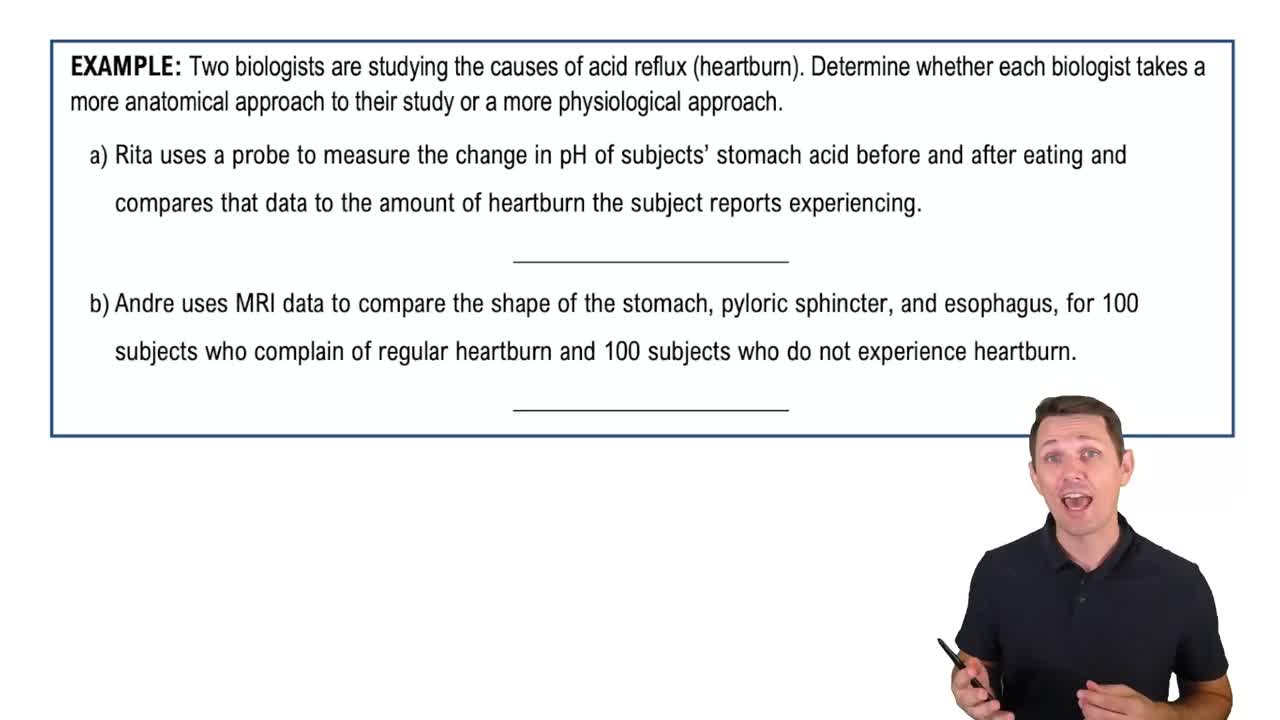
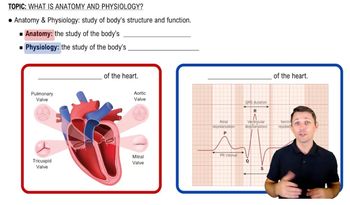
Anatomy is the study of the structures of body parts and their relationships to one another.
Physiology studies the normal functioning of the body and how body parts carry out life-sustaining activities.
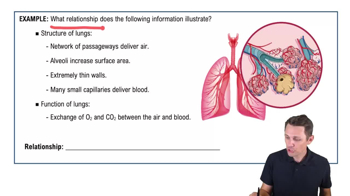
Function always reflects structure; anatomy and physiology are inseparable because the way something is built determines how it works.
Chemical, Cellular, Tissue, Organ, Organ System, Organismal levels.
Atoms combine to form molecules, which are the smallest units of matter essential for life.
Cells are made up of molecules and are the basic structural and functional units of an organism.
A group of similar cells that perform a common function; four basic types are epithelial, muscle, connective, and nervous tissues.
A discrete structure made of at least two tissue types that performs a specific function for the body.
Different organs working closely together to accomplish a common purpose; humans have 11 organ systems.
The highest level of organization; the living human being made up of many organ systems working together.
Examples include maintaining boundaries, movement, responsiveness, digestion, metabolism, excretion, reproduction, and growth.
The maintenance of relatively stable internal conditions despite continuous environmental changes; a dynamic state of equilibrium.
Receptor (detects change), Control center (determines set point and response), Effector (carries out response).
It reduces or shuts off the original stimulus, returning the variable to its ideal value, maintaining homeostasis.
Regulation of body temperature where sweating or shivering adjusts temperature back to normal.
Positive feedback enhances the original stimulus, causing the variable to deviate further from its original value.
Enhancement of labor contractions by oxytocin or platelet plug formation during blood clotting.
It is essential for survival and proper function of cells and organ systems, and its disruption leads to disease.
Nutrients, oxygen, water, normal body temperature, and appropriate atmospheric pressure.
Provide energy and building blocks for cells; includes carbohydrates, proteins, fats, minerals, and vitamins.
Essential for releasing energy from food; the body can survive only minutes without it.
Most abundant chemical; provides the environment for chemical reactions and is the base for secretions and excretions.
Rates of chemical reactions are affected, which can disrupt normal body functions.
Needed for adequate breathing and gas exchange in the lungs.