Skip to main content
Anatomy & Physiology
나의 코스
배우기
시험 준비
AI 튜터
학습 가이드
교과서적 해결책
플래시카드
탐험해 보세요
앱을 사용해 보세요
나의 코스
배우기
시험 준비
AI 튜터
학습 가이드
교과서적 해결책
플래시카드
탐험해 보세요
앱을 사용해 보세요
뒤로
Lymphatics Through the Digestive System
카드를 뒤집기 위해 탭할 수 있습니다.
What is the primary function of lymphatics in the digestive system?
카드를 뒤집기 위해 탭할 수 있습니다.
👆
What is the primary function of lymphatics in the digestive system?
The lymphatics absorb and transport dietary fats and fat-soluble vitamins from the digestive tract to the bloodstream.
진행 상황 추적
컨트롤 버튼이 '내비게이션' 모드로 변경되었습니다.
1/20
추천 영상
VideoThumbView.guidedCourse
3:32
Introduction to the Lymphatic System Example 2
4355
views
83
rank
VideoThumbView.guidedCourse
3:33
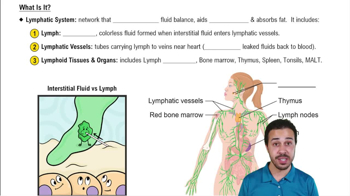
What Is It?
5956
views
155
rank
VideoThumbView.guidedCourse
3:57
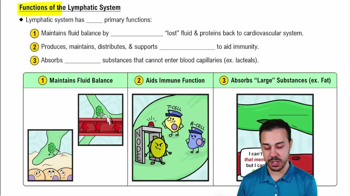
Functions of the Lymphatic System
5016
views
114
rank
이 집합의 용어 (20)
하이드의 정의
What is the primary function of lymphatics in the digestive system?
The lymphatics absorb and transport dietary fats and fat-soluble vitamins from the digestive tract to the bloodstream.
Where do lymphatic vessels in the digestive system begin?
They begin as blind-ended lymphatic capillaries called lacteals in the villi of the small intestine.
What are lacteals?
Lacteals are specialized lymphatic capillaries in the small intestine that absorb dietary lipids.
How do lymphatics transport absorbed fats?
Fats absorbed by lacteals are packaged into chylomicrons, which enter lymphatic vessels and travel through the thoracic duct to the bloodstream.
What is chyle?
Chyle is the milky fluid consisting of lymph and emulsified fats absorbed from the intestines.
Which major lymphatic vessel drains lymph from the digestive system?
The thoracic duct drains lymph from the digestive system into the left subclavian vein.
Why is the lymphatic system important for fat-soluble vitamin absorption?
Because vitamins A, D, E, and K are absorbed with dietary fats, the lymphatic system transports them efficiently to the bloodstream.
How does lymph flow differ from blood flow in the digestive system?
Lymph flow is slower and unidirectional, relying on smooth muscle contractions and valves, unlike the heart-driven blood flow.
What role do lymph nodes play in the digestive lymphatic system?
Lymph nodes filter lymph to remove pathogens and debris before it returns to the bloodstream.
What is the significance of the cisterna chyli in digestive lymphatics?
The cisterna chyli is a dilated sac that collects lymph from the lower abdomen and intestines before it enters the thoracic duct.
How do lymphatic vessels in the digestive system contribute to immune defense?
They transport immune cells and filter harmful agents through lymph nodes to protect the body from infection.
What structural feature of lacteals allows efficient fat absorption?
Lacteals have thin walls and large pores that facilitate the uptake of large lipid molecules.
How does the lymphatic system prevent edema in the digestive tissues?
By draining excess interstitial fluid, lymphatics maintain fluid balance and prevent swelling.
What is the pathway of lymph from the small intestine to the bloodstream?
Lacteals → larger lymphatic vessels → cisterna chyli → thoracic duct → left subclavian vein.
Why can't dietary fats enter blood capillaries directly?
Because fats are too large and hydrophobic, they enter lymphatic lacteals which can absorb larger molecules.
What is the role of smooth muscle in lymphatic vessels of the digestive system?
Smooth muscle contractions help propel lymph through the vessels toward the thoracic duct.
How do valves in lymphatic vessels assist lymph flow?
Valves prevent backflow, ensuring lymph moves in one direction toward the bloodstream.
What happens to chylomicrons after entering the bloodstream?
They are transported to tissues where fats are used for energy or stored.
How does the lymphatic system interact with the circulatory system in fat transport?
It delivers absorbed fats from the digestive tract into the venous blood circulation via the thoracic duct.
What is the clinical significance of lymphatic obstruction in the digestive system?
Obstruction can cause lymphedema, impaired fat absorption, and nutritional deficiencies.
 뒤로뒤로
뒤로뒤로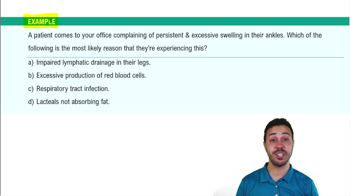
 3:32
3:32