Skip to main content
Anatomy & Physiology
나의 코스
배우기
시험 준비
AI 튜터
학습 가이드
교과서적 해결책
플래시카드
탐험해 보세요
앱을 사용해 보세요
나의 코스
배우기
시험 준비
AI 튜터
학습 가이드
교과서적 해결책
플래시카드
탐험해 보세요
앱을 사용해 보세요
뒤로
Microscopic Cells and Tissue in Anatomy & Physiology
카드를 뒤집기 위해 탭할 수 있습니다.
What is the basic structural and functional unit of all living organisms?
카드를 뒤집기 위해 탭할 수 있습니다.
👆
What is the basic structural and functional unit of all living organisms?
The
cell
is the basic structural and functional unit of all living organisms.
진행 상황 추적
컨트롤 버튼이 '내비게이션' 모드로 변경되었습니다.
1/20
추천 영상
03:32
Map of the Lesson on Tissues
12313
views
549
rank
2
comments
02:52
What is Histology?
12424
views
277
rank
04:14
Intro to Human Tissues
20536
views
692
rank
이 집합의 용어 (20)
하이드의 정의
What is the basic structural and functional unit of all living organisms?
The
cell
is the basic structural and functional unit of all living organisms.
What are the main components of a typical animal cell?
A typical animal cell includes the
cell membrane
,
cytoplasm
, and
nucleus
.
What is the function of the cell membrane?
The
cell membrane
controls the movement of substances in and out of the cell and provides protection.
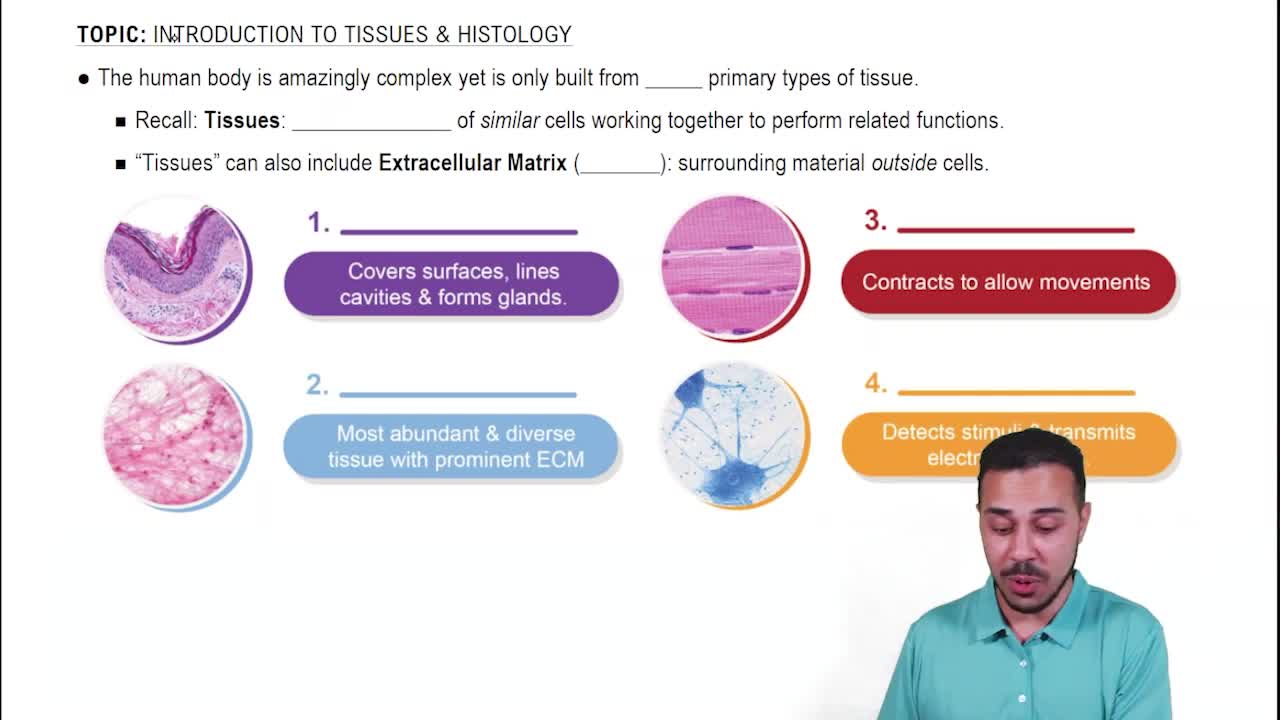
Define tissue in anatomy and physiology.
Tissue
is a group of similar cells that work together to perform a specific function.
Name the four primary types of tissue in the human body.
The four primary tissue types are
epithelial
,
connective
,
muscle
, and
nervous
tissue.
What is the main function of epithelial tissue?
Epithelial tissue
covers body surfaces, lines cavities, and forms glands.
Describe connective tissue and its general function.
Connective tissue
supports, binds, and protects other tissues and organs.
What distinguishes muscle tissue from other tissue types?
Muscle tissue
is specialized for contraction and movement.
What is the role of nervous tissue?
Nervous tissue
transmits electrical signals to coordinate body functions.
How are cells organized to form tissues?
Cells with similar structure and function group together and are embedded in an extracellular matrix to form
tissues
.
What is the extracellular matrix?
The
extracellular matrix
is a network of proteins and molecules outside cells that provides structural and biochemical support.
Give an example of a microscopic technique used to study cells and tissues.
Light microscopy
is commonly used to observe cells and tissue structure at the microscopic level.
Why is understanding microscopic cells important in anatomy and physiology?
Understanding cells helps explain how tissues and organs function and how diseases affect the body.
What is the difference between prokaryotic and eukaryotic cells?
Eukaryotic cells
have a nucleus and organelles;
prokaryotic cells
do not.
Name a key organelle involved in energy production within the cell.
The
mitochondrion
produces energy through cellular respiration.
What is the function of the nucleus in a cell?
The
nucleus
contains genetic material and controls cell activities.
How do tissues contribute to organ function?
Different tissues combine to form organs, each contributing specific functions necessary for the organ's role.
What type of tissue forms the outer layer of the skin?
Epithelial tissue
forms the outer layer of the skin, providing protection.
Which tissue type is responsible for transmitting impulses in the body?
Nervous tissue
transmits electrical impulses for communication.
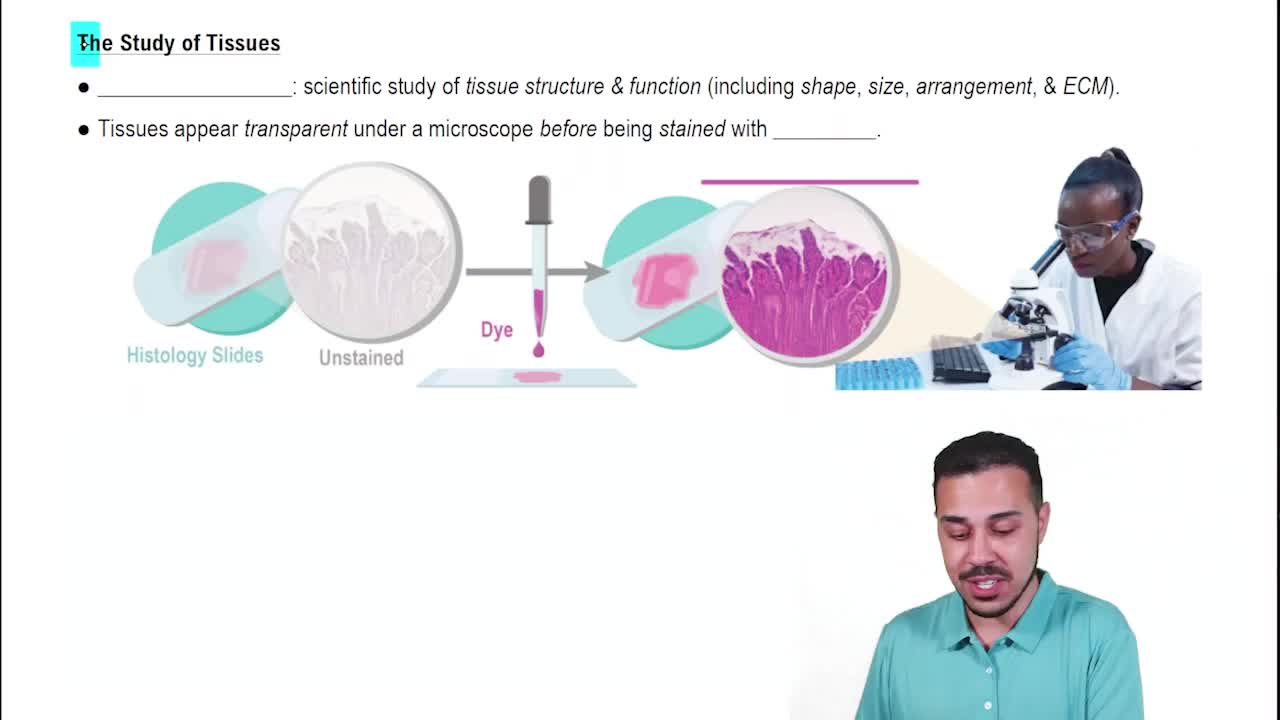
What is histology?
Histology
is the study of tissues at the microscopic level.
 뒤로뒤로
뒤로뒤로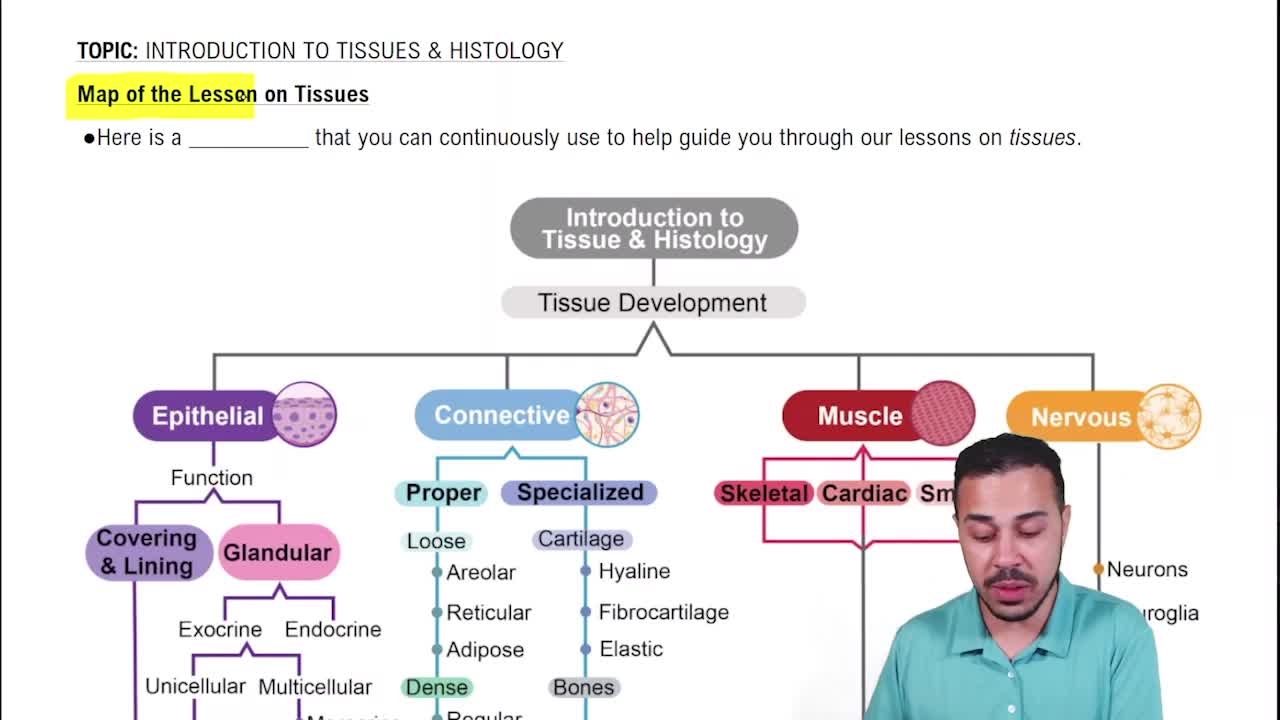
 03:32
03:32