 뒤로
뒤로Neurologic & Musculoskeletal System - Anatomy & Physiology Study Guide
 0:50
0:50
이 집합의 용어 (29)
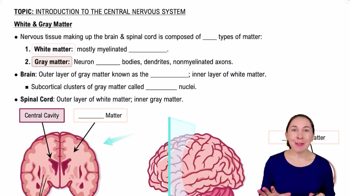
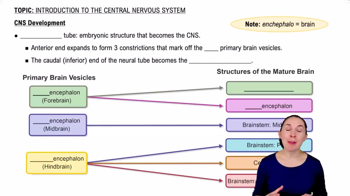
The CNS is composed of the brain and spinal cord. The brain processes and responds to information, while the spinal cord transmits signals and mediates reflexes.
Protective layers around the brain and spinal cord: dura mater (outer), arachnoid (middle), and pia mater (inner).
Fluid circulating in the CNS that provides cushioning and nutrient transport. Normal CSF is clear; cloudy CSF suggests infection.
A selective barrier that restricts passage of substances from blood to brain tissue, protecting neural tissue from toxins and pathogens.
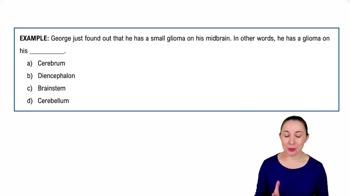
Controls vital functions such as heart rate and breathing.
Afferent nerves carry sensory information to the CNS; efferent nerves carry motor commands from the CNS to muscles.
Myelinated fibers conduct impulses rapidly; unmyelinated fibers conduct impulses more slowly.
Acetylcholine is an excitatory neurotransmitter important for neuromuscular activity.
Activates the "fight or flight" response: increases heart rate, blood pressure, blood glucose; dilates pupils; inhibits digestion.
Activates the "rest and digest" response: slows heart rate, promotes digestion, and supports healing.
Confusion → Disorientation → Memory loss → Lethargy → Coma.
Signs of increased intracranial pressure: widening pulse pressure, bradycardia, and irregular/decreased respirations.
Do not perform if increased intracranial pressure (ICP) is suspected due to risk of brain herniation.
Temporary loss of blood flow to the brain with symptoms that resolve; serves as a warning sign for stroke.
Headache, neck stiffness (nuchal rigidity), fever, photophobia, positive Kernig and Brudzinski signs, and cloudy CSF.
Raccoon eyes, Battle sign, and CSF leak from ears or nose (otorrhea/rhinorrhea).
Paralysis affecting all four limbs.
Life-threatening hypertension triggered by stimuli below a spinal cord injury; requires immediate removal of the trigger.
1. Inflammation and hematoma formation
2. Phagocytosis of debris
3. Fibroblast and chondroblast activity (soft callus)
4. Osteoblasts form new bone
5. Remodeling and strengthening
Increased pressure within a muscle compartment impairs blood flow and nerve function, causing severe pain, numbness, weakness, and possible limb ischemia.
Sprain: Injury to a ligament.
Strain: Injury to a tendon or muscle.
Rest, Ice, Compression, and Elevation to reduce swelling and promote healing.
Condition of low bone density that increases fracture risk.
Dopamine deficiency causing resting tremor and shuffling gait.
Demyelination disorder causing variable motor, sensory, and vision problems.
Ascending weakness following infection or vaccination, with risk of respiratory failure.
Ischemic stroke: Blood flow blockage causing tissue death.
Hemorrhagic stroke: Vessel rupture causing bleeding and increased ICP.
Irreversible loss of all brain and brainstem function; no reflexes or spontaneous breathing.
Receptive (Wernicke): Cannot understand language.
Expressive (Broca): Cannot express language.
Global: Both comprehension and expression impaired.