 뒤로
뒤로Respiratory System Anatomy & Physiology
 4:28
4:28
이 집합의 용어 (18)
1. Gas exchange between air and blood
2. Regulation of blood pH
3. Voice production
4. Olfaction (sense of smell)
Nose/Nasal cavity: Filters, warms, and moistens air
Pharynx: Passageway for air and food
Larynx: Voice production and airway protection
Trachea: Air passage to bronchi
Bronchi and bronchioles: Distribute air to lungs
Alveoli: Site of gas exchange
Lung volumes are the amounts of air in the lungs during different phases of the respiratory cycle, including tidal volume, inspiratory reserve volume, expiratory reserve volume, and residual volume.
Lung capacities are combinations of lung volumes, such as vital capacity, total lung capacity, inspiratory capacity, and functional residual capacity.
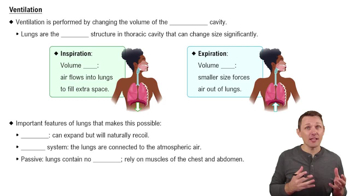
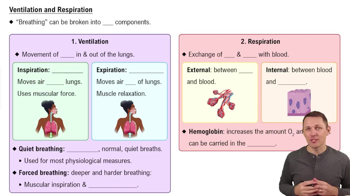
During inspiration, diaphragm contracts, thoracic volume increases, lung volume increases, intrapulmonary pressure decreases below atmospheric pressure, causing air to flow into the lungs.
During expiration, diaphragm relaxes, thoracic volume decreases, lung volume decreases, intrapulmonary pressure rises above atmospheric pressure, causing air to flow out of the lungs.
Intrapleural pressure is always slightly less than atmospheric pressure, creating a suction that keeps lungs inflated and prevents lung collapse during breathing.
Lung compliance is the ease with which lungs can expand; high compliance means lungs expand easily, low compliance means they are stiff.
Lung elastance is the ability of the lungs to recoil after being stretched; it is the inverse of compliance.
Emphysema increases lung compliance due to loss of elastic tissue, making lungs floppy but impairing recoil.
Pulmonary fibrosis decreases compliance and increases elastance, making lungs stiff and difficult to expand.
Surface tension in alveoli tends to collapse them by pulling walls together, opposing lung expansion.
Surfactant reduces surface tension in alveoli, preventing collapse and making lung expansion easier.
Airway resistance is affected by airway diameter, mucus, inflammation, and smooth muscle tone controlling bronchodilation and bronchoconstriction.
Bronchodilation occurs via sympathetic stimulation and local chemical mediators like epinephrine, increasing airway diameter and reducing resistance.
Bronchoconstriction occurs via parasympathetic stimulation and local irritants, decreasing airway diameter and increasing resistance.
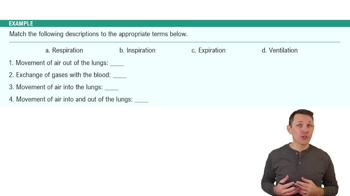
Total pulmonary ventilation is the total air moved in and out per minute; alveolar ventilation is the air reaching alveoli available for gas exchange.
Ventilation and perfusion are matched by local mechanisms: low oxygen causes vasoconstriction to redirect blood, and high carbon dioxide causes bronchodilation to increase airflow.