 뒤로
뒤로Skeletal, Cardiac, and Smooth Muscle Physiology
 6:31
6:31
이 집합의 용어 (19)
Skeletal muscle is organized into muscle fibers grouped into fascicles, surrounded by connective tissues: endomycium, perimysium, and epimysium.
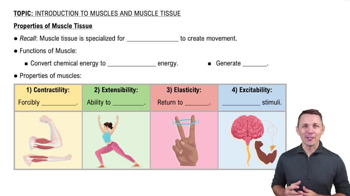
Muscle contraction occurs as actin filaments slide over myosin filaments, shortening the sarcomere without changing filament length.
Action potential triggers Ca2+ release from the sarcoplasmic reticulum, enabling myosin to bind actin and start the contractile cycle.
1. Myosin binds actin forming cross-bridge.
2. Power stroke pulls actin.
3. ATP binds myosin, releasing it.
4. ATP hydrolysis resets myosin head.
Muscle fatigue can result from ATP depletion, lactic acid buildup, ion imbalances, or impaired neural stimulation.
Slow-twitch fibers contract slowly, have high endurance, rich in mitochondria and myoglobin, and rely on aerobic metabolism.
These fibers contract quickly, use both aerobic and anaerobic metabolism, and have moderate resistance to fatigue.
Fastest contracting fibers, rely on anaerobic glycolysis, fatigue quickly, and have fewer mitochondria and myoglobin.
Optimal muscle length allows maximal overlap of actin and myosin, producing greatest force; too stretched or too contracted reduces force.
Summation occurs when multiple stimuli increase contraction strength by adding twitches before relaxation completes.
Incomplete tetanus has partial relaxation between stimuli; complete tetanus has sustained contraction with no relaxation.
A motor unit consists of a single motor neuron and all the muscle fibers it innervates, enabling graded muscle contractions.
Muscle force is varied by changing the number of active motor units and the frequency of stimulation.
Muscle generates force without changing length, such as holding a weight steady.
Muscle changes length while generating force, including concentric (shortening) and eccentric (lengthening) contractions.
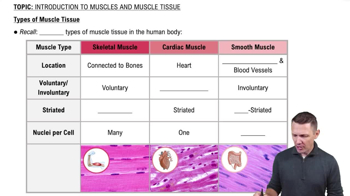
Smooth muscle cells are spindle-shaped, lack striations, and contain actin and myosin arranged irregularly.
Contraction is slower and sustained, regulated by Ca2+ binding to calmodulin activating myosin light chain kinase.
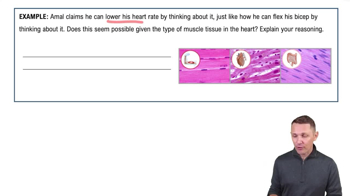
Cardiac muscle is striated, involuntary, has intercalated discs for electrical coupling, and contracts rhythmically.
Cardiac muscle is striated and involuntary; smooth muscle is non-striated and controls slow, sustained contractions.