
Ch. 17 The Cardiovascular System I: The Heart
Amerman - Human Anatomy & Physiology 2nd Edition
Amerman2nd EditionHuman Anatomy & PhysiologyISBN: 9780136873822당신이 사용하는 게 아니라요?교과서 변경
17장, 문제 2

The pericardial cavity is located between:
a. The parietal pericardium and the fibrous pericardium.
b. The fibrous pericardium and the myocardium.
c. The parietal pericardium and the visceral pericardium.
d. The epicardium and the endocardium.

검증된 단계별 안내
1
Understand the anatomy of the pericardium: The pericardium is a double-layered membrane that surrounds the heart. It consists of two main layers: the fibrous pericardium (outermost layer) and the serous pericardium (inner layer). The serous pericardium is further divided into the parietal pericardium (outer layer of the serous pericardium) and the visceral pericardium (inner layer, also known as the epicardium).
Learn about the pericardial cavity: The pericardial cavity is a potential space located between the parietal pericardium and the visceral pericardium. It contains a small amount of lubricating fluid called pericardial fluid, which reduces friction between the heart and surrounding structures during cardiac movements.
Analyze the options provided: Option (a) refers to the parietal pericardium and the fibrous pericardium, which are not separated by the pericardial cavity. Option (b) refers to the fibrous pericardium and the myocardium, which are also not separated by the pericardial cavity. Option (d) refers to the epicardium (another name for the visceral pericardium) and the endocardium, which are layers of the heart itself and not related to the pericardial cavity.
Focus on option (c): The pericardial cavity is specifically located between the parietal pericardium and the visceral pericardium. This matches the anatomical description of the cavity and its location.
Conclude that understanding the layers of the pericardium and their spatial relationships is key to identifying the correct answer. The pericardial cavity is a crucial structure for reducing friction during heart movements.

비슷한 문제에 대한 검증된 영상 답변:

이 영상 해법은 위 문제에 도움이 된다고 튜터들이 추천한 것입니다.

주요 개념

질문에 올바르게 답하기 위해 반드시 이해해야 하는 핵심 개념들은 다음과 같습니다.

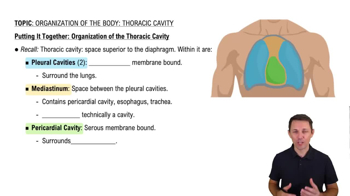
Pericardial Cavity

The pericardial cavity is a fluid-filled space that surrounds the heart, providing a protective environment. It is located between the parietal pericardium, which is the outer layer, and the visceral pericardium, which is the inner layer that directly covers the heart. This cavity contains pericardial fluid, which reduces friction during heartbeats.
추천 영상:
2:51
Organization of the Thoracic Cavity

Pericardium Layers

The pericardium consists of two main layers: the fibrous pericardium and the serous pericardium. The fibrous pericardium is a tough outer layer that anchors the heart in place, while the serous pericardium is divided into the parietal layer (lining the fibrous pericardium) and the visceral layer (epicardium), which adheres to the heart muscle. Understanding these layers is crucial for identifying the location of the pericardial cavity.
추천 영상:
가이드 코스
02:31
Epidermal Layers: Stratum Lucidum (Clear Layer)

Heart Anatomy

A basic understanding of heart anatomy is essential for interpreting the question. The heart is composed of several layers, including the myocardium (the muscular layer), the epicardium (the outer layer), and the endocardium (the inner lining). Recognizing these structures helps clarify the relationships between the pericardial cavity and the surrounding layers, aiding in the correct identification of its location.
추천 영상:
6:13
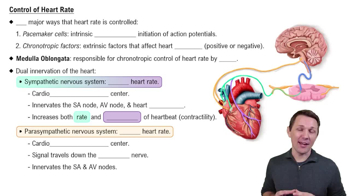
Control of Heart Rate
관련 실천
교과서 질문

The AV node delay:

a. Allows the atria and ventricles to depolarize and contract as a unit.

b. Allows the two ventricles to depolarize and contract separately.

c. Allows the atria and ventricles to depolarize and contract separately.

d. Speeds up the impulse transmission from the atria to the ventricles.

1055
views
교과서 질문

Which of the following statements is true?

a. The tricuspid valve is located between the right atrium and the right ventricle.

b. The mitral valve is located between the pulmonary veins and the left atrium.

c. The pulmonary valve is located between the pulmonary artery and the pulmonary veins.

d. The aortic valve is located between the right ventricle and the aorta.

1136
views
1
rank
교과서 질문

Mark the following statements as true or false. If a statement is false, correct it to make a true statement.

The heart consists of two superior ventricles and two inferior atria.

923
views
교과서 질문

Mark the following statements as true or false. If a statement is false, correct it to make a true statement.

The heart plays a role in the regulation of blood pressure and secretes the hormone atrial natriuretic peptide.

801
views
교과서 질문

A newer drug, ivabradine, lowers the heart rate by blocking the nonselective HCN cation channels. Why would this action decrease the heart rate? Would this drug have an effect on pacemaker cells, contractile cells, or both? Explain.

780
views
교과서 질문

You are an athletic trainer who is working with someone planning to run a marathon. Your trainee tells you to give him a workout that will make his heart 'beat faster than ever before.' What do you tell him about the effects of too rapid a heart rate?

804
views