Ch. 20 The Lymphatic System and Immunity
Amerman - Human Anatomy & Physiology 2nd Edition
Amerman2nd EditionHuman Anatomy & PhysiologyISBN: 9780136873822당신이 사용하는 게 아니라요?교과서 변경
20장, 문제 17c

Mark the following statements as true or false. If a statement is false, correct it to make a true statement.
Neutrophils are a critical component of the response to a parasitic infection.

검증된 단계별 안내
1
Step 1: Begin by understanding the role of neutrophils in the immune system. Neutrophils are a type of white blood cell that primarily respond to bacterial infections and are part of the innate immune system. They are not specialized for parasitic infections.
Step 2: Learn about the immune response to parasitic infections. Parasitic infections are typically addressed by eosinophils, another type of white blood cell, which are specialized for combating multicellular parasites like helminths.
Step 3: Evaluate the statement provided. Since neutrophils are not the primary responders to parasitic infections, the statement is false.
Step 4: Correct the false statement. Replace 'neutrophils' with 'eosinophils' to make the statement true: 'Eosinophils are a critical component of the response to a parasitic infection.'
Step 5: Review the corrected statement and ensure it aligns with the physiological roles of immune cells in combating parasitic infections.

비슷한 문제에 대한 검증된 영상 답변:

이 영상 해법은 위 문제에 도움이 된다고 튜터들이 추천한 것입니다.
도움이 되었나요?

주요 개념

질문에 올바르게 답하기 위해 반드시 이해해야 하는 핵심 개념들은 다음과 같습니다.

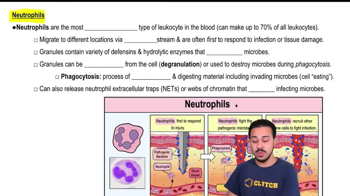
Neutrophils

Neutrophils are a type of white blood cell that play a crucial role in the immune response, particularly in fighting bacterial infections. They are the first responders to sites of infection and are primarily involved in phagocytosis, where they engulf and destroy pathogens. However, their role in combating parasitic infections is limited compared to other immune cells.
추천 영상:
5:23
Neutrophils

Immune Response to Parasitic Infections

The immune response to parasitic infections primarily involves different types of white blood cells, such as eosinophils and T-helper cells, which are more effective against parasites. Eosinophils are particularly important as they release cytotoxic granules that target larger parasites, while T-helper cells help orchestrate the immune response. Understanding this distinction is essential for accurately assessing the role of neutrophils.
추천 영상:
6:59
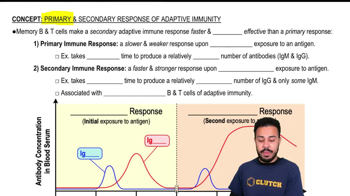
Primary and Secondary Response of Adaptive Immunity

Correcting False Statements

In academic contexts, it is important to not only identify false statements but also to provide accurate corrections. This involves understanding the underlying biological principles and being able to articulate the correct information clearly. For example, a corrected statement regarding neutrophils might specify that they are not critical for parasitic infections, as eosinophils are the primary responders in such cases.
추천 영상:
1:46
Structural Class: Synovial Joints Example 3