Ch. 22 The Digestive System
Amerman - Human Anatomy & Physiology 2nd Edition
Amerman2nd EditionHuman Anatomy & PhysiologyISBN: 9780136873822당신이 사용하는 게 아니라요?교과서 변경
22장, 문제 22

How does absorption of lipids differ from absorption of carbohydrates and proteins in the small intestine?
a. Lipids are absorbed into a capillary; carbohydrates and proteins are absorbed into a lacteal.
b. Lipids are not absorbed in the small intestine.
c. Lipids are absorbed into a lacteal; carbohydrates and proteins are absorbed into a capillary.
d. They are all absorbed into the same structure.

검증된 단계별 안내
1
Understand the basic anatomy of the small intestine: The small intestine is the primary site for nutrient absorption. It contains villi and microvilli, which increase the surface area for absorption. Each villus contains a capillary network and a lacteal (a lymphatic vessel).
Review the absorption process for carbohydrates and proteins: Carbohydrates are broken down into monosaccharides (e.g., glucose), and proteins are broken down into amino acids. These small molecules are water-soluble and are absorbed directly into the capillaries of the villi, where they enter the bloodstream.
Review the absorption process for lipids: Lipids (fats) are broken down into monoglycerides and free fatty acids. These molecules are not water-soluble, so they are packaged into structures called micelles for transport to the intestinal cells. Inside the cells, they are reassembled into triglycerides and packaged into chylomicrons, which are absorbed into the lacteals (lymphatic vessels) rather than the capillaries.
Compare the absorption pathways: Carbohydrates and proteins are absorbed into the capillaries, which transport them to the liver via the hepatic portal vein. Lipids, on the other hand, are absorbed into the lacteals, which transport them through the lymphatic system before they enter the bloodstream.
Identify the correct answer: Based on the differences in absorption pathways, the correct answer is that lipids are absorbed into a lacteal, while carbohydrates and proteins are absorbed into a capillary. This corresponds to option c.

비슷한 문제에 대한 검증된 영상 답변:

이 영상 해법은 위 문제에 도움이 된다고 튜터들이 추천한 것입니다.
도움이 되었나요?

주요 개념

질문에 올바르게 답하기 위해 반드시 이해해야 하는 핵심 개념들은 다음과 같습니다.

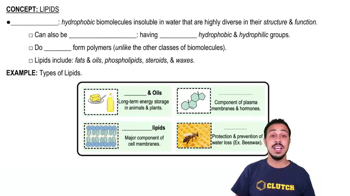
Lipid Absorption

Lipid absorption primarily occurs in the small intestine, where dietary fats are emulsified by bile salts and broken down by pancreatic lipase into fatty acids and monoglycerides. These products then diffuse across the intestinal epithelial cells and are reassembled into triglycerides, which are packaged into chylomicrons and absorbed into the lymphatic system via lacteals.
추천 영상:

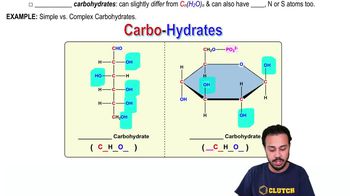
Carbohydrate and Protein Absorption

Carbohydrates and proteins are absorbed in the small intestine through different mechanisms. Carbohydrates are broken down into monosaccharides, which are absorbed directly into the bloodstream via capillaries. Proteins are digested into amino acids and small peptides, which are also absorbed into the capillaries of the intestinal villi, entering the bloodstream for distribution.
추천 영상:

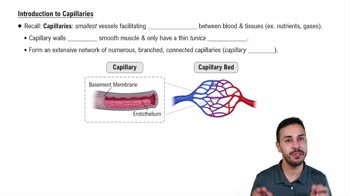
Lacteals vs. Capillaries

Lacteals are specialized lymphatic vessels found in the intestinal villi that primarily absorb lipids and fat-soluble vitamins, transporting them into the lymphatic system. In contrast, capillaries are small blood vessels that absorb water-soluble nutrients, such as carbohydrates and proteins, directly into the bloodstream, highlighting the distinct pathways for nutrient absorption in the small intestine.
추천 영상:
가이드 코스
4:36
Introduction to Capillaries