
Ch. 22 The Digestive System
Amerman - Human Anatomy & Physiology 2nd Edition
Amerman2nd EditionHuman Anatomy & PhysiologyISBN: 9780136873822당신이 사용하는 게 아니라요?교과서 변경
22장, 문제 3a

Mark the following statements as true or false. If a statement is false, correct it to make a true statement.
The mucosa from the stomach to the anus consists of an inner layer of stratified columnar epithelium.

검증된 단계별 안내
1
Understand the structure of the mucosa: The mucosa is the innermost layer of the gastrointestinal (GI) tract and consists of three sublayers: the epithelium, the lamina propria, and the muscularis mucosae. The type of epithelium varies depending on the region of the GI tract.
Recall the type of epithelium in the stomach: The stomach's mucosa is lined with simple columnar epithelium, which is specialized for secretion and protection against the acidic environment.
Recall the type of epithelium in the intestines: The small and large intestines are also lined with simple columnar epithelium, which facilitates absorption and secretion.
Recall the type of epithelium in the anus: The epithelium transitions to stratified squamous epithelium near the anus to provide protection against mechanical stress during defecation.
Evaluate the statement: The claim that the mucosa from the stomach to the anus consists of stratified columnar epithelium is false. Correct the statement by noting that the mucosa consists of simple columnar epithelium from the stomach to the rectum, transitioning to stratified squamous epithelium in the anal canal.

비슷한 문제에 대한 검증된 영상 답변:

이 영상 해법은 위 문제에 도움이 된다고 튜터들이 추천한 것입니다.
도움이 되었나요?

주요 개념

질문에 올바르게 답하기 위해 반드시 이해해야 하는 핵심 개념들은 다음과 같습니다.

Mucosal Layers

The mucosa is the innermost layer of the gastrointestinal tract, which includes the stomach and intestines. It is primarily composed of epithelial tissue, which varies in type along the digestive tract. While the stomach has a simple columnar epithelium, the rectum and anus feature stratified squamous epithelium, not stratified columnar.
추천 영상:
02:31
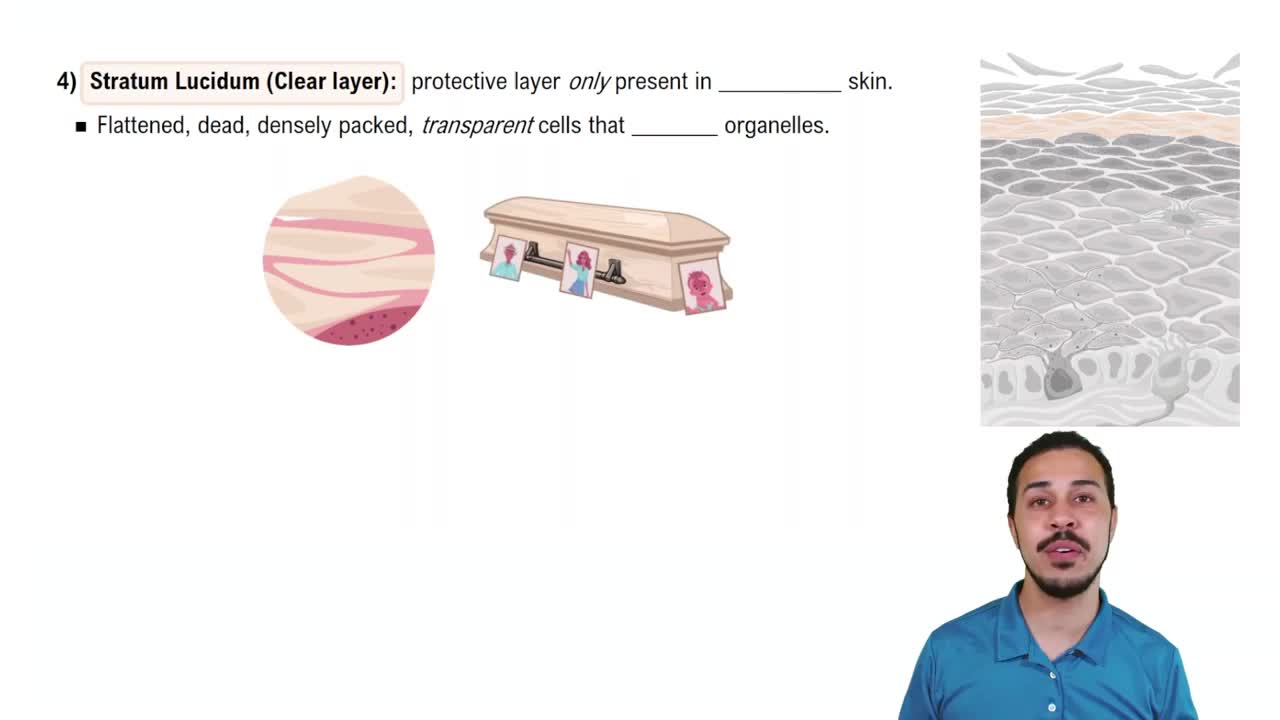
Epidermal Layers: Stratum Lucidum (Clear Layer)

Epithelial Tissue Types

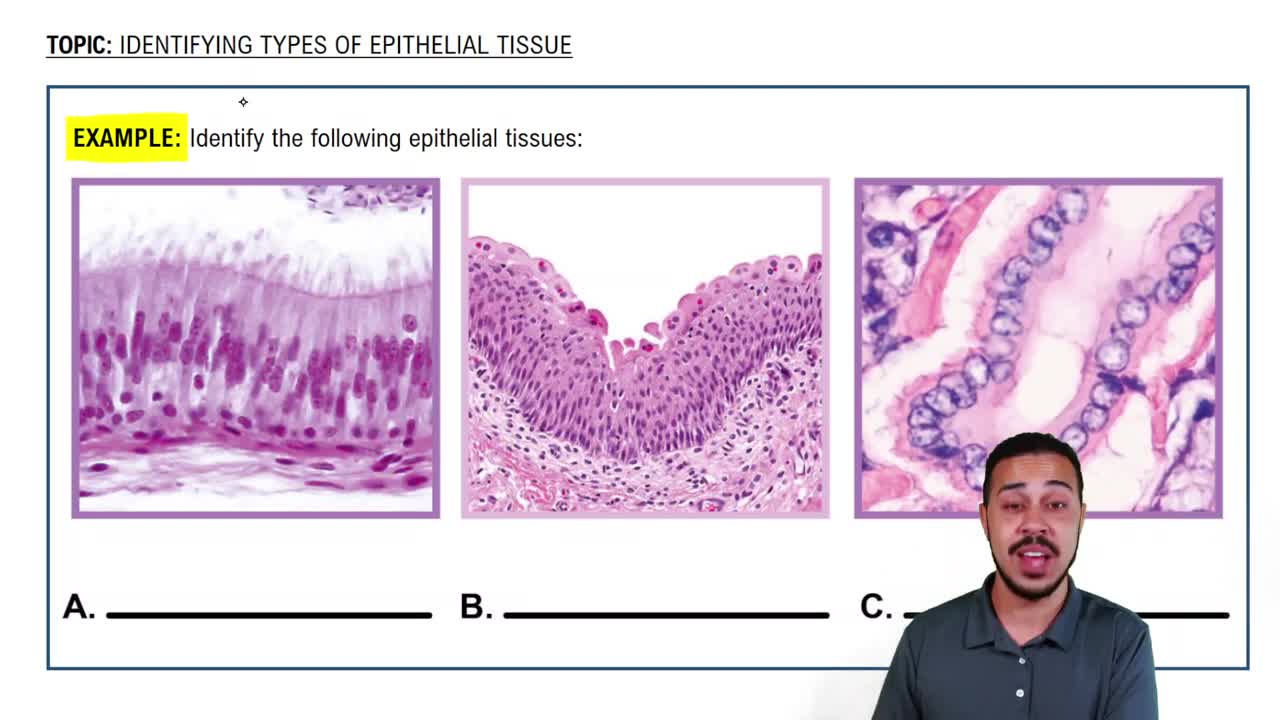
Epithelial tissues are classified based on cell shape and layering. Stratified columnar epithelium consists of multiple layers of column-shaped cells, typically found in areas requiring protection and secretion. However, it is not the predominant type found throughout the gastrointestinal tract, which features a mix of simple and stratified epithelia depending on the specific region.
추천 영상:
가이드 코스
07:25
Identifying Types of Epithelial Tissue Example 1

Gastrointestinal Tract Structure

The gastrointestinal tract is structured to facilitate digestion and absorption, with each section having specialized functions and corresponding epithelial types. The stomach has a simple columnar epithelium for secretion and protection, while the anal canal has stratified squamous epithelium to withstand abrasion, highlighting the diversity of epithelial types along the tract.
추천 영상:
가이드 코스
4:16
Structure of the Eyeball Example 1
관련 실천
교과서 질문

Mr. Williams presents to your clinic with a complaint of abdominal pain in the right upper quadrant. He says that the pain worsens when he eats, particularly when he eats fatty meals. He has noticed that his stool has been an unusual clay color recently. You perform an ultrasound of his abdomen and find that gallstones are blocking his common bile duct, preventing bile from entering the duodenum.

You test Mr. Williams's stool and find high amounts of undigested fats. Explain this finding.

645
views
교과서 질문

Mark the following statements as true or false. If a statement is false, correct it to make a true statement.

The muscularis externa of most of the alimentary canal consists of inner circular and outer longitudinal layers of smooth muscle.

850
views
교과서 질문

Match the following terms with the correct definition. 

__Chief cells          

__Parietal cells           

__Gastrin           

__Pyloric sphincter         

__Diffuse neuroendocrine (DNES) cells         

__Gastroesophageal sphincter         

__Pepsin         

__Chyme

a. Hormone that stimulates multiple digestive processes

b. Enzyme that begins protein digestion

c. Produce acid and intrinsic factor

d. Liquid produced as a result of stomach churning

e. Produce pepsinogen

f. Cells in gastric glands that produce hormones

g. Controls passage of bolus from esophagus to stomach

h. Controls passage of stomach contents to duodenum

618
views
교과서 질문

Individuals experiencing prolonged vomiting lose a great deal of hydrochloric acid with the vomitus. Predict the effect this loss of acid will have on the pH of the blood. How will the respiratory system respond to the change in pH?

876
views
교과서 질문

Mr. Williams presents to your clinic with a complaint of abdominal pain in the right upper quadrant. He says that the pain worsens when he eats, particularly when he eats fatty meals. He has noticed that his stool has been an unusual clay color recently. You perform an ultrasound of his abdomen and find that gallstones are blocking his common bile duct, preventing bile from entering the duodenum.

Explain why his feces have become a clay color instead of a normal brown color.

639
views
교과서 질문

Mark the following statements as true or false. If a statement is false, correct it to make a true statement.

The mucosa of the esophagus, pharynx, and oral cavity contains simple squamous epithelium to protect it from abrasion.

856
views