
교과서 질문
A woman begins a diet and exercise regimen and loses 30 lb. Will her total body water increase, decrease, or stay the same? Why?
438
views

 검증된 단계별 안내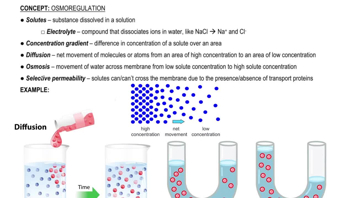
 07:59
07:59
 7:14
7:14A woman begins a diet and exercise regimen and loses 30 lb. Will her total body water increase, decrease, or stay the same? Why?
Your friend argues that all water conducts electricity, regardless of what it contains. You prepare three liquids to test this hypothesis: one with deionized water (with no solutes, only water molecules), one with 5% glucose in water, and one with 5% sodium chloride in water. Which of these solutions, if any, will conduct an electric current? Explain.
Diabetic ketoacidosis is characterized by an increased level of ketone bodies, which causes metabolic acidosis. A patient in diabetic ketoacidosis will have an altered rate of ventilation. Will the patient be hyperventilating or hypoventilating? How will a change in the rate and depth of ventilation compensate for an acidosis that is metabolic in nature?
Which of the following statements best describes the principle of mass balance?
a. The amount of a variable that is gained by the body through ingestion equals the amount that is lost from the body.
b. The body maintains a stable mass at all times.
c. The amount of each variable brought into the body must be balanced by all other variables.
d. The amount of a variable ingested is regulated by a positive feedback loop.