
Ch. 1 Introduction to Anatomy and Physiology
Amerman- Human Anatomy & Physiology 3e
Amerman3rd EditionHuman Anatomy & PhysiologyISBN: 9780138247201, 9780138247928, 9780138201814당신이 사용하는 게 아니라요?교과서 변경
1장, 문제 L2.2

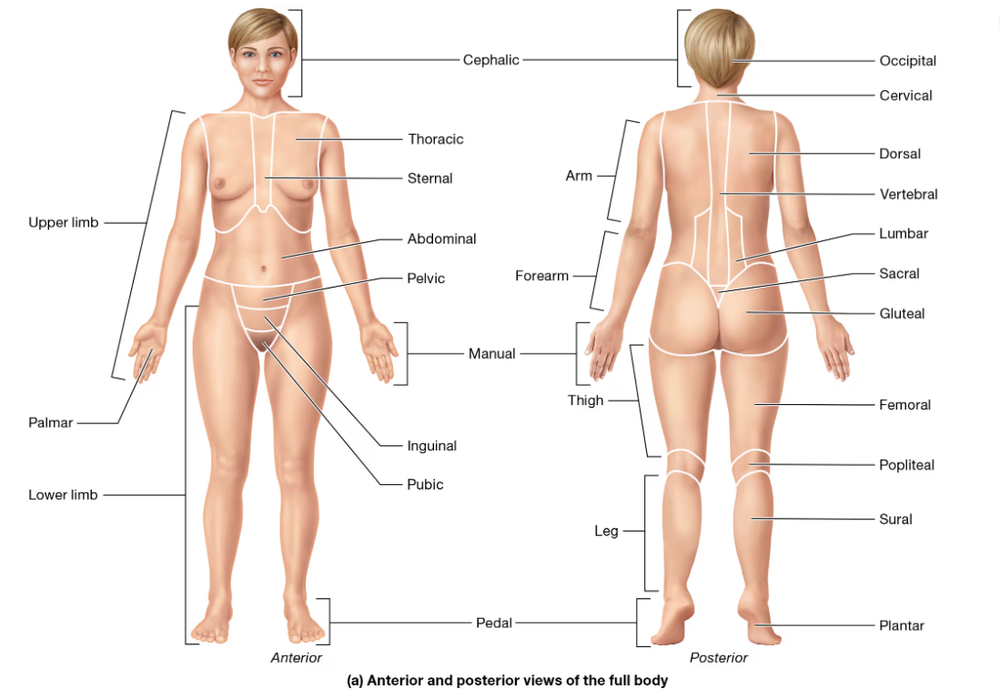
Use the correct regional and directional terms to describe the location of each of the following organs in the body. You may use the following image for reference
Anterior and posterior views of a human body with labeled regional and directional anatomical terms.
a. Esophagus
b. Brain
c. Urinary bladder (in a female)

검증된 단계별 안내
1
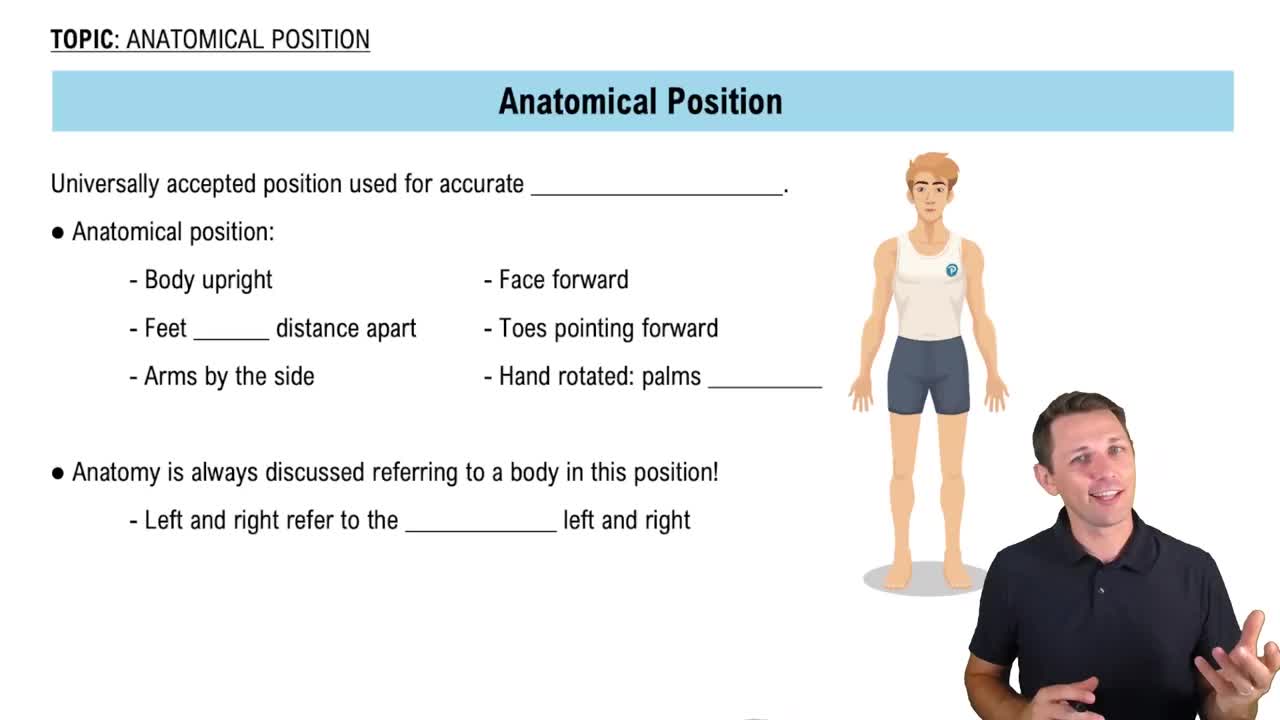
Step 1: Identify the anatomical position of the body as the standard reference point. This means the body is standing upright, facing forward, with arms at the sides and palms facing forward. All regional and directional terms are based on this position.
Step 2: For the esophagus, determine its location relative to the body regions and directional terms. The esophagus is a muscular tube that connects the throat (pharynx) to the stomach, located in the thoracic cavity, posterior to the trachea and anterior to the vertebral column. Use terms like 'posterior to the trachea', 'anterior to the vertebral column', and 'within the thoracic region'.
Step 3: For the brain, identify its location within the body. The brain is located within the cranial cavity of the skull, which is part of the head region. Use terms such as 'superior to the spinal cord', 'within the cranial cavity', and 'in the cephalic (head) region'.
Step 4: For the urinary bladder in a female, locate it within the pelvic cavity. The bladder is inferior to the abdominal cavity, anterior to the rectum, and posterior to the pubic symphysis. Use directional terms like 'inferior to the abdominal cavity', 'anterior to the rectum', and 'within the pelvic region'.
Step 5: Summarize each organ's location using the correct regional and directional terms, ensuring clarity and anatomical accuracy based on the standard anatomical position.

비슷한 문제에 대한 검증된 영상 답변:

이 영상 해법은 위 문제에 도움이 된다고 튜터들이 추천한 것입니다.

주요 개념

질문에 올바르게 답하기 위해 반드시 이해해야 하는 핵심 개념들은 다음과 같습니다.

Regional Terms

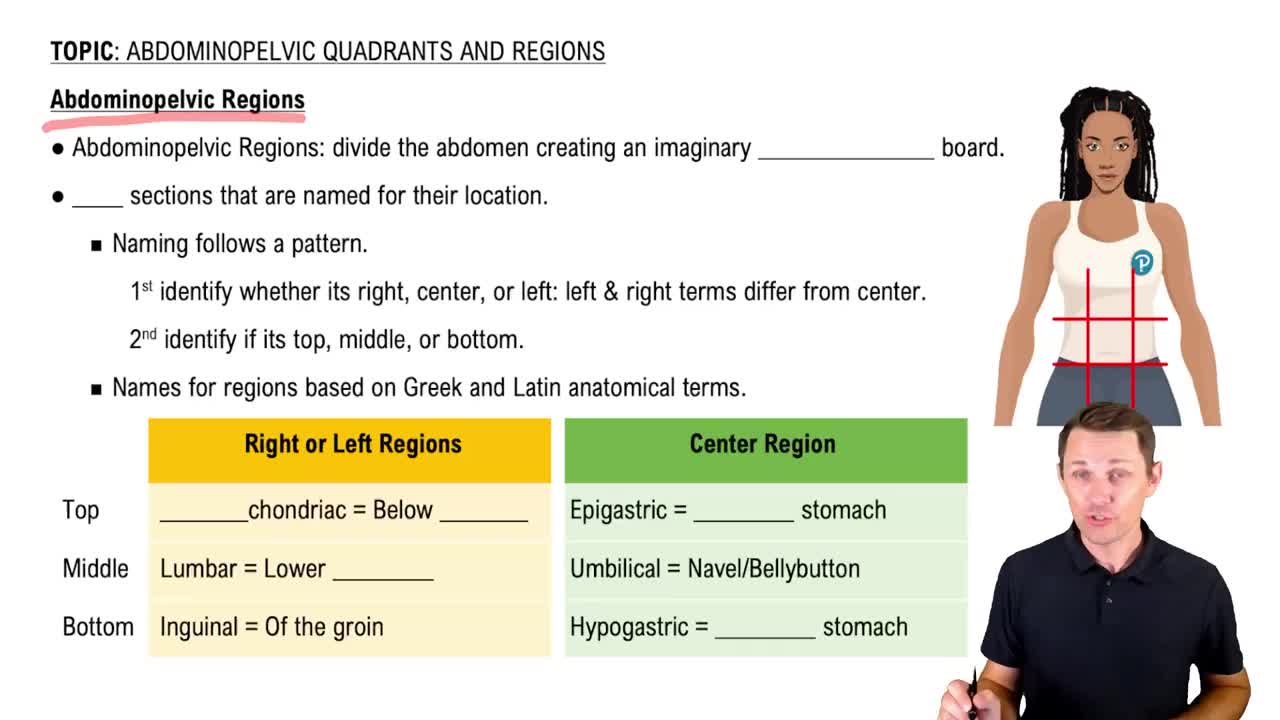
Regional terms refer to specific areas or divisions of the body used to describe locations precisely, such as thoracic (chest), abdominal, or pelvic regions. Understanding these terms helps in identifying where organs are situated relative to these body areas.
추천 영상:
04:21
The 9 Abdominopelvic Regions

Directional Terms

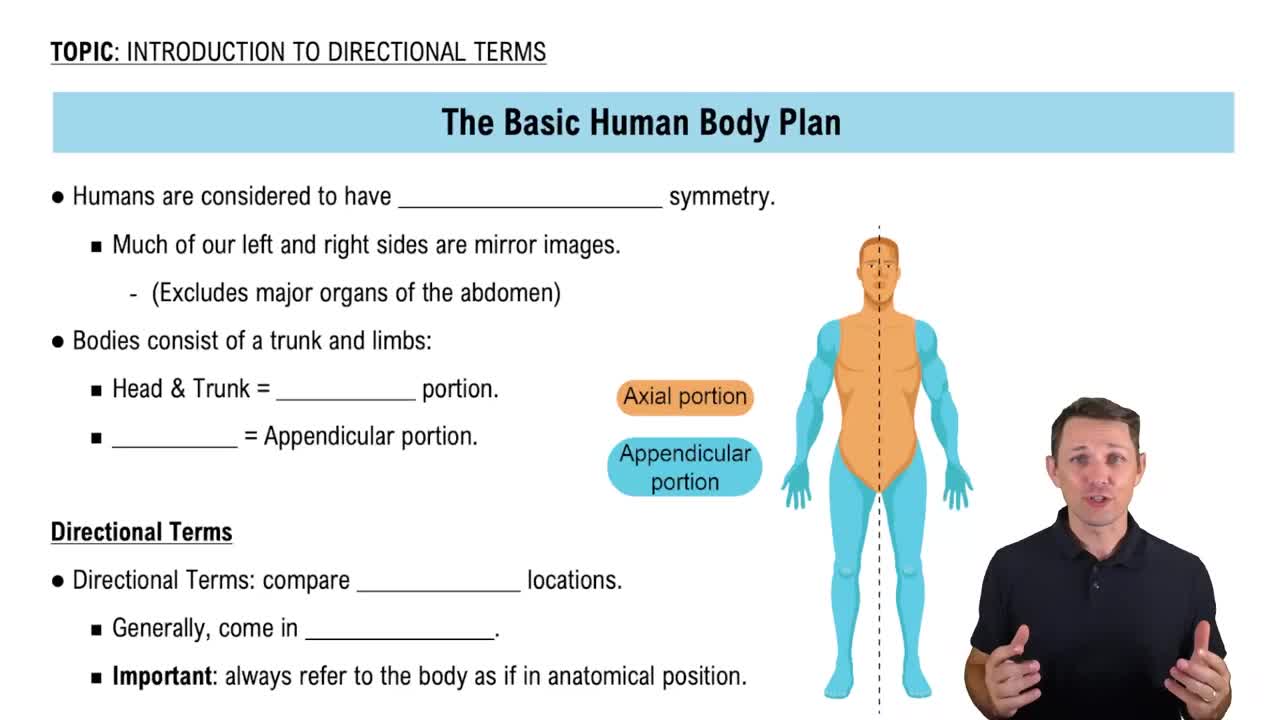
Directional terms describe the position of one body part relative to another, using words like anterior (front), posterior (back), superior (above), and inferior (below). These terms are essential for accurately describing the location of organs in relation to each other.
추천 영상:
03:00
Introduction to Directional Terms

Anatomical Position and Reference Figures

The anatomical position is a standard stance used as a reference point in anatomy, with the body standing upright, facing forward, arms at the sides, and palms facing forward. Reference figures, like Figure 1.8, provide visual guidance to apply regional and directional terms correctly.
추천 영상:
02:40
Anatomical Position