
교과서 질문
Mark the following statements as true or false. If a statement is false, correct it to make a true statement.
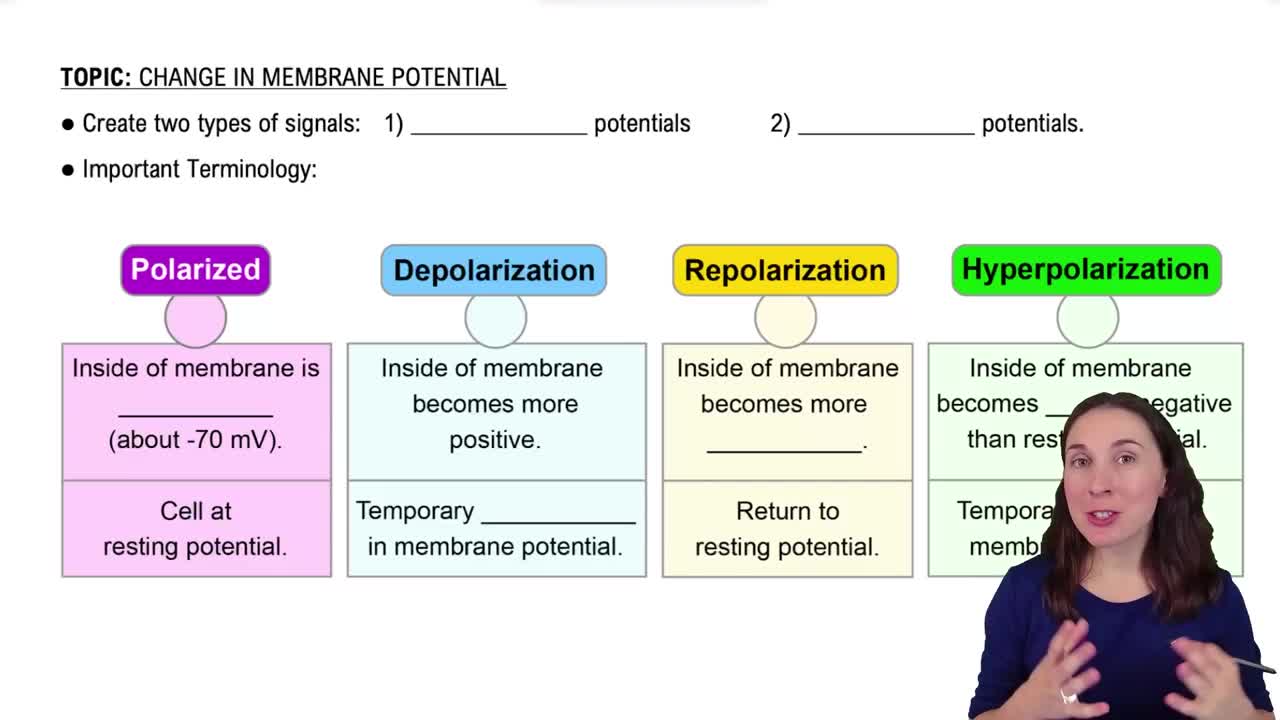
The concentration of Na+ is highest in the cytosol, and the concentration of K+ is highest in the extracellular fluid.
739
views
 검증된 단계별 안내
 3:49
3:49
 03:31
03:31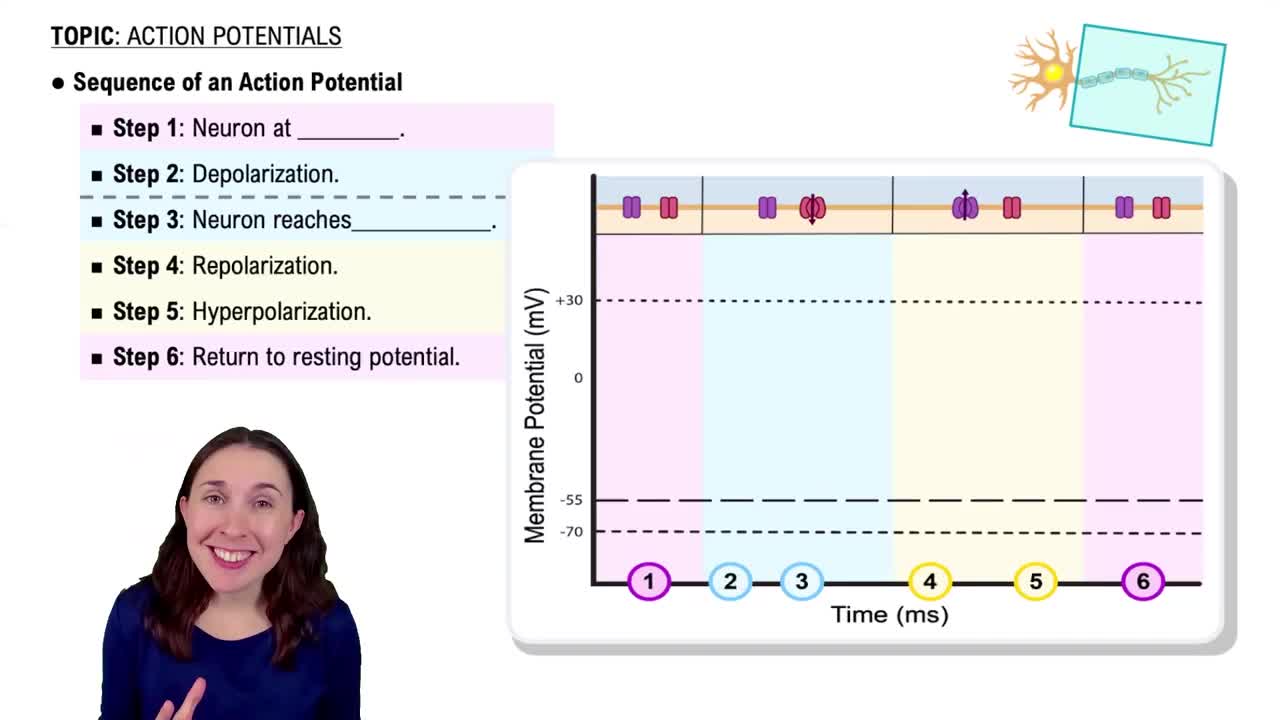 03:53
03:53Mark the following statements as true or false. If a statement is false, correct it to make a true statement.
The concentration of Na+ is highest in the cytosol, and the concentration of K+ is highest in the extracellular fluid.
The ________ is the period of time during which it is impossible to stimulate a neuron to have an action potential, whereas the ________ is the period of time during which a larger-than-normal stimulus is required to elicit an action potential.
Describe the three components of the neuromuscular junction.
Mark the following statements as true or false. If a statement is false, correct it to make a true statement.
The Na+/K+ pumps and gated channels maintain the Na+ and K+ gradients necessary for action potentials to occur.
Mark the following statements as true or false. If a statement is false, correct it to make a true statement.
The resting membrane potential refers to the voltage difference across the membranes of excitable cells at rest.
Which of the following statements best describes saltatory conduction?
a. Every section of the axolemma must be depolarized and triggered to generate an action potential.
b. The internodes must generate action potentials.
c. The dendrites and cell bodies propagate EPSPs toward the trigger zone.
d. Only the nodes of Ranvier must generate action potentials.