Ch. 11 Introduction to the Nervous System and Nervous Tissue
Amerman- Human Anatomy & Physiology 3e
Amerman3rd EditionHuman Anatomy & PhysiologyISBN: 9780138247201, 9780138247928, 9780138201814당신이 사용하는 게 아니라요?교과서 변경
11장, 문제 L2.2

What would happen if the drug blocked K+ channels instead?

검증된 단계별 안내
1
Understand the role of K+ (potassium) channels in cellular physiology: Potassium channels are responsible for allowing K+ ions to move out of the cell, which helps maintain the resting membrane potential and repolarize the cell after an action potential.
Consider the effect of blocking K+ channels: If K+ channels are blocked, K+ ions cannot exit the cell as they normally would. This would disrupt the repolarization phase of the action potential, leading to prolonged depolarization.
Analyze the impact on the action potential: Without proper repolarization, the cell would remain in a depolarized state for a longer period, which could impair the ability of excitable cells (like neurons or muscle cells) to fire subsequent action potentials.
Examine the physiological consequences: Prolonged depolarization could lead to issues such as hyperexcitability, arrhythmias in cardiac cells, or impaired signaling in neurons, depending on the tissue affected.
Relate to clinical implications: Drugs that block K+ channels are sometimes used therapeutically (e.g., antiarrhythmic drugs), but excessive or unintended blockage could lead to adverse effects, such as disrupted electrical activity in the heart or nervous system.

비슷한 문제에 대한 검증된 영상 답변:

이 영상 해법은 위 문제에 도움이 된다고 튜터들이 추천한 것입니다.
도움이 되었나요?

주요 개념

질문에 올바르게 답하기 위해 반드시 이해해야 하는 핵심 개념들은 다음과 같습니다.

K<sup>+</sup> Channels

K<sup>+</sup> channels are integral membrane proteins that allow potassium ions to flow in and out of cells. They play a crucial role in maintaining the resting membrane potential and repolarizing the cell after an action potential. Blocking these channels can disrupt normal cellular excitability and lead to various physiological effects.
추천 영상:

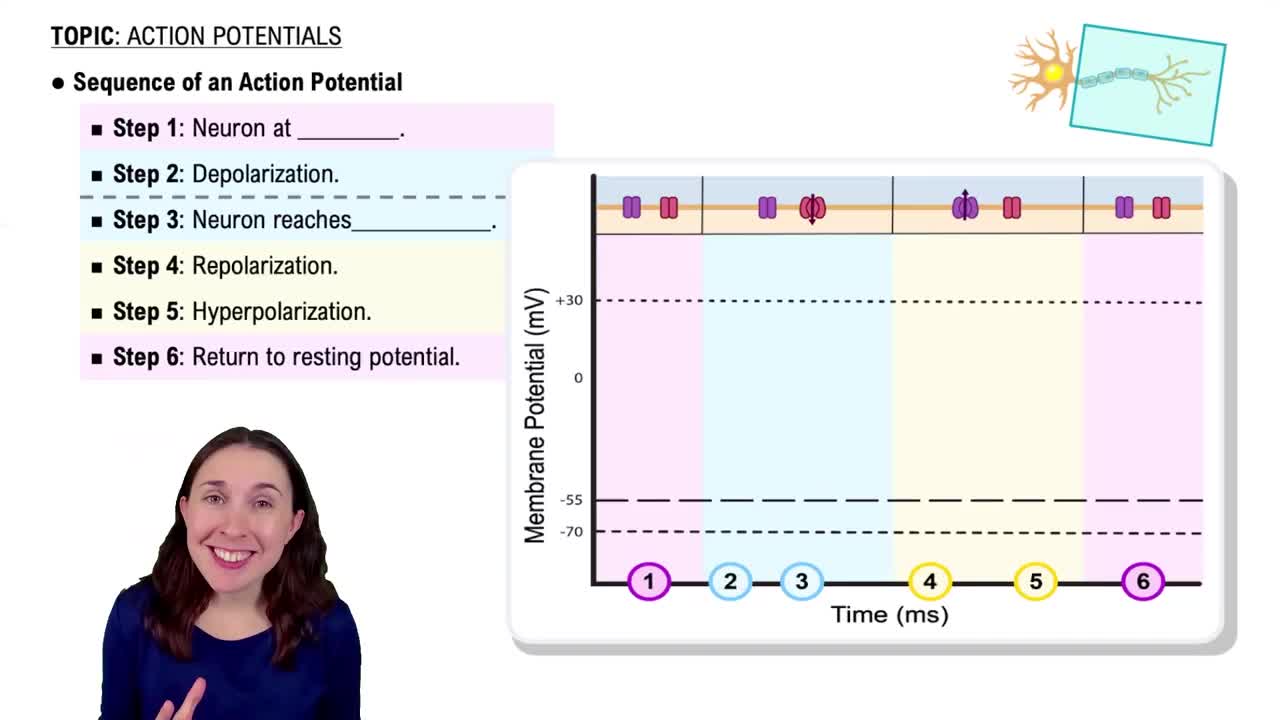
Action Potential

An action potential is a rapid, temporary change in the electrical membrane potential of a neuron or muscle cell, allowing for the transmission of signals. It involves depolarization followed by repolarization, primarily driven by the movement of Na<sup>+</sup> and K<sup>+</sup> ions. Blocking K<sup>+</sup> channels would hinder repolarization, potentially prolonging the action potential.
추천 영상:
03:53
Action Potential

Physiological Effects of Ion Channel Blockade

Blocking ion channels can lead to significant physiological changes, such as altered heart rhythms, muscle contractions, or nerve signaling. For instance, if K<sup>+</sup> channels are blocked, it can result in prolonged depolarization, increased excitability, and potentially dangerous conditions like arrhythmias in cardiac tissue.
추천 영상:
03:58
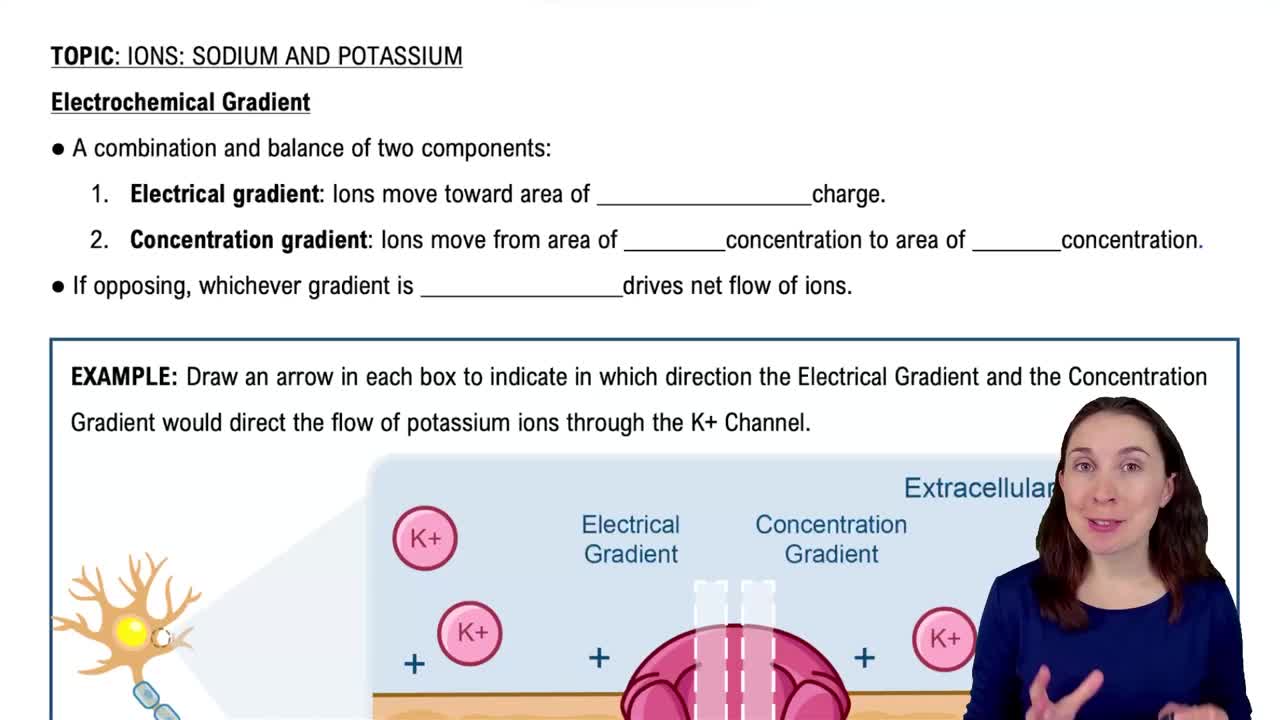
Electrochemical Gradient