Ch. 12 The Central Nervous System
Amerman- Human Anatomy & Physiology 3e
Amerman3rd EditionHuman Anatomy & PhysiologyISBN: 9780138247201, 9780138247928, 9780138201814당신이 사용하는 게 아니라요?교과서 변경
12장, 문제 19

The two components of the CNS that are responsible for maintenance of homeostasis are the ________ and the ________. 

검증된 단계별 안내
1
Step 1: Understand the Central Nervous System (CNS) and its role in maintaining homeostasis. The CNS consists of the brain and spinal cord, and it regulates various physiological processes to keep the body in balance.
Step 2: Identify the specific regions of the CNS involved in homeostasis. These regions are responsible for monitoring and adjusting bodily functions such as temperature, blood pressure, and fluid balance.
Step 3: Focus on the hypothalamus, a part of the brain that plays a key role in homeostasis. The hypothalamus regulates autonomic functions, endocrine activity, and behaviors essential for survival.
Step 4: Consider the brainstem, another critical component of the CNS. The brainstem controls vital functions such as heart rate, breathing, and blood pressure, which are essential for maintaining homeostasis.
Step 5: Combine the knowledge from steps 3 and 4 to identify the two components of the CNS responsible for homeostasis: the hypothalamus and the brainstem.

비슷한 문제에 대한 검증된 영상 답변:

이 영상 해법은 위 문제에 도움이 된다고 튜터들이 추천한 것입니다.
도움이 되었나요?

주요 개념

질문에 올바르게 답하기 위해 반드시 이해해야 하는 핵심 개념들은 다음과 같습니다.

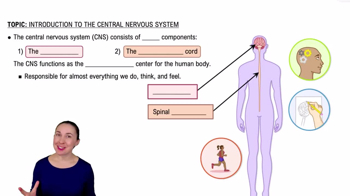
Central Nervous System (CNS)

The Central Nervous System (CNS) consists of the brain and spinal cord, serving as the primary control center for processing information and coordinating bodily functions. It plays a crucial role in maintaining homeostasis by integrating sensory information and responding appropriately to maintain internal balance.
추천 영상:
1:32
The Central Nervous System

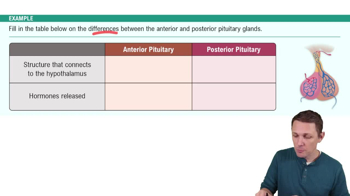
Hypothalamus

The hypothalamus is a small but vital region of the brain that regulates many autonomic functions, including temperature control, hunger, thirst, and circadian rhythms. It acts as a link between the nervous system and the endocrine system, influencing homeostasis by releasing hormones that affect various bodily processes.
추천 영상:
6:11
The Hypothalamus and Pituitary Gland Example 3

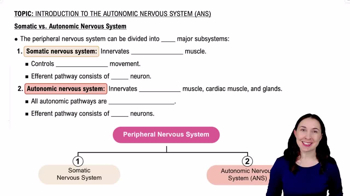
Autonomic Nervous System (ANS)

The Autonomic Nervous System (ANS) is a component of the peripheral nervous system that regulates involuntary bodily functions, such as heart rate, digestion, and respiratory rate. It is divided into the sympathetic and parasympathetic systems, which work together to maintain homeostasis by responding to stress and promoting relaxation, respectively.
추천 영상:
1:50
Somatic vs. Autonomic Nervous System
관련 실천
교과서 질문

Declarative memories are formed by the process of ________ that takes place in the ________, and are stored in the ________. 

1176
views

교과서 질문

Mark the following statements on the role of the brain in movement as true or false. If a statement is false, correct it to make a true statement. 

The cerebellum monitors the initiation of movement but does not monitor ongoing movements. 

732
views
교과서 질문

Match the term on the left with its correct description from the column on the right.     


____ REM sleep     

____ Stage I sleep     

____ Delta waves     

____ Beta waves     

____ Theta waves     

____ Stage IV sleep


a. The EEG pattern seen in the deepest stage of sleep

b. The deepest stage of sleep

c. The EEG pattern seen in an alert, awake adult

d. Drowsiness or the lightest stage of sleep

e. The EEG pattern seen in lighter stages of sleep

f. The stage of sleep during which most dreaming takes place

811
views
1
rank
교과서 질문

Mark the following statements on the role of the brain in movement as true or false. If a statement is false, correct it to make a true statement. 

The correction of motor error by the cerebellum can occur over the long term by motor learning.

761
views
1
rank
교과서 질문

Mark the following statements on the role of the brain in movement as true or false. If a statement is false, correct it to make a true statement. 

The basal nuclei inhibit inappropriate movements and are required for the initiation of movement. 

780
views
교과서 질문

The part of the brain responsible for the production of language is known as:

a. Wernicke's area

b. The prefrontal cortex

c. The auditory association area

d. Broca's area

1085
views