Ch. 12 The Central Nervous System
Amerman- Human Anatomy & Physiology 3e
Amerman3rd EditionHuman Anatomy & PhysiologyISBN: 9780138247201, 9780138247928, 9780138201814당신이 사용하는 게 아니라요?교과서 변경
12장, 문제 24

Which of the following is not a component of emotion?
a. Visceral motor responses mediated by the hypothalamus
b. Somatic motor responses mediated by the limbic system and the hypothalamus
c. Somatic motor responses mediated by the upper motor neurons of the corticospinal tracts
d. Subjective feelings mediated by the amygdala and the cerebral cortex

검증된 단계별 안내
1
Step 1: Understand the components of emotion. Emotions involve multiple systems in the body, including visceral motor responses, somatic motor responses, and subjective feelings. These systems are mediated by different parts of the brain and nervous system.
Step 2: Analyze visceral motor responses. These are involuntary responses controlled by the autonomic nervous system and mediated by the hypothalamus. Examples include changes in heart rate, blood pressure, and respiration during emotional states.
Step 3: Examine somatic motor responses. These are voluntary movements, such as facial expressions or gestures, that are influenced by emotional states. The limbic system and hypothalamus play a role in coordinating these responses.
Step 4: Evaluate the corticospinal tracts. These tracts are responsible for voluntary motor control mediated by upper motor neurons. They are not directly involved in emotional responses but rather in precise, voluntary movements.
Step 5: Consider subjective feelings. These are the conscious experiences of emotion, such as fear or happiness, and are mediated by the amygdala and cerebral cortex. They are integral to the emotional experience.

비슷한 문제에 대한 검증된 영상 답변:

이 영상 해법은 위 문제에 도움이 된다고 튜터들이 추천한 것입니다.
도움이 되었나요?

주요 개념

질문에 올바르게 답하기 위해 반드시 이해해야 하는 핵심 개념들은 다음과 같습니다.

Components of Emotion

Emotions are typically understood to consist of three main components: physiological responses, behavioral responses, and subjective experiences. Physiological responses involve bodily reactions, such as heart rate changes, while behavioral responses include facial expressions and actions. Subjective experiences refer to the personal feelings associated with emotions, which can vary widely among individuals.
추천 영상:
5:04
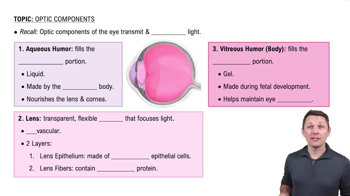
Optic Components

Role of the Hypothalamus

The hypothalamus is a crucial brain structure involved in regulating various autonomic functions, including emotional responses. It mediates visceral motor responses, such as changes in heart rate and blood pressure, which are integral to the physiological aspect of emotions. Understanding its role helps clarify how emotions can trigger physical reactions in the body.
추천 영상:
6:11
The Hypothalamus and Pituitary Gland Example 3

Limbic System and Emotion

The limbic system, which includes structures like the amygdala and hippocampus, plays a significant role in processing emotions. It is involved in both the generation of emotional responses and the formation of emotional memories. The amygdala, in particular, is key for the emotional significance of stimuli, influencing how we react to different situations.
추천 영상:
가이드 코스
03:40
Integumentary System Functions