Ch. 14 The Autonomic Nervous System and Homeostasis
Amerman- Human Anatomy & Physiology 3e
Amerman3rd EditionHuman Anatomy & PhysiologyISBN: 9780138247201, 9780138247928, 9780138201814당신이 사용하는 게 아니라요?교과서 변경
14장, 문제 7

Which of the following actions would you expect when sympathetic neurons release norepinephrine onto β1 receptors?
a. Decreased sweat production
b. Constriction of blood vessels serving the digestive, urinary, and integumentary systems
c. Adjustment of the shape of the lens
d. Increase in the rate and force of contraction of the heart.

검증된 단계별 안내
1
Step 1: Understand the role of sympathetic neurons in the autonomic nervous system. Sympathetic neurons are part of the 'fight or flight' response, which prepares the body for action by increasing heart rate, dilating airways, and redirecting blood flow to essential organs like muscles.
Step 2: Learn about norepinephrine and its interaction with β1 receptors. Norepinephrine is a neurotransmitter released by sympathetic neurons, and β1 receptors are primarily found in the heart. Activation of β1 receptors leads to increased heart rate and stronger heart contractions.
Step 3: Analyze the options provided in the question. For each option, determine whether it aligns with the effects of norepinephrine binding to β1 receptors. For example, decreased sweat production (option a) is not related to β1 receptor activation, as sweat production is controlled by different receptors.
Step 4: Focus on the physiological effects of β1 receptor activation. Activation of β1 receptors specifically increases the rate and force of heart contractions, which is consistent with the body's need to pump more blood during a 'fight or flight' response.
Step 5: Eliminate incorrect options based on your understanding of β1 receptor activation and sympathetic nervous system functions. For example, constriction of blood vessels serving the digestive, urinary, and integumentary systems (option b) is mediated by α1 receptors, not β1 receptors. Adjustment of the shape of the lens (option c) is controlled by parasympathetic neurons, not sympathetic neurons.

비슷한 문제에 대한 검증된 영상 답변:

이 영상 해법은 위 문제에 도움이 된다고 튜터들이 추천한 것입니다.
도움이 되었나요?

주요 개념

질문에 올바르게 답하기 위해 반드시 이해해야 하는 핵심 개념들은 다음과 같습니다.

Sympathetic Nervous System

The sympathetic nervous system is a part of the autonomic nervous system that prepares the body for 'fight or flight' responses during stressful situations. It increases heart rate, dilates airways, and redirects blood flow to essential organs, enhancing physical performance. Understanding its role is crucial for interpreting how norepinephrine affects various body functions.
추천 영상:
1:21
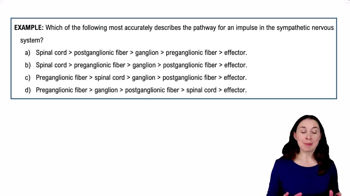
Sympathetic Nervous System Example 3

Norepinephrine and β1 Receptors

Norepinephrine is a neurotransmitter that binds to adrenergic receptors, including β1 receptors, primarily found in the heart. Activation of β1 receptors leads to increased heart rate and contractility, which enhances cardiac output. This concept is essential for understanding the physiological effects of sympathetic stimulation on the heart.
추천 영상:
2:47
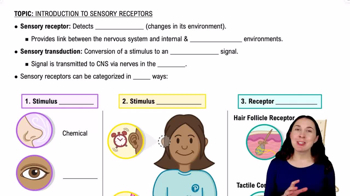
Sensory Receptors

Physiological Responses to Sympathetic Activation

When sympathetic neurons are activated, various physiological responses occur, such as increased heart rate, blood vessel constriction, and altered glandular secretions. These responses are part of the body's mechanism to cope with stress. Recognizing these responses helps in predicting the outcomes of norepinephrine release on different organs and systems.
추천 영상:
5:03
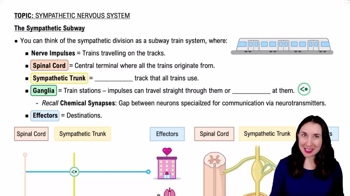
The Sympathetic Subway