Ch. 18 The Cardiovascular System II: The Blood Vessels
Amerman- Human Anatomy & Physiology 3e
Amerman3rd EditionHuman Anatomy & PhysiologyISBN: 9780138247201, 9780138247928, 9780138201814당신이 사용하는 게 아니라요?교과서 변경
18장, 문제 1a

Mark the following statements as true or false. If a statement is false, correct it to make a true statement.
Arteries are the exchange vessels of the cardiovascular system.

검증된 단계별 안내
1
Step 1: Understand the role of arteries in the cardiovascular system. Arteries are blood vessels that carry blood away from the heart to various parts of the body. They are primarily involved in transporting blood, not in the exchange of substances.
Step 2: Learn about the exchange vessels in the cardiovascular system. The exchange of gases, nutrients, and waste products occurs in capillaries, which are small, thin-walled blood vessels designed for this purpose.
Step 3: Compare the function of arteries and capillaries. Arteries are larger and have thicker walls to withstand high pressure, while capillaries are specialized for exchange due to their thin walls and proximity to tissues.
Step 4: Evaluate the statement provided. The statement 'Arteries are the exchange vessels of the cardiovascular system' is false because arteries are not involved in the exchange process; capillaries are the exchange vessels.
Step 5: Correct the false statement. The corrected statement is: 'Capillaries are the exchange vessels of the cardiovascular system.'

비슷한 문제에 대한 검증된 영상 답변:

이 영상 해법은 위 문제에 도움이 된다고 튜터들이 추천한 것입니다.
도움이 되었나요?

주요 개념

질문에 올바르게 답하기 위해 반드시 이해해야 하는 핵심 개념들은 다음과 같습니다.

Arteries

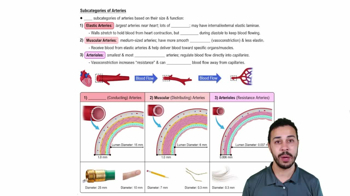
Arteries are blood vessels that carry oxygenated blood away from the heart to the tissues of the body, except for the pulmonary arteries, which carry deoxygenated blood to the lungs. They have thick, elastic walls to withstand high pressure from the heart's pumping action.
추천 영상:
가이드 코스
14:43
Subcategories of Arteries

Exchange Vessels

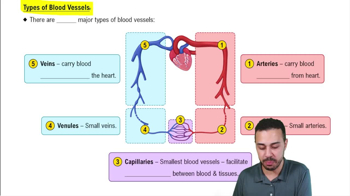
Exchange vessels refer to capillaries, which are the smallest blood vessels in the cardiovascular system. They facilitate the exchange of oxygen, carbon dioxide, nutrients, and waste products between blood and surrounding tissues through their thin walls.
추천 영상:
가이드 코스
5:34
Types of Blood Vessels

Cardiovascular System

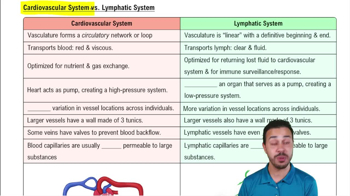
The cardiovascular system consists of the heart, blood vessels, and blood, functioning to transport nutrients, gases, hormones, and waste products throughout the body. It plays a crucial role in maintaining homeostasis and supporting cellular functions.
추천 영상:
가이드 코스
6:06
Cardiovascular System vs. Lymphatic System