
교과서 질문
Leukocytes are:
a. Nucleated cells that function in blood clotting
b. Nucleated cells that function in immunity
c. Anucleate cells that function in blood clotting
d. Anucleate cells that function in immunity
1138
views

 검증된 단계별 안내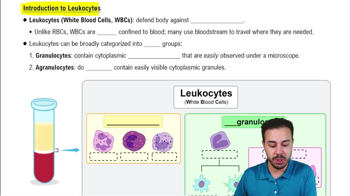
 4:50
4:50
 2:19
2:19 5:47
5:47Leukocytes are:
a. Nucleated cells that function in blood clotting
b. Nucleated cells that function in immunity
c. Anucleate cells that function in blood clotting
d. Anucleate cells that function in immunity
Number the steps of hemostasis in order, putting 1 by the first event, 2 by the second, and so on.
____The intrinsic/contact activation and extrinsic/tissue factor pathways produce factor Xa.
____The clot retracts.
____Thrombin converts fibrinogen to fibrin, and fibrin glues the plug together.
____Platelets are activated, and the platelet plug forms.
____Vasoconstriction and increased tissue pressure decrease blood flow through the vessel.
____Tissue plasminogen activator activates plasmin, which degrades fibrin.
____The common pathway produces thrombin.
Lymphocytes are derived from the _____ cell line, whereas the other leukocytes are derived from the _____ cell line.
Erythrocytes are derived from stem cells called____, circulate in the blood for approximately _______ days, and are destroyed by an organ called the _______.
Platelets are derived from cells called:
a. Thromboblasts
b. Leukoblasts
c. Megakaryocytes
d. Thrombokaryocytes
Anemia is defined as:
a. A decreased oxygen-carrying capacity of the blood.
b. A decreased iron content of the blood.
c. Decreased bone marrow function.
d. Abnormalities in hemoglobin.