Ch. 20 The Lymphatic System and Immunity
Amerman- Human Anatomy & Physiology 3e
Amerman3rd EditionHuman Anatomy & PhysiologyISBN: 9780138247201, 9780138247928, 9780138201814당신이 사용하는 게 아니라요?교과서 변경
20장, 문제 L2.2

Complement proteins are crucial for stimulating phagocytes to clear immune complexes. Predict what type of hypersensitivity disorder might result from complement deficiencies. Explain what other consequences might arise from a complement deficiency.

검증된 단계별 안내
1
Understand the role of complement proteins in the immune system: Complement proteins are part of the innate immune system and help in opsonization (marking pathogens for destruction), recruiting immune cells, and forming membrane attack complexes to destroy pathogens. They also stimulate phagocytes to clear immune complexes, which are clusters of antigens bound to antibodies.
Identify the connection between complement deficiencies and hypersensitivity disorders: Complement deficiencies can impair the clearance of immune complexes, leading to their accumulation in tissues. This accumulation can trigger inflammation and tissue damage, which is characteristic of Type III hypersensitivity disorders (immune complex-mediated hypersensitivity).
Explain the mechanism of Type III hypersensitivity: In Type III hypersensitivity, immune complexes deposit in tissues such as blood vessels, joints, and kidneys. These deposits activate the complement system, leading to inflammation and recruitment of neutrophils, which can cause tissue damage. A deficiency in complement proteins disrupts this process, exacerbating immune complex accumulation and inflammation.
Discuss other consequences of complement deficiencies: Complement deficiencies can lead to increased susceptibility to infections, particularly bacterial infections, because complement proteins are essential for opsonization and the formation of membrane attack complexes. Additionally, complement deficiencies may impair the regulation of immune responses, potentially contributing to autoimmune diseases.
Summarize the importance of complement proteins: Complement proteins are vital for maintaining immune system balance by clearing immune complexes, preventing excessive inflammation, and protecting against infections. A deficiency in these proteins can result in hypersensitivity disorders, increased infection risk, and potential autoimmune complications.

비슷한 문제에 대한 검증된 영상 답변:

이 영상 해법은 위 문제에 도움이 된다고 튜터들이 추천한 것입니다.
도움이 되었나요?

주요 개념

질문에 올바르게 답하기 위해 반드시 이해해야 하는 핵심 개념들은 다음과 같습니다.

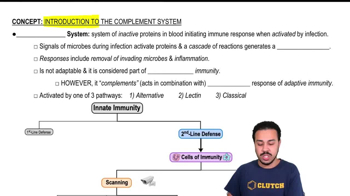
Complement System

The complement system is a part of the immune system that enhances the ability of antibodies and phagocytic cells to clear pathogens and promote inflammation. It consists of a series of proteins that, when activated, can opsonize pathogens, recruit immune cells, and form membrane attack complexes to lyse cells. Deficiencies in this system can lead to increased susceptibility to infections and impaired clearance of immune complexes.
추천 영상:
4:25
Complement System

Hypersensitivity Disorders

Hypersensitivity disorders are exaggerated immune responses that can cause tissue damage and disease. They are classified into four types: Type I (immediate), Type II (cytotoxic), Type III (immune complex-mediated), and Type IV (delayed-type). A deficiency in complement proteins can lead to Type III hypersensitivity, where immune complexes accumulate and cause inflammation and tissue damage due to inadequate clearance.
추천 영상:
05:21
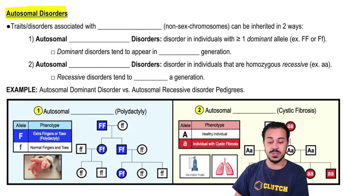
Autosomal Disorders

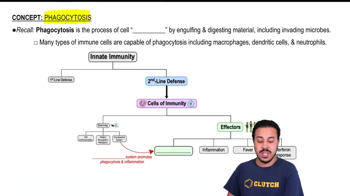
Phagocytosis

Phagocytosis is the process by which certain immune cells, such as macrophages and neutrophils, engulf and digest pathogens and debris. This process is crucial for maintaining tissue homeostasis and initiating immune responses. Complement proteins enhance phagocytosis by opsonizing pathogens, making them more recognizable to phagocytes. A deficiency in complement can impair this process, leading to chronic infections and autoimmune conditions.
추천 영상:
2:19
Phagocytosis