Ch. 20 The Lymphatic System and Immunity
Amerman- Human Anatomy & Physiology 3e
Amerman3rd EditionHuman Anatomy & PhysiologyISBN: 9780138247201, 9780138247928, 9780138201814당신이 사용하는 게 아니라요?교과서 변경
20장, 문제 L2.3

Terrence has severe asthma and allergies, and is placed on a medication that blocks the functioning of IgE. How would this medication alleviate his symptoms?

검증된 단계별 안내
1
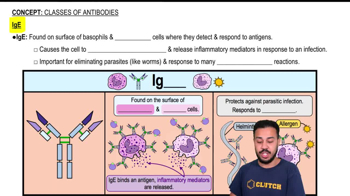
Understand the role of IgE in the immune system: Immunoglobulin E (IgE) is an antibody that plays a key role in allergic reactions and asthma. It binds to allergens and triggers the release of histamine and other inflammatory chemicals from mast cells and basophils, leading to symptoms such as airway constriction, inflammation, and mucus production.
Recognize the mechanism of the medication: The medication blocks the functioning of IgE, preventing it from binding to allergens and activating mast cells and basophils. This reduces the release of histamine and other inflammatory mediators.
Explain how blocking IgE alleviates asthma symptoms: By inhibiting IgE activity, the medication reduces airway inflammation, bronchoconstriction, and mucus overproduction, which are common symptoms of asthma.
Describe how blocking IgE alleviates allergy symptoms: Allergic reactions, such as sneezing, itching, and swelling, are caused by the release of histamine and other chemicals. Blocking IgE prevents this release, thereby reducing allergic symptoms.
Summarize the overall effect: The medication helps manage Terrence's asthma and allergies by targeting the root cause—IgE-mediated immune responses—leading to improved breathing and reduced allergic reactions.

비슷한 문제에 대한 검증된 영상 답변:

이 영상 해법은 위 문제에 도움이 된다고 튜터들이 추천한 것입니다.
도움이 되었나요?

주요 개념

질문에 올바르게 답하기 위해 반드시 이해해야 하는 핵심 개념들은 다음과 같습니다.

IgE (Immunoglobulin E)

IgE is a type of antibody produced by the immune system in response to allergens. It plays a crucial role in allergic reactions by binding to allergens and triggering the release of histamines and other chemicals from mast cells, leading to symptoms such as inflammation, bronchoconstriction, and mucus production, which are particularly problematic for individuals with asthma.
추천 영상:

Asthma Pathophysiology

Asthma is a chronic respiratory condition characterized by inflammation and narrowing of the airways, often triggered by allergens, irritants, or exercise. The inflammation leads to increased mucus production and bronchoconstriction, resulting in symptoms like wheezing, coughing, and difficulty breathing. Understanding this pathophysiology is essential for comprehending how medications can alleviate symptoms.
추천 영상:
3:49
Glomerular Filtration Pressure

Mechanism of Action of IgE Blockers

Medications that block IgE function, such as monoclonal antibodies, work by preventing IgE from binding to allergens and activating mast cells. This inhibition reduces the release of inflammatory mediators, thereby decreasing the severity of allergic reactions and asthma symptoms. By targeting IgE, these medications can provide significant relief for patients with severe asthma and allergies.
추천 영상: