Ch. 21 The Respiratory System
Amerman- Human Anatomy & Physiology 3e
Amerman3rd EditionHuman Anatomy & PhysiologyISBN: 9780138247201, 9780138247928, 9780138201814당신이 사용하는 게 아니라요?교과서 변경
21장, 문제 11

Which of the following does not affect the efficiency of pulmonary gas exchange?
a. The surface area of the respiratory membrane
b. The degree of match of ventilation to perfusion
c. The percent saturation of hemoglobin
d. The thickness of the respiratory membrane

검증된 단계별 안내
1
Step 1: Understand the concept of pulmonary gas exchange. Pulmonary gas exchange refers to the process by which oxygen is transferred from the alveoli in the lungs to the blood, and carbon dioxide is transferred from the blood to the alveoli. This process is influenced by several factors, including the surface area of the respiratory membrane, the thickness of the respiratory membrane, and the matching of ventilation (airflow) to perfusion (blood flow).
Step 2: Analyze the role of the surface area of the respiratory membrane. A larger surface area allows for more efficient gas exchange because it provides more space for oxygen and carbon dioxide to diffuse across the membrane. A reduction in surface area, such as in conditions like emphysema, can impair gas exchange.
Step 3: Examine the importance of the thickness of the respiratory membrane. The respiratory membrane must be thin to allow for efficient diffusion of gases. If the membrane becomes thicker, as in pulmonary edema, the diffusion of gases is slowed, reducing the efficiency of gas exchange.
Step 4: Consider the degree of match between ventilation and perfusion. Ventilation-perfusion matching ensures that areas of the lung receiving airflow also receive adequate blood flow for gas exchange. Mismatches, such as in conditions like pulmonary embolism, can reduce the efficiency of gas exchange.
Step 5: Evaluate the percent saturation of hemoglobin. While hemoglobin saturation is critical for oxygen transport in the blood, it does not directly affect the efficiency of gas exchange at the respiratory membrane. Instead, it reflects how much oxygen is bound to hemoglobin after gas exchange has occurred.

비슷한 문제에 대한 검증된 영상 답변:

이 영상 해법은 위 문제에 도움이 된다고 튜터들이 추천한 것입니다.
도움이 되었나요?

주요 개념

질문에 올바르게 답하기 위해 반드시 이해해야 하는 핵심 개념들은 다음과 같습니다.

Pulmonary Gas Exchange

Pulmonary gas exchange refers to the process by which oxygen is transferred from the alveoli in the lungs to the blood, and carbon dioxide is removed from the blood to be exhaled. This process is crucial for maintaining adequate oxygen levels in the body and removing metabolic waste. Factors influencing this exchange include surface area, ventilation-perfusion matching, and membrane thickness.
추천 영상:
03:59
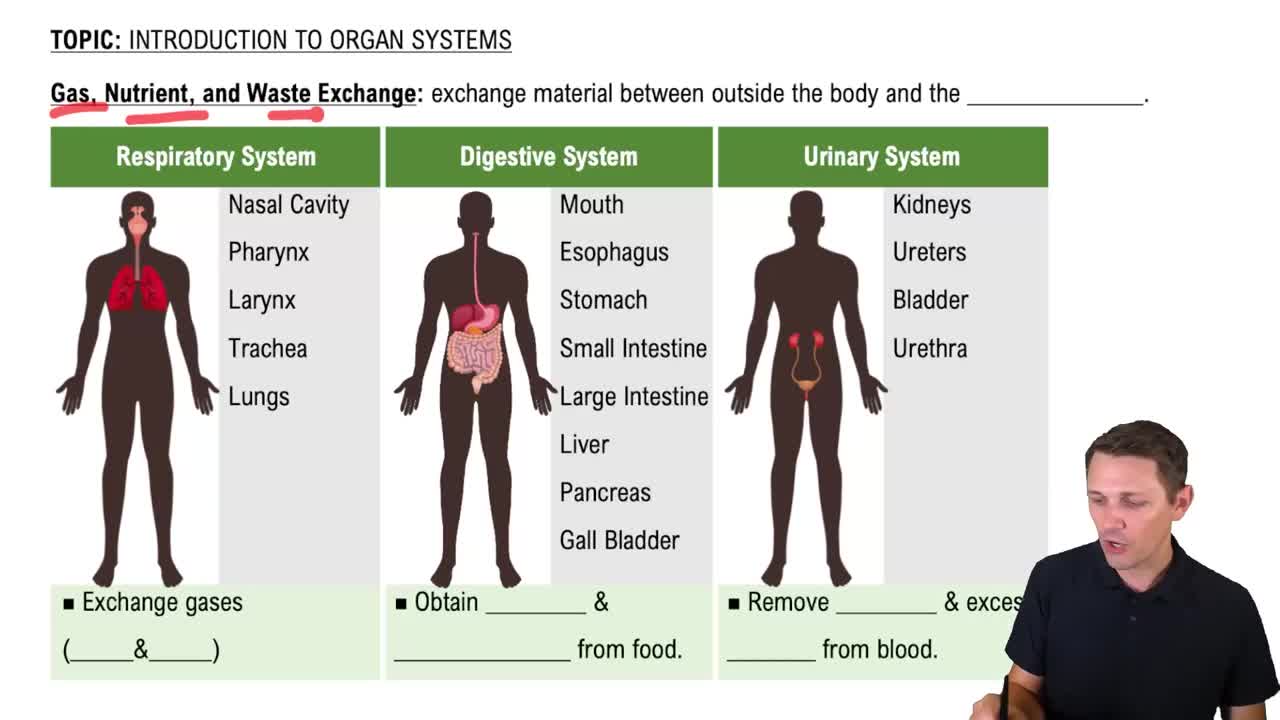
Gas, Nutrient and Waste Exchange

Ventilation-Perfusion Matching

Ventilation-perfusion matching is the relationship between the air reaching the alveoli (ventilation) and the blood flow in the surrounding capillaries (perfusion). An optimal match is essential for efficient gas exchange; if ventilation exceeds perfusion or vice versa, it can lead to reduced oxygen uptake and carbon dioxide removal, impacting overall respiratory efficiency.

Respiratory Membrane Characteristics

The respiratory membrane is the barrier through which gas exchange occurs, consisting of the alveolar epithelium, the capillary endothelium, and their fused basement membranes. Key characteristics include its surface area and thickness; a larger surface area and thinner membrane enhance gas exchange efficiency, while increased thickness can impede the process, leading to respiratory issues.
추천 영상:
00:48
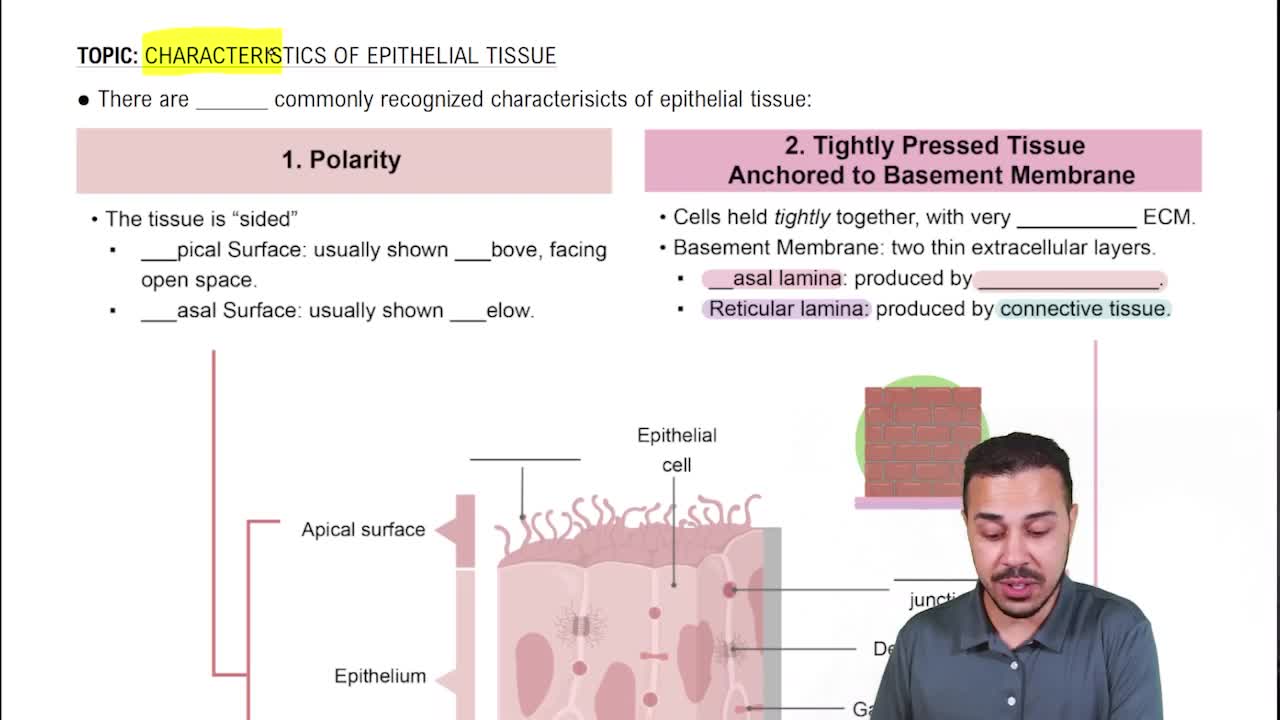
5 Characteristics of Epithelia