Ch. 24 The Urinary System
Amerman- Human Anatomy & Physiology 3e
Amerman3rd EditionHuman Anatomy & PhysiologyISBN: 9780138247201, 9780138247928, 9780138201814당신이 사용하는 게 아니라요?교과서 변경
24장, 문제 L2.4

Why must the kidneys establish a concentration gradient in the interstitial fluid of the renal medulla in order to produce concentrated urine?

검증된 단계별 안내
1
Understand the role of the kidneys in maintaining homeostasis: The kidneys regulate water and electrolyte balance in the body by filtering blood and producing urine. Producing concentrated urine is essential to conserve water, especially in conditions of dehydration.
Recognize the importance of the renal medulla: The renal medulla is the innermost part of the kidney, and its interstitial fluid must have a high concentration of solutes (such as sodium and urea) to create a concentration gradient. This gradient is critical for water reabsorption.
Explain the countercurrent multiplier system: The nephron's loop of Henle, particularly the descending and ascending limbs, plays a key role in establishing the concentration gradient. The descending limb is permeable to water but not solutes, while the ascending limb actively transports solutes (like Na⁺ and Cl⁻) out but is impermeable to water. This creates a progressively higher solute concentration in the medulla.
Describe how the gradient facilitates water reabsorption: When filtrate reaches the collecting ducts, the high solute concentration in the medulla's interstitial fluid draws water out of the ducts via osmosis, provided antidiuretic hormone (ADH) is present to make the ducts permeable to water. This process concentrates the urine.
Summarize the necessity of the gradient: Without the concentration gradient in the renal medulla, the kidneys would not be able to reabsorb water efficiently, leading to the production of dilute urine and potential dehydration. The gradient ensures the body can conserve water when needed.

비슷한 문제에 대한 검증된 영상 답변:

이 영상 해법은 위 문제에 도움이 된다고 튜터들이 추천한 것입니다.
도움이 되었나요?

주요 개념

질문에 올바르게 답하기 위해 반드시 이해해야 하는 핵심 개념들은 다음과 같습니다.

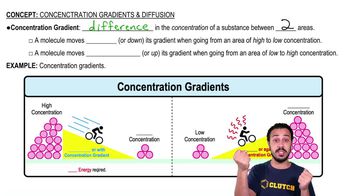
Concentration Gradient

A concentration gradient refers to the difference in the concentration of solutes in a solution between two areas. In the kidneys, a concentration gradient is established in the renal medulla, allowing for the movement of water and solutes. This gradient is crucial for the reabsorption of water, enabling the kidneys to concentrate urine and maintain fluid balance in the body.
추천 영상:
04:51
Concentration Gradients and Diffusion

Countercurrent Multiplication

Countercurrent multiplication is a mechanism in the nephron that enhances the concentration gradient in the renal medulla. It involves the interaction between the descending and ascending limbs of the loop of Henle, where the descending limb is permeable to water but not to solutes, while the ascending limb is permeable to solutes but not to water. This process helps to create a high osmolarity in the medulla, facilitating the reabsorption of water from the collecting ducts.
추천 영상:
가이드 코스
02:41
Structural Naming of Epithelial Tissue Example 1

Antidiuretic Hormone (ADH)

Antidiuretic hormone (ADH), also known as vasopressin, plays a critical role in regulating water balance in the body. When the body is dehydrated, ADH is released, prompting the kidneys to reabsorb more water from the urine back into the bloodstream. This action relies on the established concentration gradient in the renal medulla, allowing for the production of concentrated urine and the conservation of water.
추천 영상:
가이드 코스
13:06
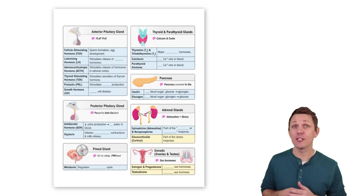
Review of Major Hormones