Ch. 4 Histology
Amerman- Human Anatomy & Physiology 3e
Amerman3rd EditionHuman Anatomy & PhysiologyISBN: 9780138247201, 9780138247928, 9780138201814당신이 사용하는 게 아니라요?교과서 변경
4장, 문제 7b

Compare and contrast the following pairs of terms:
Unicellular gland and multicellular gland

검증된 단계별 안내
1
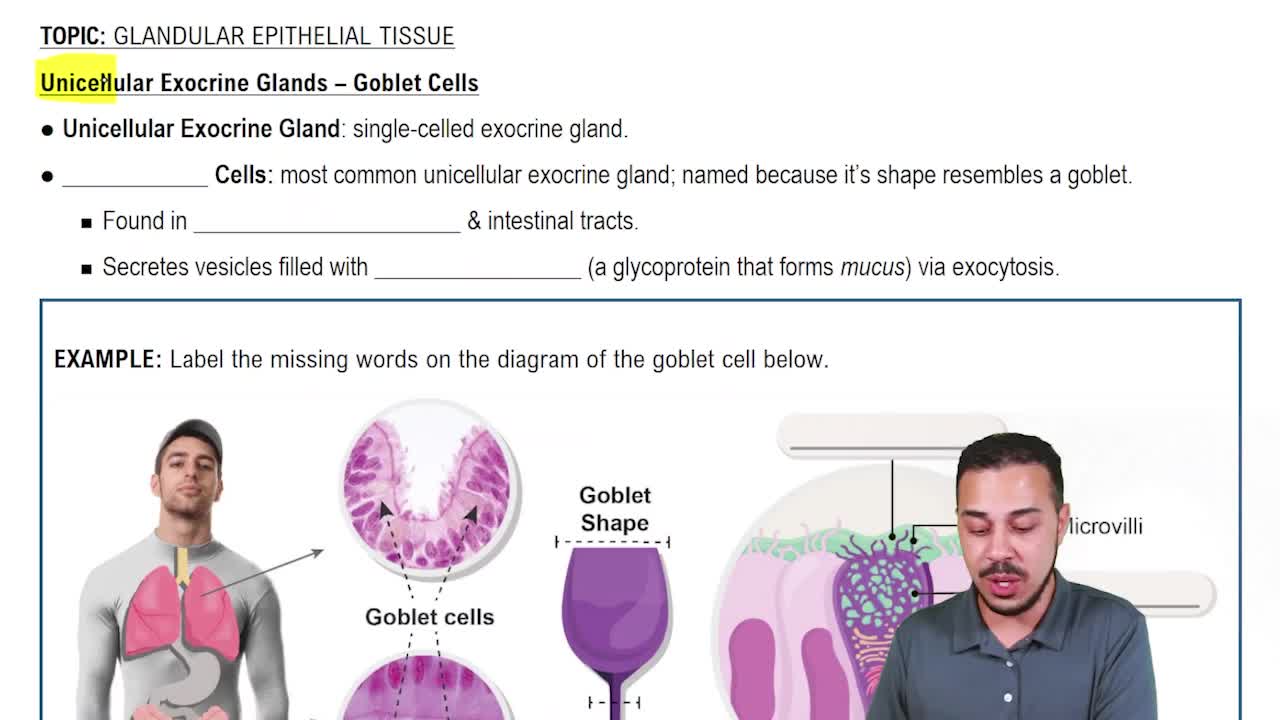
Define a unicellular gland: A unicellular gland is a single-celled gland that secretes substances directly onto a surface or into a lumen. An example is a goblet cell, which secretes mucus in the respiratory and digestive tracts.
Define a multicellular gland: A multicellular gland is composed of multiple cells that work together to produce and secrete substances. These glands can be further classified into simple (unbranched ducts) and compound (branched ducts) glands, such as sweat glands or salivary glands.
Compare the structure: Unicellular glands consist of a single cell, while multicellular glands are made up of multiple cells organized into a structure, such as tubular or alveolar shapes.
Compare the secretion process: Unicellular glands release their secretions directly onto the surface or into a lumen, whereas multicellular glands often use ducts to transport their secretions to the target site.
Contrast their locations and examples: Unicellular glands, like goblet cells, are typically found in epithelial linings, while multicellular glands, such as sebaceous glands or the pancreas, are more complex and found in various tissues and organs.

비슷한 문제에 대한 검증된 영상 답변:

이 영상 해법은 위 문제에 도움이 된다고 튜터들이 추천한 것입니다.
도움이 되었나요?

주요 개념

질문에 올바르게 답하기 위해 반드시 이해해야 하는 핵심 개념들은 다음과 같습니다.

Unicellular Glands

Unicellular glands consist of a single cell that performs the function of secretion. An example is the goblet cell, which secretes mucus in the respiratory and digestive tracts. These glands are typically found embedded within epithelial tissues and are responsible for localized secretion, playing a crucial role in protecting and lubricating surfaces.
추천 영상:
04:39
Unicellular Exocrine Glands - Goblet Cells

Multicellular Glands

Multicellular glands are composed of multiple cells that work together to produce and secrete substances. They can be further classified into exocrine glands, which secrete their products into ducts, and endocrine glands, which release hormones directly into the bloodstream. Examples include salivary glands and the thyroid gland, respectively, highlighting their diverse functions in the body.
추천 영상:
7:10
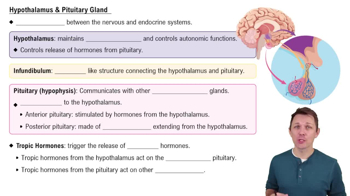
Hypothalamus & Pituitary Gland

Comparison of Gland Types

The primary difference between unicellular and multicellular glands lies in their structure and complexity. Unicellular glands are simpler and consist of a single cell, while multicellular glands are more complex, involving groups of cells organized into tissues. This structural difference influences their secretion mechanisms, functional roles, and the types of substances they produce, impacting overall physiological processes.
추천 영상:
7:10
Hypothalamus & Pituitary Gland