Ch. 4 Histology
Amerman- Human Anatomy & Physiology 3e
Amerman3rd EditionHuman Anatomy & PhysiologyISBN: 9780138247201, 9780138247928, 9780138201814당신이 사용하는 게 아니라요?교과서 변경
4장, 문제 L2.3

Predict what would happen if the mucous membranes of the body stopped secreting mucus or if they secreted excess mucus.

검증된 단계별 안내
1
Understand the role of mucous membranes: Mucous membranes line various body cavities and organs, such as the respiratory, digestive, and urogenital tracts. They secrete mucus, which serves to protect and lubricate these surfaces, trap pathogens, and prevent tissue dehydration.
Analyze the consequences of no mucus secretion: If mucous membranes stopped secreting mucus, the affected areas would lose their protective barrier. This could lead to increased vulnerability to infections, tissue damage due to dryness, and impaired function of systems like the respiratory tract (difficulty trapping dust and pathogens) and digestive tract (reduced lubrication for food passage).
Examine the effects of excess mucus secretion: Overproduction of mucus could result in blockages or obstructions in the respiratory or digestive tracts. For example, in the respiratory system, excess mucus could impair airflow, leading to difficulty breathing or conditions like chronic bronchitis. In the digestive system, it could interfere with nutrient absorption.
Consider the physiological mechanisms involved: Mucus secretion is regulated by various factors, including neural signals, immune responses, and environmental stimuli. Disruption in these regulatory mechanisms could lead to either insufficient or excessive mucus production.
Relate to clinical conditions: Insufficient mucus secretion is seen in conditions like Sjögren's syndrome, where dryness affects mucous membranes. Excess mucus production is common in diseases like cystic fibrosis or chronic obstructive pulmonary disease (COPD). Understanding these conditions can help predict the broader implications of altered mucus secretion.

비슷한 문제에 대한 검증된 영상 답변:

이 영상 해법은 위 문제에 도움이 된다고 튜터들이 추천한 것입니다.
도움이 되었나요?

주요 개념

질문에 올바르게 답하기 위해 반드시 이해해야 하는 핵심 개념들은 다음과 같습니다.

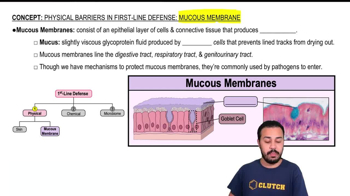
Mucous Membranes

Mucous membranes are specialized tissues that line various cavities and organs in the body, producing mucus. This mucus serves several functions, including lubrication, protection against pathogens, and trapping particles. Understanding the role of mucous membranes is crucial for predicting the effects of changes in mucus secretion.
추천 영상:
가이드 코스
2:36
Mucous Membranes

Mucus Function

Mucus plays a vital role in maintaining homeostasis by providing a barrier against infections, facilitating the movement of materials, and keeping tissues moist. If mucus secretion is disrupted, either by cessation or excess, it can lead to various health issues, such as increased susceptibility to infections or impaired organ function.
추천 영상:
가이드 코스
06:04
Functional Groups

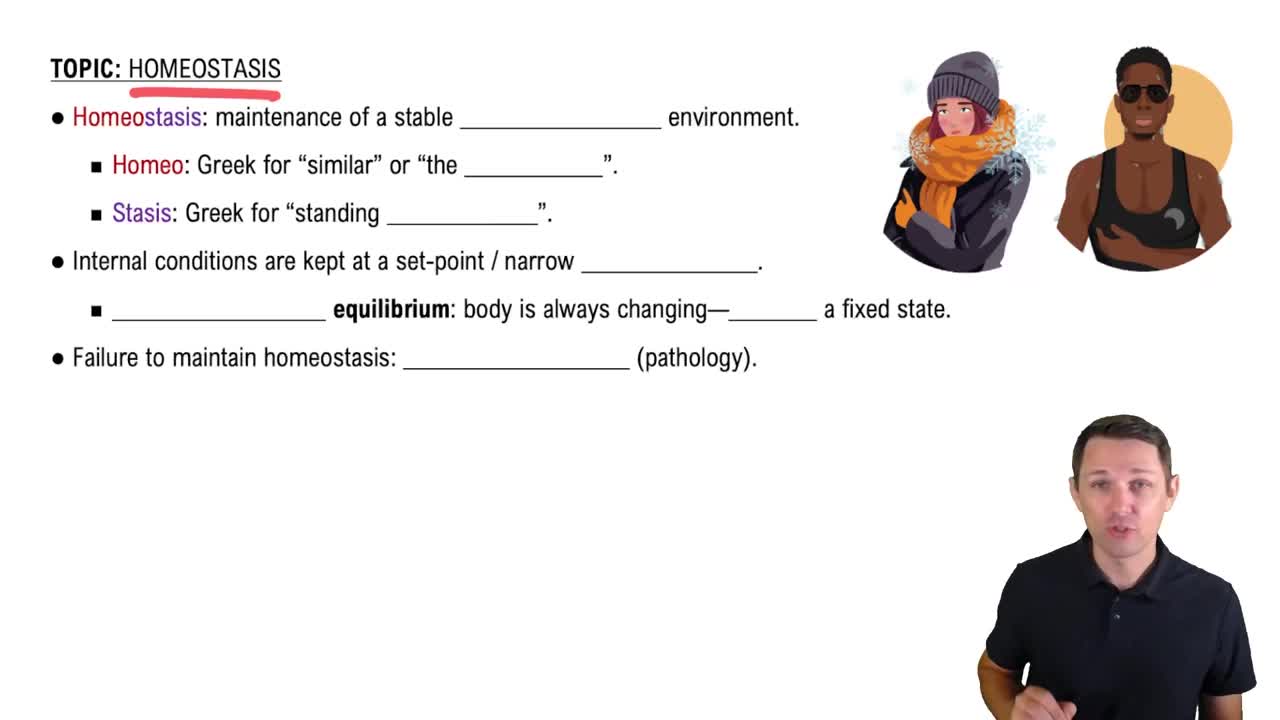
Homeostasis

Homeostasis refers to the body's ability to maintain stable internal conditions despite external changes. The secretion of mucus is part of this regulatory process, helping to protect and support various bodily functions. Disruptions in mucus production can lead to imbalances, affecting overall health and physiological processes.
추천 영상:
01:59
Introduction to Homeostasis