Ch. 6 Bones and Bone Tissue
Amerman- Human Anatomy & Physiology 3e
Amerman3rd EditionHuman Anatomy & PhysiologyISBN: 9780138247201, 9780138247928, 9780138201814당신이 사용하는 게 아니라요?교과서 변경
6장, 문제 L2.1

Explain why a person who is wheelchair-bound or bed-bound often has very low bone mass, especially in his or her legs.

검증된 단계별 안내
1
Understand the concept of Wolff's Law: Bone tissue adapts to the mechanical stresses placed upon it. When bones experience regular stress, such as weight-bearing activities, they remodel and strengthen. Conversely, a lack of stress leads to bone resorption and weakening.
Recognize that wheelchair-bound or bed-bound individuals experience significantly reduced mechanical stress on their lower limbs. Without regular weight-bearing activities like walking or standing, the bones in the legs are not stimulated to maintain their density.
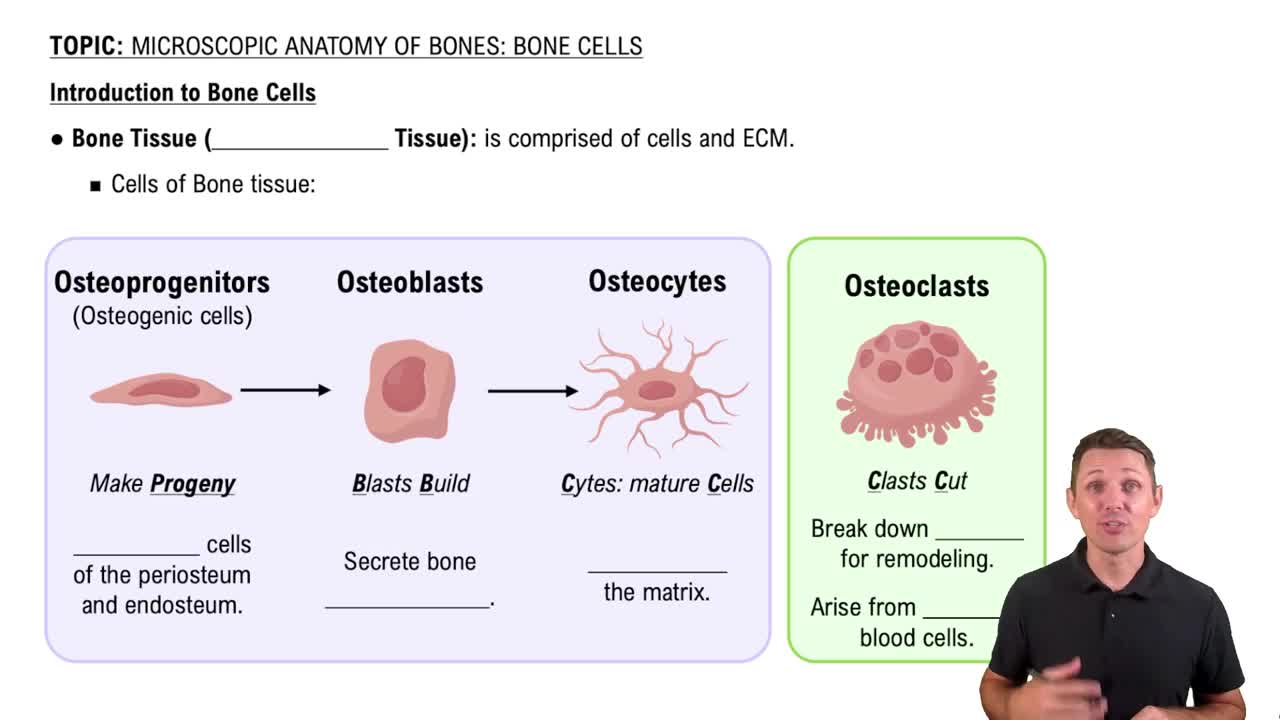
Consider the role of osteoblasts and osteoclasts: Osteoblasts are responsible for building bone, while osteoclasts break down bone. In the absence of mechanical stress, osteoclast activity may outpace osteoblast activity, leading to a net loss of bone mass.
Acknowledge the impact of muscle activity: Muscle contractions during movement also exert forces on bones, stimulating bone remodeling. Reduced muscle activity in the legs of immobile individuals further contributes to bone loss.
Factor in potential secondary effects: Prolonged immobility can lead to other physiological changes, such as reduced blood flow and nutrient delivery to the bones, which may exacerbate bone loss over time.

비슷한 문제에 대한 검증된 영상 답변:

이 영상 해법은 위 문제에 도움이 된다고 튜터들이 추천한 것입니다.
도움이 되었나요?

주요 개념

질문에 올바르게 답하기 위해 반드시 이해해야 하는 핵심 개념들은 다음과 같습니다.

Bone Remodeling

Bone remodeling is a continuous process where old bone tissue is replaced by new bone tissue. This process is influenced by mechanical stress; when bones are subjected to weight-bearing activities, they adapt by becoming denser. In individuals who are wheelchair-bound or bed-bound, the lack of mechanical loading leads to decreased stimulation for bone formation, resulting in lower bone mass.
추천 영상:
가이드 코스
4:19
Introduction to Bone Cells

Osteoporosis

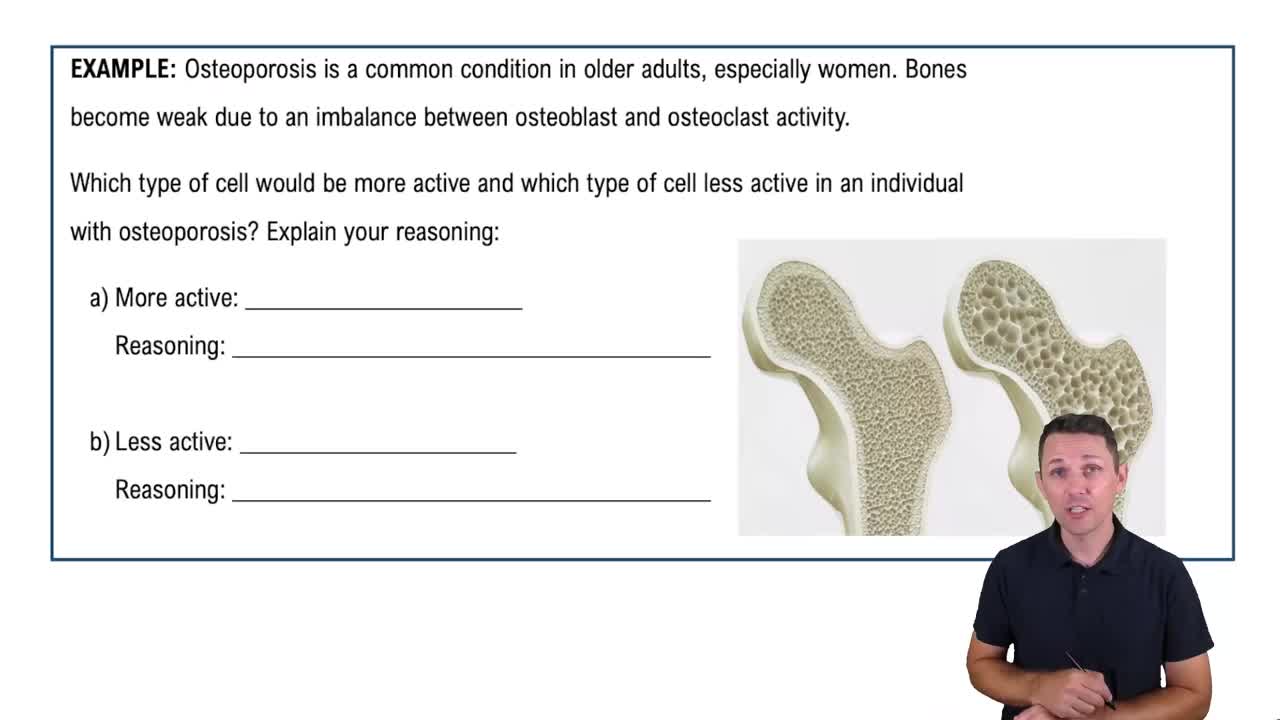
Osteoporosis is a condition characterized by weakened bones and a decrease in bone density, making them more susceptible to fractures. In individuals with limited mobility, such as those who are wheelchair-bound or bed-bound, the risk of developing osteoporosis increases due to insufficient physical activity and the resultant lack of bone-strengthening forces, particularly in the legs.
추천 영상:
가이드 코스
1:57
Microscopic Anatomy of Bones - Bone Cells Example 2

Muscle-Bone Interaction

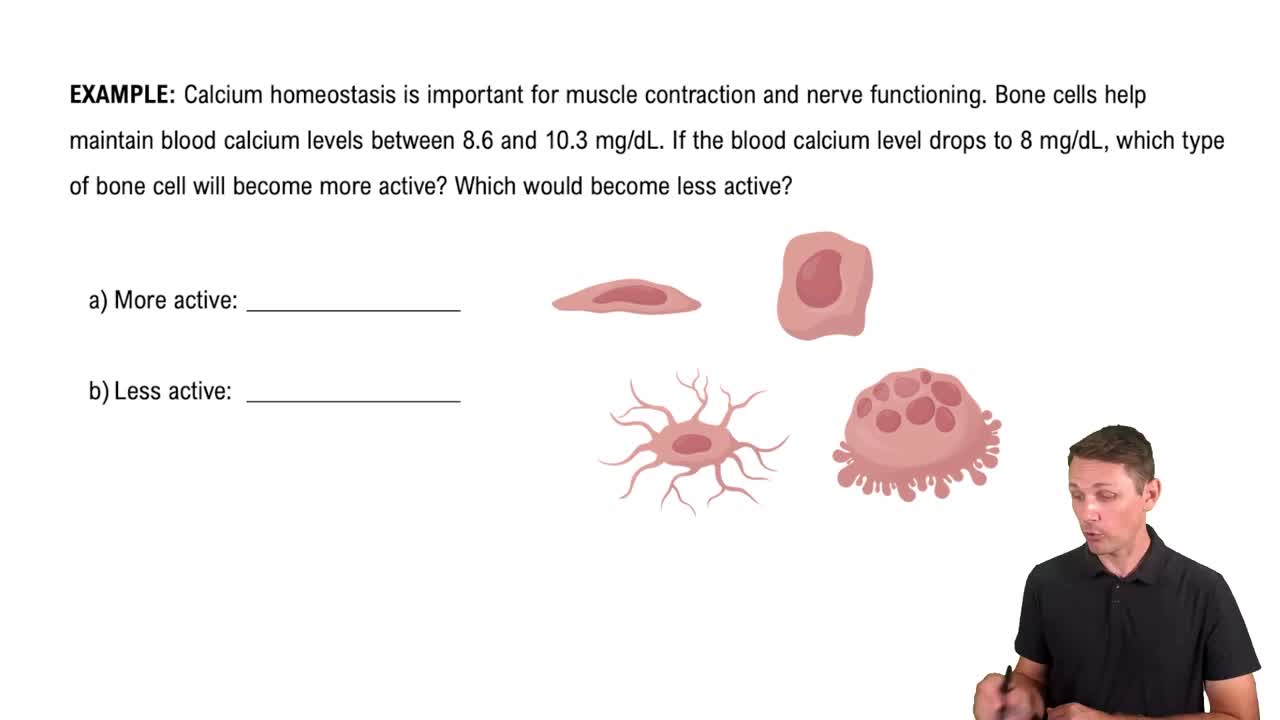
The interaction between muscles and bones is crucial for maintaining bone health. Muscles exert forces on bones during movement, which stimulates bone growth and maintenance. In individuals with limited mobility, the reduced muscle activity leads to decreased mechanical loading on the bones, contributing to lower bone mass, especially in the legs, where muscle strength is vital for bone density.
추천 영상:
가이드 코스
2:21
Microscopic Anatomy of Bones - Bone Cells Example 1