Ch. 9 The Muscular System
Amerman- Human Anatomy & Physiology 3e
Amerman3rd EditionHuman Anatomy & PhysiologyISBN: 9780138247201, 9780138247928, 9780138201814당신이 사용하는 게 아니라요?교과서 변경
9장, 문제 11

Match the muscle with its main action:
_____Sternocleidomastoid muscle     
_____Transversus abdominis muscle     
_____Internal oblique muscle     
_____Rectus abdominis muscle     
_____Splenius capitis muscle     
_____Quadratus lumborum muscle.
a. Laterally flexes the trunk
b. Flexes the trunk
c. Compresses the abdominal cavity
d. Extends the vertebral column
e. Flexes the head
f. Extends the head

검증된 단계별 안내
1
Step 1: Understand the main actions of each muscle listed in the problem. For example, the Sternocleidomastoid muscle is responsible for flexing the head and rotating it to the opposite side.
Step 2: Review the anatomical location and function of the Transversus abdominis muscle. This muscle compresses the abdominal cavity, aiding in core stability and respiration.
Step 3: Examine the Internal oblique muscle, which is involved in trunk rotation and lateral flexion. It also assists in compressing the abdominal cavity.
Step 4: Identify the Rectus abdominis muscle, which is primarily responsible for flexing the trunk, such as during sit-ups or bending forward.
Step 5: Match the Splenius capitis muscle and Quadratus lumborum muscle with their actions. The Splenius capitis extends the head, while the Quadratus lumborum laterally flexes the trunk and stabilizes the lumbar spine.

비슷한 문제에 대한 검증된 영상 답변:

이 영상 해법은 위 문제에 도움이 된다고 튜터들이 추천한 것입니다.

주요 개념

질문에 올바르게 답하기 위해 반드시 이해해야 하는 핵심 개념들은 다음과 같습니다.

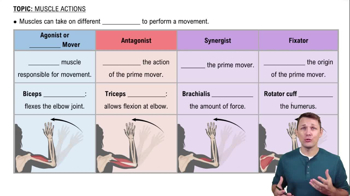
Muscle Actions

Muscle actions refer to the specific movements that muscles produce when they contract. Understanding the primary actions of different muscles is crucial for identifying their roles in body mechanics. For instance, muscles can flex, extend, rotate, or stabilize various parts of the body, and knowing these actions helps in matching muscles to their functions.
추천 영상:
5:41
Muscle Actions

Anatomy of the Core Muscles

The core muscles include various muscle groups that stabilize the trunk and pelvis, playing a vital role in movement and posture. Key muscles such as the rectus abdominis, internal oblique, and transversus abdominis are essential for trunk flexion and stabilization. Familiarity with these muscles and their anatomical locations aids in understanding their specific actions.
추천 영상:
2:00
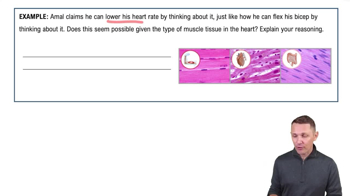
Introduction to Muscles and Muscle Tissue Example 1

Cervical and Lumbar Muscles

Cervical and lumbar muscles, such as the sternocleidomastoid and quadratus lumborum, are responsible for movements of the head and lower back, respectively. The sternocleidomastoid primarily flexes and rotates the head, while the quadratus lumborum laterally flexes the trunk. Recognizing the functions of these muscles is important for accurately matching them to their actions.
추천 영상:
2:00
Introduction to Muscles and Muscle Tissue Example 1