During a neurobiology lecture, a professor repeatedly refers to group A and group B fibers, absolute refractory period, and myelin sheath gaps. Define these terms.
Ch. 11 Fundamentals of the Nervous System and Nervous Tissue
Hoehn, Haynes, Abbott12th EditionMarieb Human Anatomy & PhysiologyISBN: 9780138242732당신이 사용하는 게 아니라요?교과서 변경
모든 교과서
Hoehn, Haynes, Abbott 12th Edition
Ch. 11 Fundamentals of the Nervous System and Nervous Tissue
문제 16
Hoehn, Haynes, Abbott 12th Edition
Ch. 11 Fundamentals of the Nervous System and Nervous Tissue
문제 1611장, 문제 16
a. Describe the composition and function of the cell body.
b. How are axons and dendrites alike? In what ways (structurally and functionally) do they differ?
검증된 단계별 안내1
For part (a), start by defining the cell body (also called the soma) of a neuron. Explain that it contains the nucleus and most of the organelles, such as mitochondria, ribosomes, and endoplasmic reticulum, which are essential for the neuron's metabolic activities and protein synthesis.
Next, describe the function of the cell body, emphasizing that it integrates incoming signals from the dendrites and generates outgoing signals to the axon. It also maintains the neuron's health and supports its overall function.
For part (b), begin by identifying the similarities between axons and dendrites: both are extensions of the neuron that conduct electrical signals and are covered by the plasma membrane with cytoplasm inside.
Then, explain the structural differences: dendrites are typically short, branched, and numerous, while axons are usually long, singular, and may have branches called axon collaterals. Also, dendrites have a rough surface due to synaptic inputs, whereas axons have a smooth surface.
Finally, discuss the functional differences: dendrites receive incoming signals from other neurons and transmit them toward the cell body, whereas axons carry outgoing signals away from the cell body to other neurons, muscles, or glands.

비슷한 문제에 대한 검증된 영상 답변:
이 영상 해법은 위 문제에 도움이 된다고 튜터들이 추천한 것입니다.
영상 길이:
2m주요 개념
질문에 올바르게 답하기 위해 반드시 이해해야 하는 핵심 개념들은 다음과 같습니다.
Cell Body (Soma) Composition and Function
The cell body, or soma, contains the nucleus and cytoplasm with organelles like mitochondria and ribosomes. It integrates incoming signals and maintains cell health by producing proteins and energy necessary for neuron function.
추천 영상:
가이드 코스
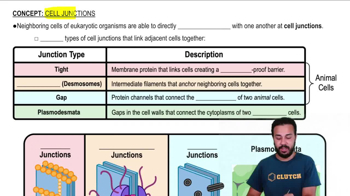
Cell Junctions
Structure and Function of Axons
Axons are long, slender projections that transmit electrical impulses away from the cell body to other neurons or muscles. They often have myelin sheaths to speed signal conduction and end in terminal branches for communication.
추천 영상:
가이드 코스
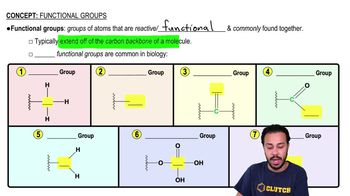
Functional Groups
Structure and Function of Dendrites
Dendrites are branched extensions from the cell body that receive incoming signals from other neurons. They have numerous receptors and increase the surface area for synaptic input, playing a key role in signal integration.
추천 영상:
가이드 코스
Functional Groups
관련 실천
교과서 질문
632
views
1
rank
교과서 질문
The velocity of nerve impulse conduction is greatest in
a. Heavily myelinated, large-diameter fibers
b. Myelinated, small-diameter fibers
c. Nonmyelinated, small-diameter fibers
d. Nonmyelinated, large-diameter fibers
964
views
교과서 질문
a. Contrast unipolar, bipolar, and multipolar neurons structurally.
b. Indicate where each is most likely to be found.
1149
views
교과서 질문
Describe the events that must occur to generate an AP. Relate the sequence of changes in permeability to changes in the ion channels, and explain why the AP is an all-or-none phenomenon.
1252
views
1
rank
교과서 질문
What is the polarized membrane state? How is it maintained? (Note the relative roles of both passive and active mechanisms.)
1478
views
1
rank