Ch. 1 The Human Body: An Orientation
Marieb - Human Anatomy & Physiology 11th Edition
Marieb, Hoehn11th EditionHuman Anatomy & PhysiologyISBN: 9780136874034당신이 사용하는 게 아니라요?교과서 변경
1장, 문제 5

In (a)–(e), a directional term [e.g., distal in (a)] is followed by terms indicating different body structures or locations (e.g., the elbow/wrist). In each case, choose the structure or organ that matches the given directional term.
a. Distal: the elbow/the wrist
b. Lateral: the hip bone/the umbilicus
c. Superior: the nose/the chin
d. Anterior: the toes/the heel
e. Superficial: the scalp/the skull

검증된 단계별 안내
1
Step 1: Understand the meaning of each directional term. For example, 'distal' means farther from the point of attachment or origin, 'lateral' means away from the midline of the body, 'superior' means above or higher, 'anterior' means toward the front, and 'superficial' means closer to the surface of the body.
Step 2: For each pair of body structures, identify their relative positions based on the directional term. For instance, in (a) 'distal: the elbow/the wrist', determine which structure is farther from the body's point of attachment (shoulder) to the arm.
Step 3: Compare the two structures in each pair using the directional term. For example, in (b) 'lateral: the hip bone/the umbilicus', decide which structure is farther from the midline of the body.
Step 4: Apply the same logic to the remaining pairs: (c) 'superior: the nose/the chin', (d) 'anterior: the toes/the heel', and (e) 'superficial: the scalp/the skull'. Determine which structure fits the directional term relative to the other.
Step 5: Summarize your findings by selecting the correct structure in each pair that matches the directional term, ensuring you have correctly interpreted the anatomical positions.

비슷한 문제에 대한 검증된 영상 답변:

이 영상 해법은 위 문제에 도움이 된다고 튜터들이 추천한 것입니다.
영상 길이:
2m
도움이 되었나요?

주요 개념

질문에 올바르게 답하기 위해 반드시 이해해야 하는 핵심 개념들은 다음과 같습니다.

Directional Terms in Anatomy

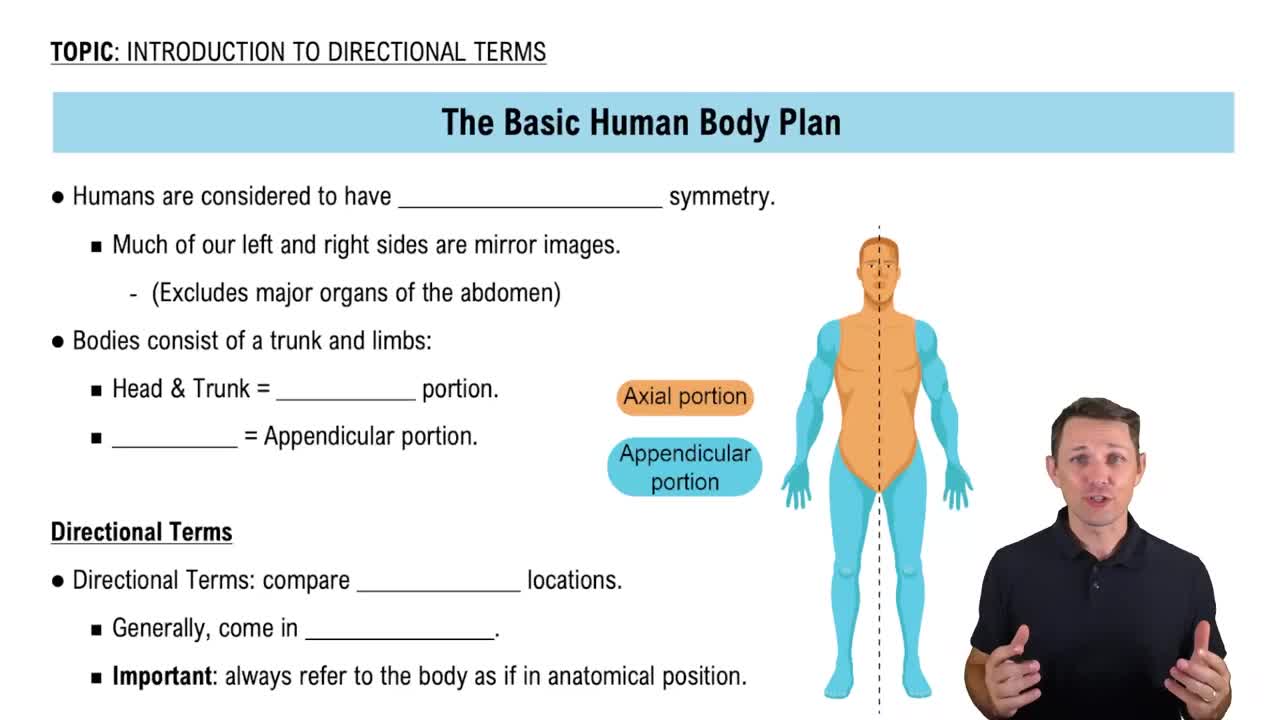
Directional terms describe the location of one body part relative to another. For example, 'distal' means farther from the point of attachment, while 'lateral' means away from the midline. Understanding these terms helps accurately identify and describe anatomical positions.
추천 영상:
가이드 코스
03:00
Introduction to Directional Terms

Anatomical Landmarks and Reference Points

Anatomical landmarks like the elbow, wrist, umbilicus, and scalp serve as fixed points to apply directional terms. Recognizing these structures allows for precise communication about body locations and relationships between different parts.
추천 영상:
가이드 코스
02:40
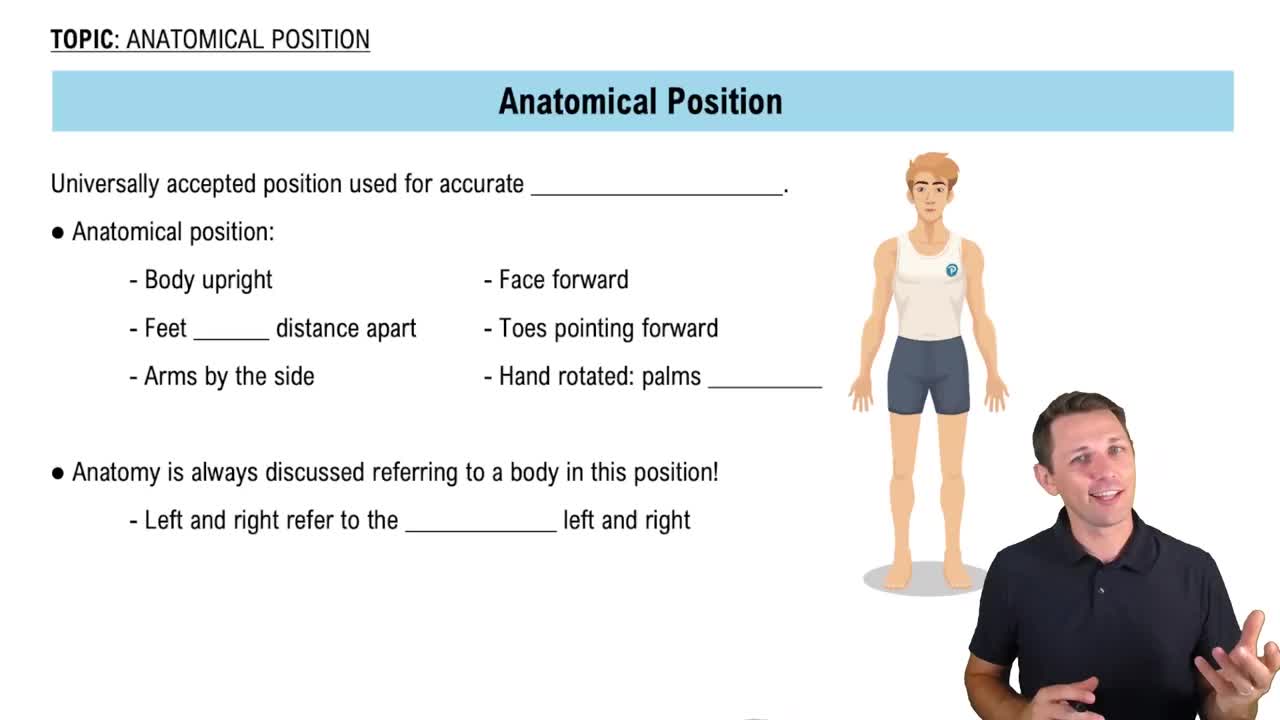
Anatomical Position

Body Planes and Orientation

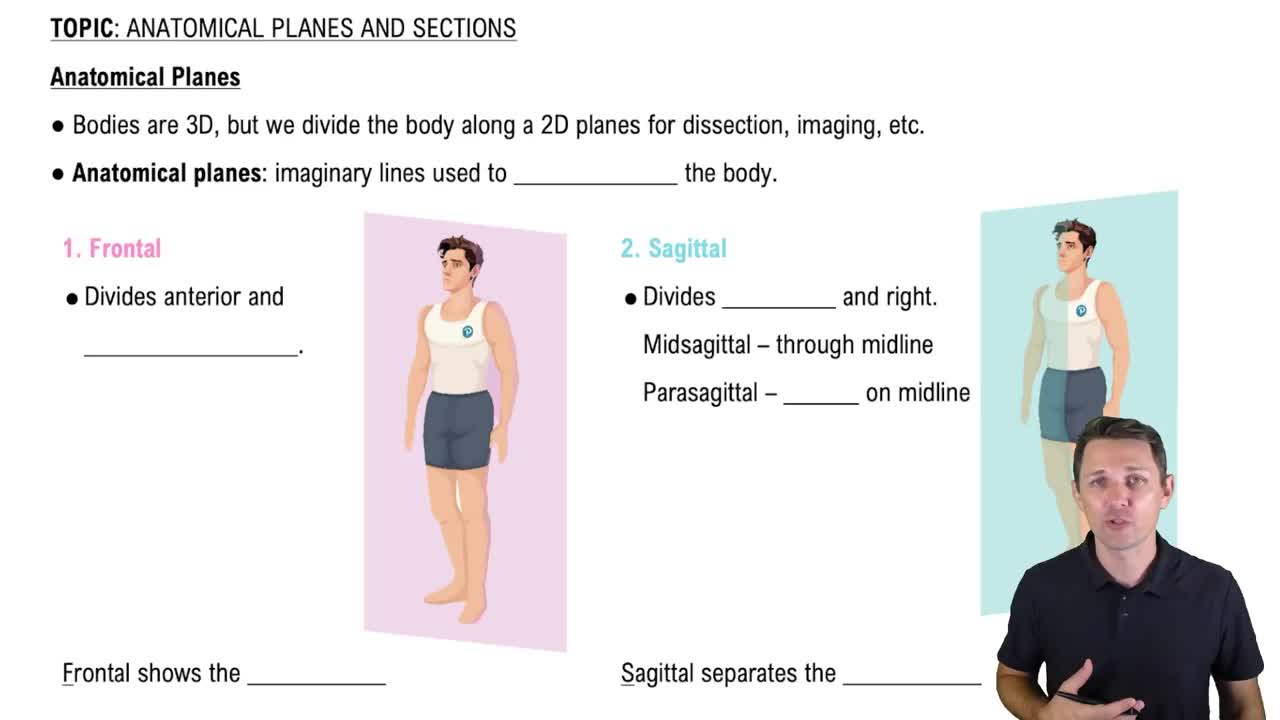
Body planes (sagittal, frontal, transverse) and orientation terms such as superior (above), anterior (front), and superficial (near surface) provide a framework for describing spatial relationships. These concepts are essential for interpreting directional terms in context.
추천 영상:
가이드 코스
04:01
Anatomical Planes