Ch. 10 The Muscular System
Marieb - Human Anatomy & Physiology 11th Edition
Marieb, Hoehn11th EditionHuman Anatomy & PhysiologyISBN: 9780136874034당신이 사용하는 게 아니라요?교과서 변경
10장, 문제 25

Mr. Ahmadi, an out-of-shape 45-year-old man, was advised by his physician to lose weight and to exercise on a regular basis. He followed his diet faithfully and began to jog daily. One day, while on his morning jog, he heard a snapping sound that was immediately followed by a severe pain in his right lower calf. When his leg was examined, a gap was seen between his swollen upper calf region and his heel, and he was unable to plantar flex that ankle. What do you think happened? Why was the upper part of his calf swollen?

검증된 단계별 안내
1
Step 1: Identify the anatomical structures involved based on the symptoms. The inability to plantar flex the ankle and the gap between the upper calf and heel suggest an injury to the Achilles tendon, which connects the calf muscles (gastrocnemius and soleus) to the heel bone (calcaneus).
Step 2: Understand the mechanism of injury. A snapping sound followed by severe pain during jogging indicates a sudden rupture or tear of the Achilles tendon, which commonly occurs in middle-aged individuals who are not regularly active.
Step 3: Explain why the upper part of the calf is swollen. When the Achilles tendon ruptures, the calf muscles lose their attachment to the heel and retract upwards, causing a visible gap and swelling due to muscle retraction and localized bleeding or inflammation.
Step 4: Correlate the functional deficit with the injury. Since the Achilles tendon is essential for plantar flexion (pointing the foot downward), its rupture results in the inability to perform this movement, which is why Mr. Ahmadi cannot plantar flex his ankle.
Step 5: Summarize the clinical diagnosis. Based on the history, physical findings, and functional loss, the most likely diagnosis is an Achilles tendon rupture with associated muscle retraction and swelling in the upper calf.

비슷한 문제에 대한 검증된 영상 답변:

이 영상 해법은 위 문제에 도움이 된다고 튜터들이 추천한 것입니다.
영상 길이:
2m

주요 개념

질문에 올바르게 답하기 위해 반드시 이해해야 하는 핵심 개념들은 다음과 같습니다.

Achilles Tendon Rupture

An Achilles tendon rupture occurs when the strong tendon connecting the calf muscles to the heel bone tears, often causing a snapping sound and sudden pain. It typically results from sudden, forceful movements, especially in middle-aged or inactive individuals starting exercise. This injury leads to difficulty or inability to plantar flex the foot, as the tendon is essential for pushing off the ground.
추천 영상:
3:01
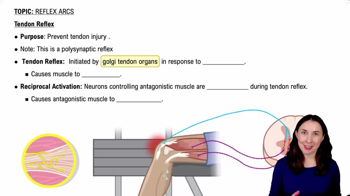
Tendon Reflex

Calf Muscle Anatomy and Function

The calf is primarily composed of the gastrocnemius and soleus muscles, which merge into the Achilles tendon attaching to the heel. These muscles contract to plantar flex the foot, enabling activities like walking and jogging. When the Achilles tendon ruptures, the calf muscles lose their anchor, causing the muscle belly to retract and form a visible gap and swelling in the upper calf.
추천 영상:
가이드 코스
06:04
Functional Groups

Clinical Signs of Tendon Injury

Key clinical signs of an Achilles tendon rupture include a palpable gap above the heel, swelling, bruising, and inability to plantar flex the ankle. The swelling in the upper calf is due to muscle retraction and localized bleeding or inflammation. Recognizing these signs helps differentiate tendon rupture from other calf injuries like muscle strains or deep vein thrombosis.
추천 영상:
3:01
Tendon Reflex