Ch. 11 Fundamentals of the Nervous System and Nervous Tissue
Marieb - Human Anatomy & Physiology 11th Edition
Marieb, Hoehn11th EditionHuman Anatomy & PhysiologyISBN: 9780136874034당신이 사용하는 게 아니라요?교과서 변경
11장, 문제 18

What is the polarized membrane state? How is it maintained? (Note the relative roles of both passive and active mechanisms.)

검증된 단계별 안내
1
Understand that the polarized membrane state refers to the difference in electrical charge across the plasma membrane of a cell, typically a neuron or muscle cell, where the inside of the cell is more negative relative to the outside.
Recognize that this polarization is primarily due to the unequal distribution of ions, especially sodium (Na\^+), potassium (K\^+), chloride (Cl\^-), and negatively charged proteins, across the membrane.
Identify the passive mechanisms that contribute to maintaining polarization, such as the selective permeability of the membrane to ions (mainly K\^+ leaking out of the cell) and the diffusion of ions down their concentration gradients through ion channels.
Explain the active mechanism, which is the sodium-potassium pump (Na\^+/K\^+ ATPase), that uses ATP energy to actively transport 3 Na\^+ ions out of the cell and 2 K\^+ ions into the cell, against their concentration gradients, helping to maintain the resting membrane potential.
Summarize that the polarized state is maintained by a balance between passive ion movement (diffusion and leakage) and active transport (Na\^+/K\^+ pump), which together establish and preserve the resting membrane potential essential for cell excitability.

비슷한 문제에 대한 검증된 영상 답변:

이 영상 해법은 위 문제에 도움이 된다고 튜터들이 추천한 것입니다.
영상 길이:
1m
도움이 되었나요?

주요 개념

질문에 올바르게 답하기 위해 반드시 이해해야 하는 핵심 개념들은 다음과 같습니다.

Polarized Membrane State

The polarized membrane state refers to the difference in electrical charge across a cell's plasma membrane, typically with the inside being more negative relative to the outside. This resting membrane potential is essential for functions like nerve impulse transmission and muscle contraction.
추천 영상:
04:15
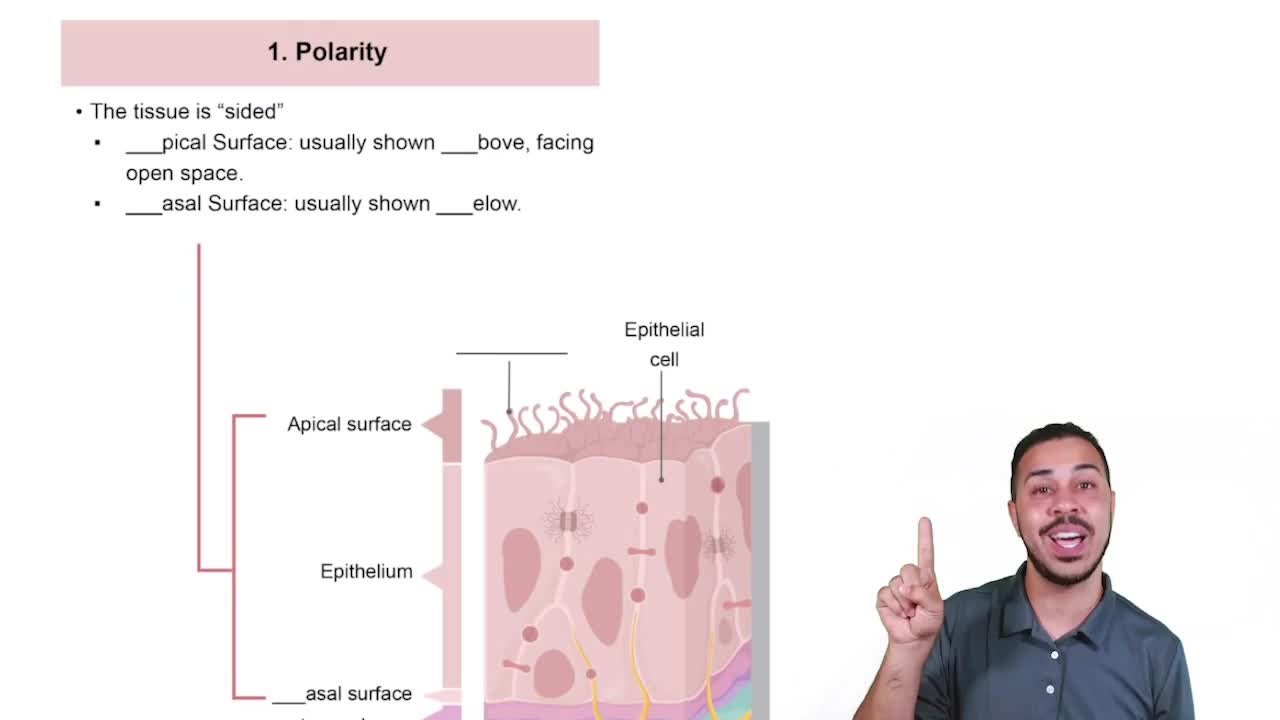
Characteristic 1: Polarity

Passive Mechanisms in Membrane Polarization

Passive mechanisms involve the movement of ions down their electrochemical gradients through ion channels, such as potassium ions leaking out of the cell. These movements help establish and maintain the resting membrane potential without energy expenditure.
추천 영상:
가이드 코스
05:05
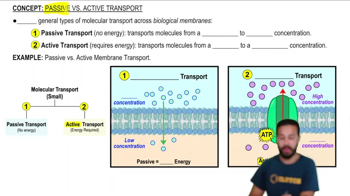
Passive vs. Active Transport

Active Mechanisms in Membrane Polarization

Active mechanisms use energy, primarily from ATP, to transport ions against their concentration gradients via pumps like the sodium-potassium ATPase. This pump moves sodium out and potassium into the cell, crucially maintaining ion gradients that sustain the polarized state.
추천 영상:
가이드 코스
02:37
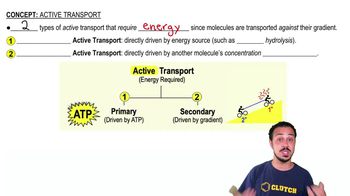
Active Transport