Ch. 13 The Peripheral Nervous System and Reflex Activity
Marieb - Human Anatomy & Physiology 11th Edition
Marieb, Hoehn11th EditionHuman Anatomy & PhysiologyISBN: 9780136874034당신이 사용하는 게 아니라요?교과서 변경
13장, 문제 14

Characterize each receptor activity described below by choosing the appropriate letter and number(s) from keys A and B. 
_____    , _____  (1) You are enjoying an ice cream cone. 
_____    , _____  (2) You have just scalded yourself with hot coffee. 
_____    , _____  (3) The retinas of your eyes are stimulated. 
_____    , _____  (4) You bump (lightly) into someone. 
_____    , _____  (5) You are in a completely dark room and reaching toward the light switch. 
_____    , _____  (6) You feel uncomfortable after a large meal.
Key A:
a. Exteroceptor
b. Interoceptor
c. Proprioceptor
Key B:
(1) Chemoreceptor
(2) Mechanoreceptor
(3) Nociceptor
(4) Photoreceptor
(5) Thermoreceptor

검증된 단계별 안내
1
Step 1: Understand the two keys provided in the problem. Key A refers to the type of receptor based on its location and function: (a) exteroceptor detects stimuli from outside the body, (b) interoceptor detects internal stimuli, and (c) proprioceptor detects body position and movement. Key B refers to the type of receptor based on the nature of the stimulus: (1) chemoreceptor detects chemical changes, (2) mechanoreceptor detects mechanical changes like pressure or touch, (3) nociceptor detects pain, (4) photoreceptor detects light, and (5) thermoreceptor detects temperature changes.
Step 2: Analyze each scenario described in the problem and determine the appropriate receptor type from Key A. For example, if the stimulus is external (like enjoying an ice cream cone), it would likely involve an exteroceptor. If the stimulus is internal (like feeling uncomfortable after a large meal), it would involve an interoceptor.
Step 3: Match the stimulus described in each scenario to the appropriate receptor type from Key B. For instance, enjoying an ice cream cone involves taste, which is detected by chemoreceptors, while scalding yourself with hot coffee involves pain, which is detected by nociceptors.
Step 4: Combine the receptor type from Key A with the stimulus type from Key B for each scenario. For example, enjoying an ice cream cone would be characterized as 'a, 1' (exteroceptor and chemoreceptor).
Step 5: Repeat the process for all six scenarios, ensuring that each is matched to the correct combination of receptor type and stimulus type. Use the descriptions provided in the problem to guide your choices.

비슷한 문제에 대한 검증된 영상 답변:

이 영상 해법은 위 문제에 도움이 된다고 튜터들이 추천한 것입니다.
영상 길이:
3m
도움이 되었나요?

주요 개념

질문에 올바르게 답하기 위해 반드시 이해해야 하는 핵심 개념들은 다음과 같습니다.

Receptor Types

Receptors are specialized cells that detect and respond to various stimuli. They are categorized into different types based on their location and function: exteroceptors respond to external stimuli, interoceptors monitor internal body conditions, and proprioceptors provide information about body position and movement.
추천 영상:
2:46
C-Type Lectin Receptors (CLRs)

Sensory Modalities

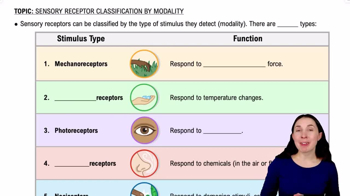
Sensory modalities refer to the different types of sensations that receptors can detect. For example, chemoreceptors respond to chemical stimuli, mechanoreceptors to mechanical pressure or distortion, nociceptors to pain, photoreceptors to light, and thermoreceptors to temperature changes.
추천 영상:
2:11
Sensory Receptor Classification by Modality

Integration of Sensory Information

The brain integrates sensory information from various receptors to create a coherent perception of the environment. This process involves interpreting signals from different receptor types, allowing individuals to respond appropriately to stimuli, such as enjoying food or reacting to pain.
추천 영상:
2:47
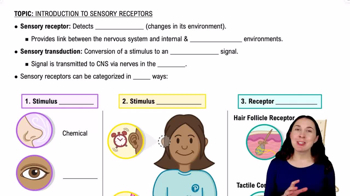
Sensory Receptors