Ch. 18 The Cardiovascular System: The Heart
Marieb - Human Anatomy & Physiology 11th Edition
Marieb, Hoehn11th EditionHuman Anatomy & PhysiologyISBN: 9780136874034당신이 사용하는 게 아니라요?교과서 변경
18장, 문제 3

An ECG provides information about:
a. Cardiac output
b. Movement of the excitation wave across the heart
c. Coronary circulation
d. Valve impairment

검증된 단계별 안내
1
Step 1: Understand what an ECG (electrocardiogram) measures. An ECG records the electrical activity generated by the heart as it depolarizes and repolarizes during each heartbeat.
Step 2: Recognize that the ECG traces the movement of the excitation wave (electrical impulses) across the heart muscle, showing the timing and pattern of atrial and ventricular depolarization and repolarization.
Step 3: Analyze each option in the question: (a) Cardiac output refers to the volume of blood the heart pumps per minute, which is not directly measured by an ECG; (b) Movement of the excitation wave across the heart is exactly what the ECG records; (c) Coronary circulation involves blood flow through coronary arteries, which is not assessed by ECG; (d) Valve impairment relates to mechanical function of heart valves, which ECG does not directly evaluate.
Step 4: Conclude that the correct information provided by an ECG is related to the electrical activity and movement of the excitation wave across the heart.
Step 5: Summarize that the ECG is a tool for monitoring the heart's electrical conduction system, not mechanical output or blood flow.

비슷한 문제에 대한 검증된 영상 답변:

이 영상 해법은 위 문제에 도움이 된다고 튜터들이 추천한 것입니다.
영상 길이:
2m

주요 개념

질문에 올바르게 답하기 위해 반드시 이해해야 하는 핵심 개념들은 다음과 같습니다.

Electrocardiogram (ECG) Basics

An ECG records the electrical activity of the heart over time, capturing the excitation waves generated by cardiac muscle depolarization and repolarization. It provides a graphical representation of the heart's rhythm and conduction patterns but does not directly measure mechanical functions like output or valve status.
추천 영상:
4:36
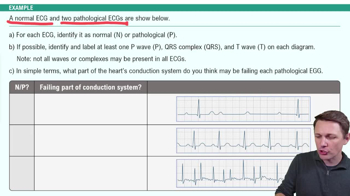
Electrocardiogram (ECG) Example 2

Excitation Wave Propagation in the Heart

The excitation wave refers to the electrical impulses that travel through the heart's conduction system, triggering muscle contraction. The ECG traces these waves as they move across the atria and ventricles, allowing assessment of the timing and sequence of cardiac electrical activity.
추천 영상:
03:50
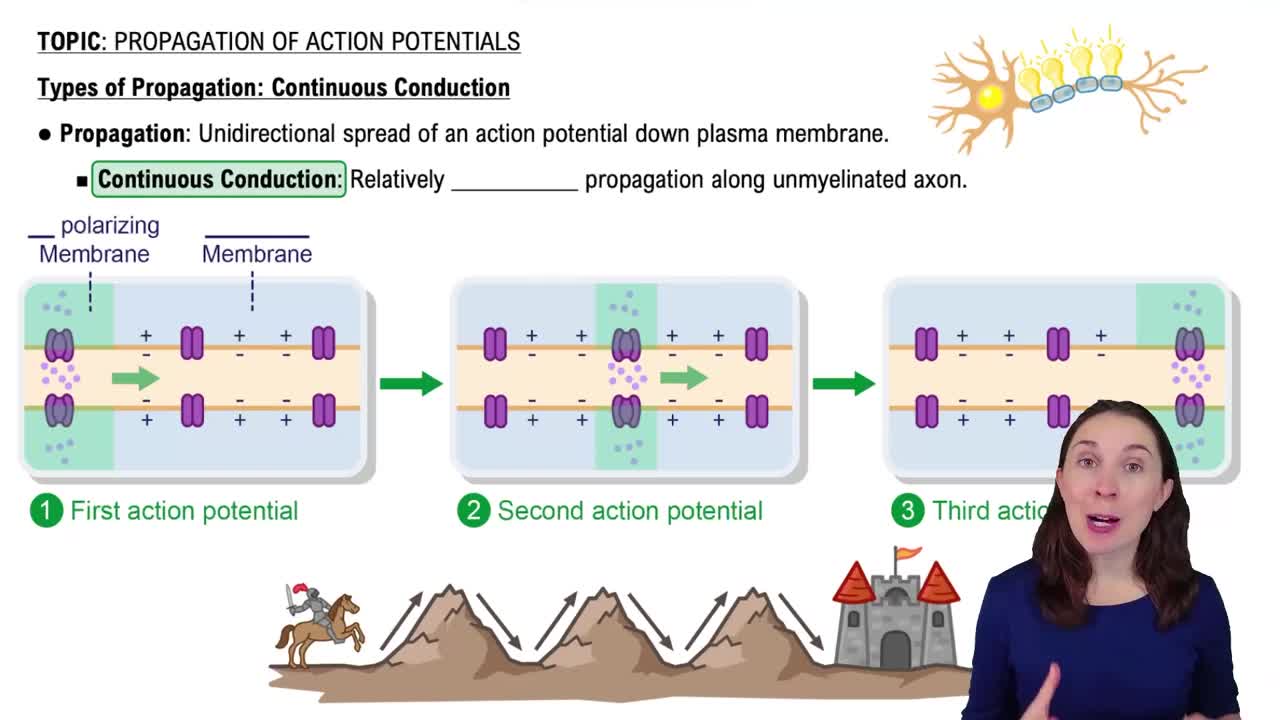
Types of Propagation: Continuous Conduction

Limitations of ECG in Assessing Cardiac Function

While ECG provides electrical information, it does not directly measure cardiac output, coronary blood flow, or valve function. These aspects require other diagnostic tools like echocardiography or angiography, as ECG cannot visualize mechanical or circulatory parameters.
추천 영상:
9:24
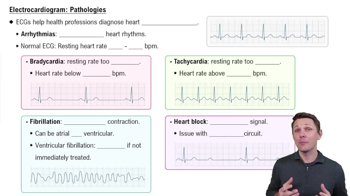
Electrocardiogram: Pathologies