Ch. 21 The Immune System: Innate and Adaptive Body Defenses
Marieb - Human Anatomy & Physiology 11th Edition
Marieb, Hoehn11th EditionHuman Anatomy & PhysiologyISBN: 9780136874034당신이 사용하는 게 아니라요?교과서 변경
21장, 문제 24

Differentiate between humoral and cellular adaptive immunity.

검증된 단계별 안내
1
Step 1: Define adaptive immunity as the body's specific defense mechanism that develops after exposure to a particular antigen, involving two main branches: humoral and cellular immunity.
Step 2: Explain humoral immunity as the aspect of adaptive immunity that involves B lymphocytes (B cells) producing antibodies that circulate in body fluids (humors) to neutralize or mark pathogens for destruction.
Step 3: Describe cellular immunity as the branch of adaptive immunity that involves T lymphocytes (T cells) directly attacking infected or abnormal cells, or helping other immune cells through signaling.
Step 4: Highlight the key difference: humoral immunity targets extracellular pathogens using antibodies, while cellular immunity targets intracellular pathogens by killing infected cells or activating other immune responses.
Step 5: Summarize by noting that both humoral and cellular immunity work together to provide a comprehensive adaptive immune response, with humoral immunity focusing on antibody-mediated defense and cellular immunity focusing on cell-mediated defense.

비슷한 문제에 대한 검증된 영상 답변:

이 영상 해법은 위 문제에 도움이 된다고 튜터들이 추천한 것입니다.
영상 길이:
3m
도움이 되었나요?

주요 개념

질문에 올바르게 답하기 위해 반드시 이해해야 하는 핵심 개념들은 다음과 같습니다.

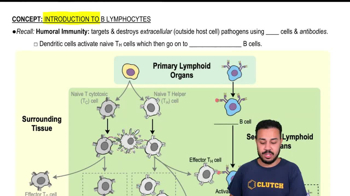
Humoral Immunity

Humoral immunity involves the production of antibodies by B cells that circulate in body fluids to neutralize pathogens. It primarily targets extracellular microbes and toxins, providing defense by marking invaders for destruction or preventing their entry into cells.
추천 영상:
가이드 코스
3:55
Humoral Immunity

Cellular Immunity

Cellular immunity is mediated by T cells that directly attack infected or abnormal cells. It is essential for eliminating intracellular pathogens, such as viruses, by recognizing antigen-presenting cells and triggering targeted cell destruction.
추천 영상:
가이드 코스
03:38
Introduction to Cellular Respiration

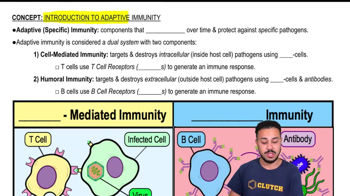
Adaptive Immunity

Adaptive immunity is a specific immune response that develops after exposure to antigens, characterized by memory and specificity. It includes both humoral and cellular branches, enabling the body to respond more effectively upon subsequent encounters with the same pathogen.
추천 영상:
가이드 코스
5:47
Adaptive Immunity