Ch. 26 Fluid, Electrolyte, and Acid-Base Balance
Marieb - Human Anatomy & Physiology 11th Edition
Marieb, Hoehn11th EditionHuman Anatomy & PhysiologyISBN: 9780136874034당신이 사용하는 게 아니라요?교과서 변경
26장, 문제 1

Body water content is greatest in:
a. Infants
b. Young adults
c. Elderly adults

검증된 단계별 안내
1
Understand that body water content varies with age due to changes in body composition, such as fat and muscle mass.
Recall that infants have a higher percentage of body water compared to adults because their bodies contain less fat and more water-rich tissues.
Recognize that young adults have a moderate body water content, lower than infants but higher than elderly adults.
Know that elderly adults typically have the lowest body water content due to increased fat deposits and decreased muscle mass, both of which contain less water.
Conclude that among the given options, infants have the greatest body water content.

비슷한 문제에 대한 검증된 영상 답변:

이 영상 해법은 위 문제에 도움이 된다고 튜터들이 추천한 것입니다.
영상 길이:
1m
도움이 되었나요?

주요 개념

질문에 올바르게 답하기 위해 반드시 이해해야 하는 핵심 개념들은 다음과 같습니다.

Body Water Content Variation with Age

Body water content changes throughout life, being highest in infancy and gradually decreasing with age. Infants have a larger proportion of water relative to their body weight compared to adults and elderly individuals.
추천 영상:
04:21
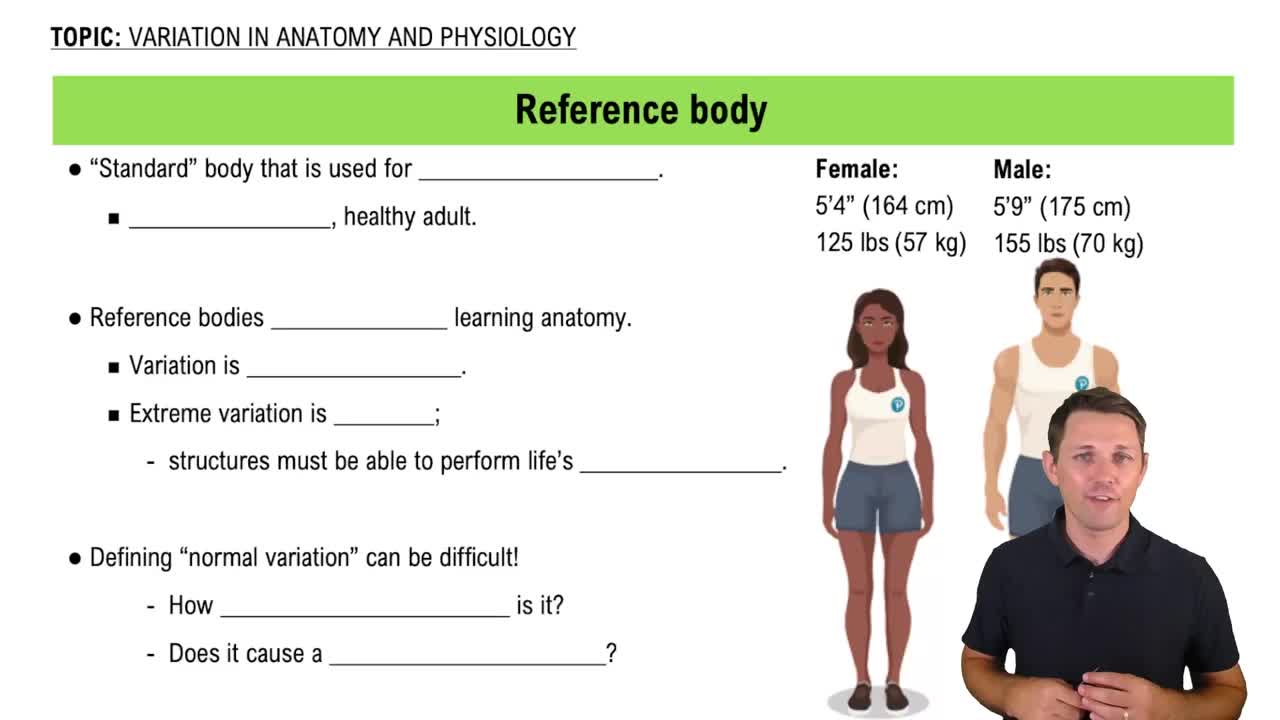
Variation in A&P

Physiological Differences in Infants

Infants have a higher percentage of total body water, often around 70-80%, due to their higher metabolic rate and greater extracellular fluid volume, which supports rapid growth and development.
추천 영상:
03:04
The Difference Between Anatomy and Physiology

Impact of Aging on Body Water

As people age, total body water decreases due to loss of muscle mass and increased fat tissue, which contains less water. Elderly adults typically have lower body water content, making them more susceptible to dehydration.
추천 영상:
가이드 코스
01:54
Introduction to Water