Fresh water is a precious natural resource in Florida and it is said that supplies are dwindling. Desalinizing (removing salt from) ocean water has been recommended as a solution to the problem. Why shouldn't we drink salt water?
Ch. 3 Cells: The Living Units

3장, 문제 24
Explain why alcoholics are likely to have much more smooth ER than teetotalers.
검증된 단계별 안내1
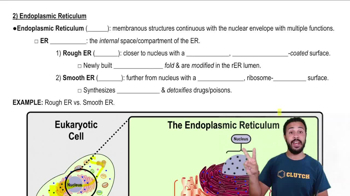
Understand the function of the smooth endoplasmic reticulum (smooth ER) in cells, which is primarily involved in lipid synthesis and detoxification processes, including the metabolism of drugs and toxins.
Recognize that alcohol (ethanol) is a toxin that the body needs to metabolize and detoxify, primarily in liver cells where smooth ER is abundant.
Know that chronic alcohol consumption induces the proliferation of smooth ER in liver cells to increase the capacity for metabolizing alcohol and other toxins, a process called enzyme induction.
Explain that this increase in smooth ER allows alcoholics to process larger amounts of alcohol more efficiently, but it also reflects cellular adaptation to the increased demand for detoxification.
Contrast this with teetotalers, who do not consume alcohol and therefore have less need for enhanced detoxification, resulting in fewer smooth ER structures in their liver cells.

비슷한 문제에 대한 검증된 영상 답변:
이 영상 해법은 위 문제에 도움이 된다고 튜터들이 추천한 것입니다.
영상 길이:
2m주요 개념
질문에 올바르게 답하기 위해 반드시 이해해야 하는 핵심 개념들은 다음과 같습니다.
Smooth Endoplasmic Reticulum (Smooth ER) Structure and Function
The smooth ER is a cellular organelle involved in lipid synthesis, detoxification, and metabolism of various substances. Unlike rough ER, it lacks ribosomes and is abundant in cells that process toxins or produce lipids, adapting its size based on cellular needs.
추천 영상:
가이드 코스
Endoplasmic Reticulum
Role of Smooth ER in Alcohol Metabolism
Smooth ER contains enzymes like cytochrome P450 that metabolize alcohol and other drugs. Chronic alcohol consumption induces the proliferation of smooth ER to increase the cell's capacity to detoxify ethanol, leading to an expanded smooth ER network in liver cells.
추천 영상:
가이드 코스
Introduction to Metabolism
Cellular Adaptation to Chronic Alcohol Exposure
Cells adapt to repeated exposure to toxins by increasing organelles involved in detoxification. In alcoholics, liver cells respond to continuous ethanol presence by producing more smooth ER, enhancing their ability to metabolize alcohol but also potentially causing cellular stress.
추천 영상:
가이드 코스
Review of Adaptive Immunity
관련 실천
교과서 질문
95
views
교과서 질문
Cell division typically yields two daughter cells, each with one nucleus. How is the occasional binucleate condition of liver cells explained?
56
views
교과서 질문
In their anatomy lab, many students are exposed to the chemical preservatives phenol, formaldehyde, and alcohol. Our cells break down these toxins very effectively. What cellular organelle is responsible for this?
89
views
교과서 질문
A 'red-hot' bacterial infection of the intestinal tract irritates the intestinal cells and interferes with digestion. Such a condition is often accompanied by diarrhea, which causes loss of body water. On the basis of what you have learned about osmotic water flows, explain why diarrhea may occur.
124
views
1
rank