
교과서 질문
Membrane junctions that allow nutrients or ions to flow from cell to cell are:
a. Desmosomes
b. Gap junctions
c. Tight junctions
d. All of these
135
views

 검증된 단계별 안내
 03:54
03:54
 02:50
02:50 5:04
5:04Membrane junctions that allow nutrients or ions to flow from cell to cell are:
a. Desmosomes
b. Gap junctions
c. Tight junctions
d. All of these
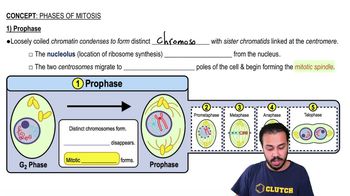
The phase of mitosis during which centrioles reach the poles and chromosomes attach to the spindle is
a. Anaphase
b. Metaphase
c. Prophase
d. Telophase
The information sequence that determines the nature of a protein is:
a. Nucleotide
b. Gene
c. Triplet
d. Codon
The major types of lipids found in the plasma membranes are (choose two):
a. Cholesterol
b. Triglycerides
c. Phospholipids
d. Fat-soluble vitamins
The RNA synthesized on one of the DNA strands is:
a. mRNA
b. tRNA
c. rRNA
d. all of these.
Osmosis always involves:
a. A selectively permeable membrane
b. A difference in solute concentration
c. Diffusion
d. Active transport
e. a, b, and c