Ch. 4 Tissue: The Living Fabric
Marieb - Human Anatomy & Physiology 11th Edition
Marieb, Hoehn11th EditionHuman Anatomy & PhysiologyISBN: 9780136874034당신이 사용하는 게 아니라요?교과서 변경
4장, 문제 7

Name the two major components of the extracellular matrix and, if applicable, subclasses of each component.

검증된 단계별 안내
1
Identify the two major components of the extracellular matrix (ECM), which are the fibrous proteins and the ground substance.
Explain that the fibrous proteins primarily include collagen fibers, elastic fibers, and reticular fibers, each providing different structural properties to the ECM.
Describe the ground substance as a gel-like material composed mainly of water, proteoglycans, and glycosaminoglycans (GAGs), which fill the space between cells and fibers.
Clarify that proteoglycans are a subclass of the ground substance and consist of a core protein with attached GAG chains, contributing to the ECM's viscosity and resilience.
Summarize that the ECM's two major components are fibrous proteins (collagen, elastic, reticular fibers) and ground substance (proteoglycans and glycosaminoglycans), which together provide structural support and biochemical signaling.

비슷한 문제에 대한 검증된 영상 답변:

이 영상 해법은 위 문제에 도움이 된다고 튜터들이 추천한 것입니다.
영상 길이:
1m

주요 개념

질문에 올바르게 답하기 위해 반드시 이해해야 하는 핵심 개념들은 다음과 같습니다.

Extracellular Matrix (ECM)

The extracellular matrix is a complex network of macromolecules surrounding cells, providing structural and biochemical support. It plays a crucial role in tissue integrity, cell signaling, and regulating cellular behavior.
추천 영상:
3:31
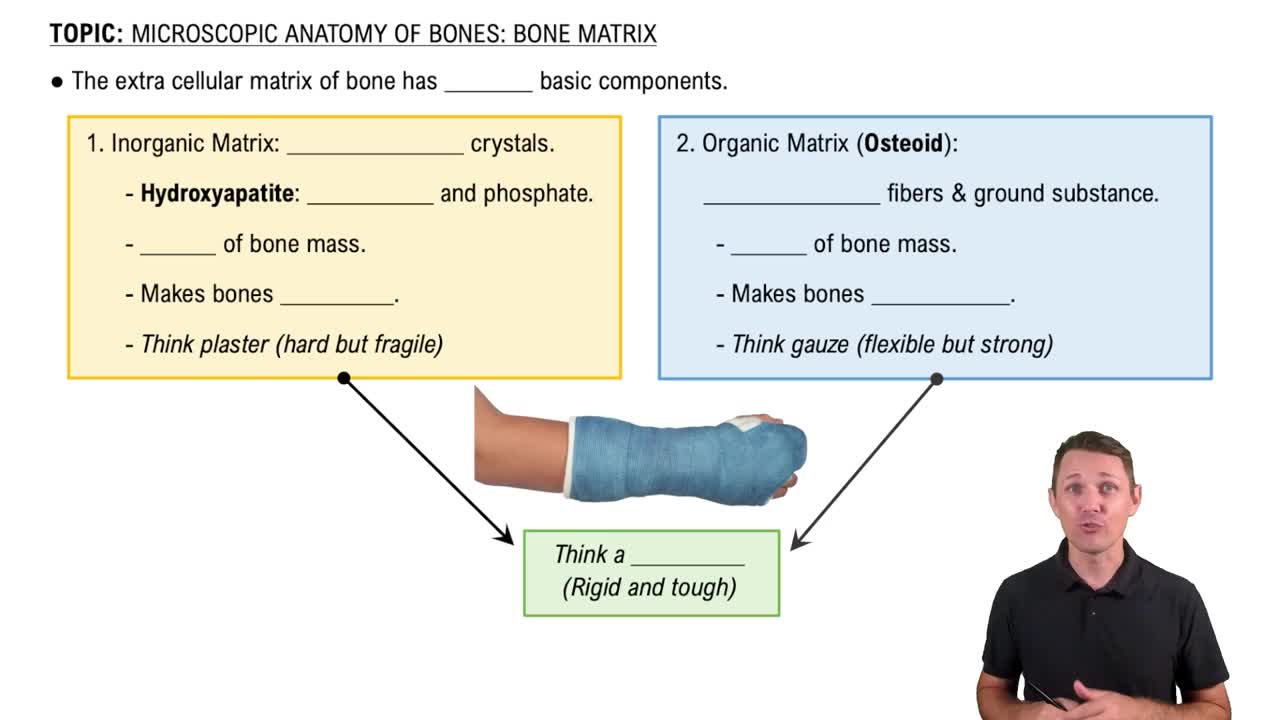
Bone Matrix

Major Components of the ECM: Proteins

Proteins in the ECM include fibrous types like collagen, which provides tensile strength, and elastin, which offers elasticity. Other proteins such as fibronectin and laminin help in cell adhesion and signaling.
추천 영상:
5:04
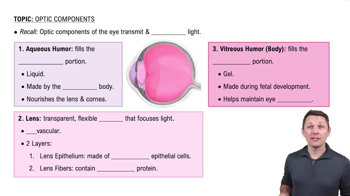
Optic Components

Major Components of the ECM: Polysaccharides (Glycosaminoglycans and Proteoglycans)

Polysaccharides in the ECM mainly consist of glycosaminoglycans (GAGs) and proteoglycans. GAGs are long, unbranched chains that attract water, providing hydration and resistance to compression, while proteoglycans are GAGs linked to proteins, contributing to matrix structure and cell communication.
추천 영상:
3:07
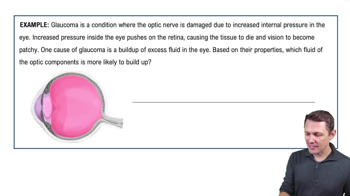
Optic Components of the Eyeball Example 1