Ch. 5 The Integumentary System
Marieb - Human Anatomy & Physiology 11th Edition
Marieb, Hoehn11th EditionHuman Anatomy & PhysiologyISBN: 9780136874034당신이 사용하는 게 아니라요?교과서 변경
5장, 문제 14

Which epidermal cells contain keratohyaline and lamellar granules?

검증된 단계별 안내
1
Understand that the epidermis is composed of several layers of cells, each with distinct functions and characteristics.
Recall that keratohyaline granules are involved in the process of keratinization, helping to form the dense protein matrix in the skin's outer layer.
Recognize that lamellar granules contain lipids that contribute to the skin's waterproof barrier by filling spaces between cells.
Identify the specific epidermal cell type that contains both keratohyaline and lamellar granules; these are the cells in the stratum granulosum layer.
Conclude that the keratinocytes in the stratum granulosum are the epidermal cells containing keratohyaline and lamellar granules, playing a key role in skin barrier formation.

비슷한 문제에 대한 검증된 영상 답변:

이 영상 해법은 위 문제에 도움이 된다고 튜터들이 추천한 것입니다.
도움이 되었나요?

주요 개념

질문에 올바르게 답하기 위해 반드시 이해해야 하는 핵심 개념들은 다음과 같습니다.

Epidermal Cell Types

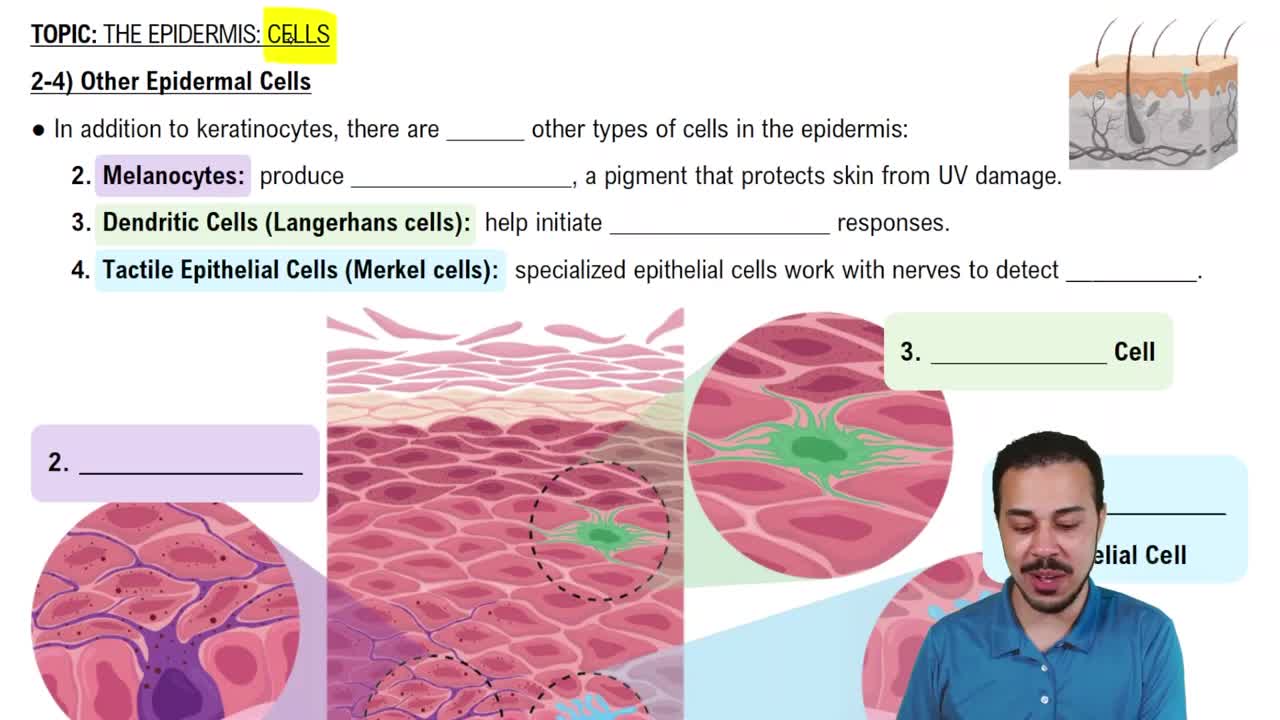
The epidermis consists of several cell types, including keratinocytes, melanocytes, Langerhans cells, and Merkel cells. Keratinocytes are the most abundant and are responsible for producing keratin and other granules essential for skin barrier function.
추천 영상:
가이드 코스
07:02
Other Epidermal Cells

Keratohyaline Granules

Keratohyaline granules are dense, protein-rich structures found in the granular layer of keratinocytes. They contain profilaggrin, which helps in the aggregation of keratin filaments, contributing to the formation of the skin’s protective outer layer.
추천 영상:

Lamellar Granules

Lamellar granules are lipid-containing organelles in keratinocytes that release lipids into the extracellular space. These lipids form a waterproof barrier, preventing water loss and protecting the skin from external environmental damage.
추천 영상:
2:52
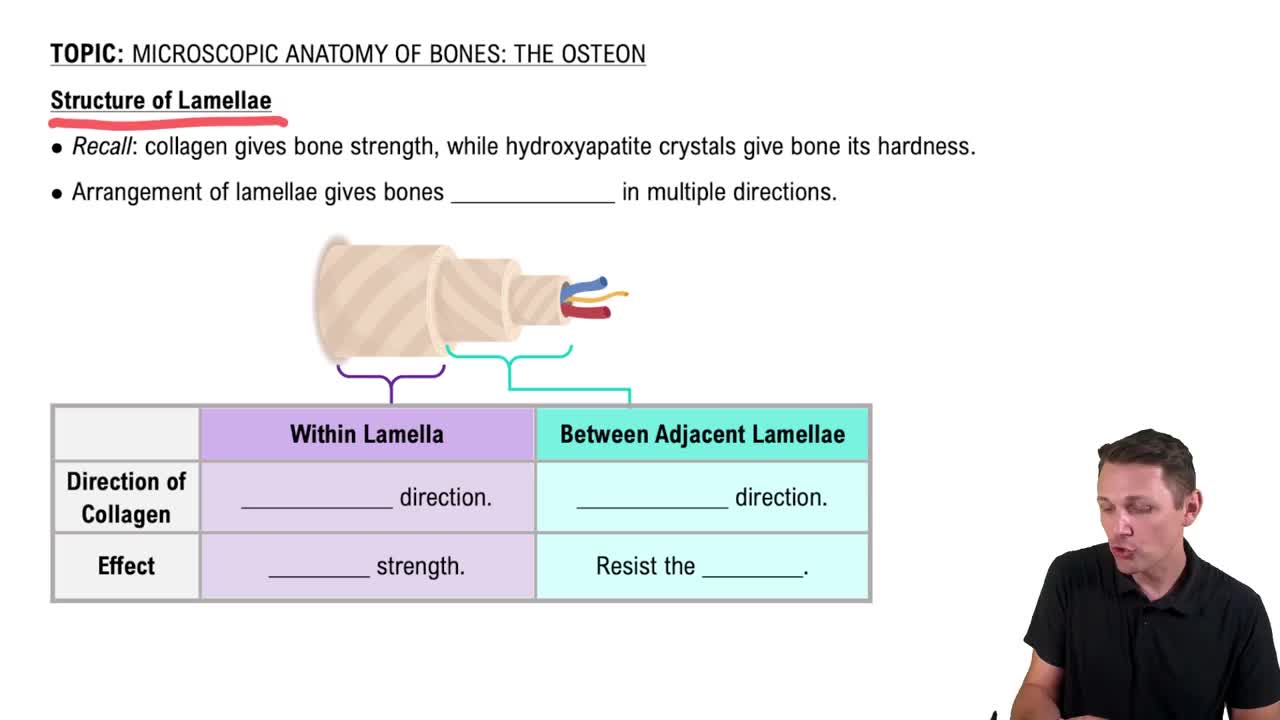
Structure of Lamellae