Ch. 6 Bones and Skeletal Tissues
Marieb - Human Anatomy & Physiology 11th Edition
Marieb, Hoehn11th EditionHuman Anatomy & PhysiologyISBN: 9780136874034당신이 사용하는 게 아니라요?교과서 변경
6장, 문제 20

Mrs. Abbruzzo brought her 4-year-old daughter to the doctor, complaining that she didn't 'look right.' The child's forehead was enlarged, her rib cage was knobby, and her lower limbs were bent and deformed. X rays revealed very thick epiphyseal plates. Mrs. Abbruzzo was advised to increase dietary amounts of vitamin D and milk and to get the girl outside to play in the sun. Considering the child's signs and symptoms, what disease do you think she has? Explain the doctor's instructions.

검증된 단계별 안내
1
Step 1: Identify the key clinical signs described: enlarged forehead, knobby rib cage, bent and deformed lower limbs, and very thick epiphyseal plates seen on X-rays. These signs suggest a problem with bone development and mineralization.
Step 2: Recognize that thickened epiphyseal plates indicate a delay or defect in the normal process of bone calcification and ossification, which is characteristic of rickets, a disease caused by vitamin D deficiency in children.
Step 3: Understand that vitamin D is essential for calcium absorption in the intestines, which is necessary for proper bone mineralization. Without enough vitamin D, bones become soft and deformed, leading to the symptoms observed.
Step 4: Explain the doctor's instructions: increasing dietary vitamin D and milk (a source of calcium and vitamin D) and encouraging outdoor play to increase sunlight exposure, which helps the skin synthesize vitamin D naturally.
Step 5: Summarize that the child likely has rickets, and the treatment focuses on correcting the vitamin D deficiency to promote proper bone mineralization and prevent further deformities.

비슷한 문제에 대한 검증된 영상 답변:

이 영상 해법은 위 문제에 도움이 된다고 튜터들이 추천한 것입니다.
영상 길이:
3m
도움이 되었나요?

주요 개념

질문에 올바르게 답하기 위해 반드시 이해해야 하는 핵심 개념들은 다음과 같습니다.

Rickets

Rickets is a childhood bone disorder caused by vitamin D deficiency, leading to impaired calcium and phosphate metabolism. This results in soft, weak bones that deform under weight, causing symptoms like enlarged forehead, knobby ribs, and bowed legs. It is common in children with inadequate sun exposure or poor dietary intake of vitamin D.

Role of Vitamin D in Bone Health

Vitamin D is essential for calcium absorption in the intestines, which is critical for proper bone mineralization. Without enough vitamin D, bones cannot harden properly, leading to thickened but weak growth plates and bone deformities. Sunlight exposure helps the skin synthesize vitamin D naturally, complementing dietary sources.

Epiphyseal Plates and Bone Growth

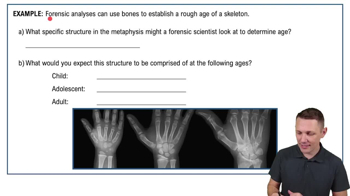
Epiphyseal plates are growth regions at the ends of long bones where new bone is formed during childhood. In rickets, these plates become abnormally thick and disorganized due to defective mineralization, causing bone deformities and growth disturbances. X-rays showing thickened epiphyseal plates are diagnostic indicators of this condition.
추천 영상:
3:22
Gross Anatomy of Bones - Structure of a Long Bone Example 1