Ch. 9 Muscles and Muscle Tissue
Marieb - Human Anatomy & Physiology 11th Edition
Marieb, Hoehn11th EditionHuman Anatomy & PhysiologyISBN: 9780136874034당신이 사용하는 게 아니라요?교과서 변경
9장, 문제 22

When a suicide victim was found, the coroner was unable to remove the drug vial clutched in his hand. Explain the reasons for this. If the victim had been discovered three days later, would the coroner have had the same difficulty? Explain.

검증된 단계별 안내
1
Understand that rigor mortis is the postmortem stiffening of muscles caused by chemical changes in muscle tissue after death, primarily due to the depletion of ATP, which prevents muscle relaxation.
Recognize that rigor mortis typically begins within 2 to 6 hours after death, peaks around 12 hours, and can last up to 48 to 72 hours before muscle tissues begin to relax again as decomposition progresses.
Apply this knowledge to the scenario: the coroner could not remove the drug vial because the victim's hand muscles were stiff and fixed in place due to rigor mortis, making it difficult to open the hand.
Consider the time factor: if the victim had been discovered three days later, rigor mortis would likely have passed, and muscle stiffness would have diminished due to tissue breakdown, making it easier for the coroner to remove the vial.
Summarize that the presence and timing of rigor mortis explain the difficulty in removing the vial immediately after death, and the absence of rigor mortis after several days would reduce this difficulty.

비슷한 문제에 대한 검증된 영상 답변:

이 영상 해법은 위 문제에 도움이 된다고 튜터들이 추천한 것입니다.
영상 길이:
2m

주요 개념

질문에 올바르게 답하기 위해 반드시 이해해야 하는 핵심 개념들은 다음과 같습니다.

Rigor Mortis

Rigor mortis is the postmortem stiffening of muscles caused by chemical changes in muscle tissue after death. It typically begins within 2-6 hours and can cause a deceased person's muscles to contract, making it difficult to release objects held tightly, such as a drug vial.

Postmortem Changes Over Time

After death, the body undergoes various changes including rigor mortis, livor mortis, and decomposition. Rigor mortis usually dissipates after 24-48 hours as muscle tissues break down, so after three days, the stiffness would have lessened, making it easier to remove objects from the deceased's grasp.
추천 영상:
03:31
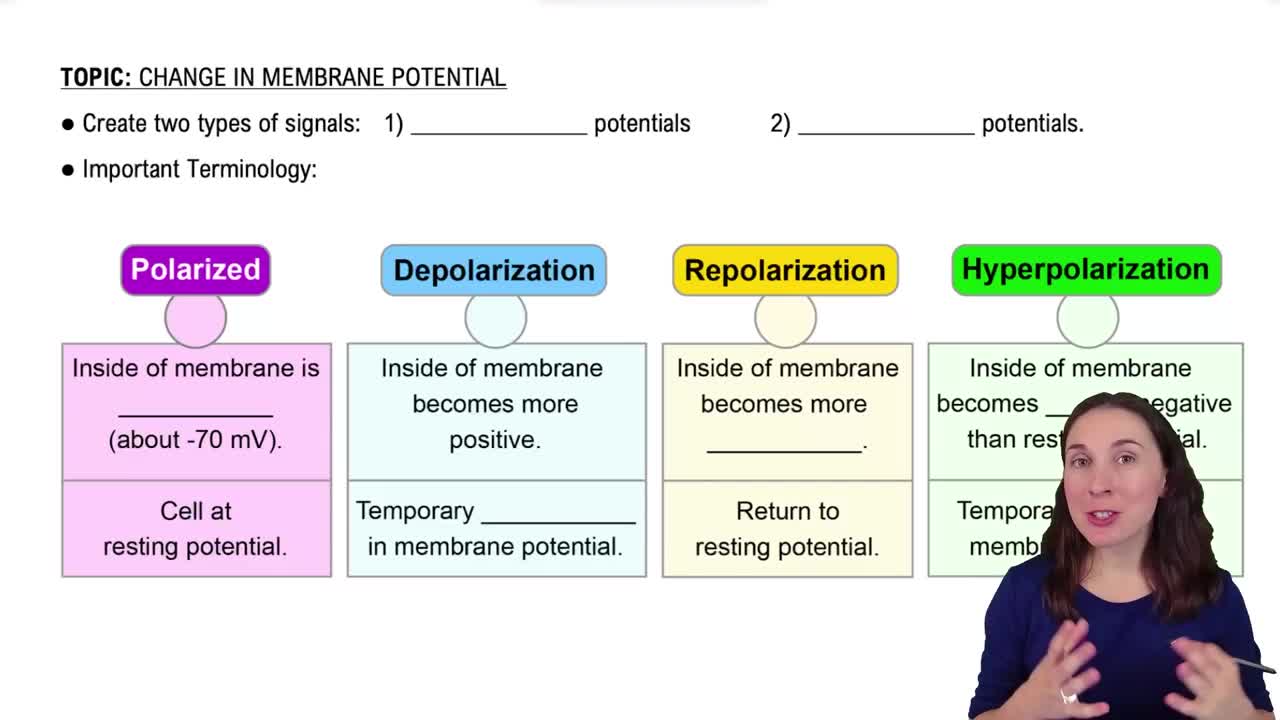
Change in Membrane Potential

Muscle Contraction Mechanism in Death

Muscle contraction after death occurs due to the lack of ATP, which normally allows muscles to relax. Without ATP, muscles remain contracted, causing a firm grip. This biochemical process explains why the coroner could not remove the vial immediately after death.
추천 영상:
4:53
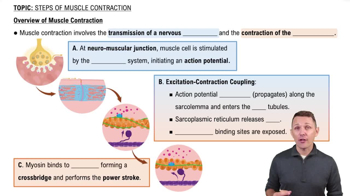
Overview of Muscle Contraction