Which of the effects listed in response to question 9 would be reversed by parasympathetic activity?
Ch. 14 The Autonomic Nervous System

14장, 문제 7
Briefly explain why the following terms are sometimes used to refer to the autonomic nervous system: involuntary nervous system and emotional-visceral system.
검증된 단계별 안내1
Step 1: Understand that the autonomic nervous system (ANS) controls bodily functions that are not consciously directed, such as heart rate, digestion, and respiratory rate.
Step 2: Recognize that the term 'involuntary nervous system' is used because the ANS operates automatically without conscious control, managing essential physiological processes.
Step 3: Note that the term 'emotional-visceral system' highlights the ANS's role in linking emotional states to visceral (internal organ) responses, such as changes in heart rate or digestion during stress or relaxation.
Step 4: Connect these terms by explaining that the ANS integrates emotional experiences with physical reactions, which is why it is sometimes described as the emotional-visceral system.
Step 5: Summarize that both terms emphasize different aspects of the ANS: 'involuntary' focuses on its automatic control, while 'emotional-visceral' emphasizes its role in emotional and internal organ regulation.

비슷한 문제에 대한 검증된 영상 답변:
이 영상 해법은 위 문제에 도움이 된다고 튜터들이 추천한 것입니다.
영상 길이:
2m주요 개념
질문에 올바르게 답하기 위해 반드시 이해해야 하는 핵심 개념들은 다음과 같습니다.
Autonomic Nervous System (ANS)
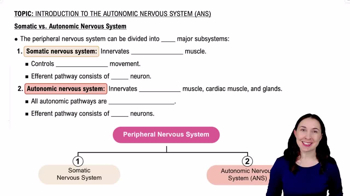
The ANS is a part of the peripheral nervous system that controls involuntary bodily functions such as heart rate, digestion, and respiratory rate. It operates without conscious control, regulating internal organs to maintain homeostasis.
추천 영상:
Somatic vs. Autonomic Nervous System
Involuntary Nervous System
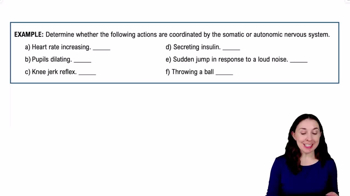
This term highlights the ANS's role in managing bodily functions that occur automatically, without conscious effort. Unlike the somatic nervous system, it controls muscles and glands that respond reflexively to internal stimuli.
추천 영상:
Introduction to the Autonomic Nervous System Example 1
Emotional-Visceral System
This term emphasizes the ANS's involvement in emotional responses by regulating visceral organs. Emotional states like stress or fear trigger autonomic changes, linking emotions to physiological reactions such as increased heart rate or sweating.
추천 영상:
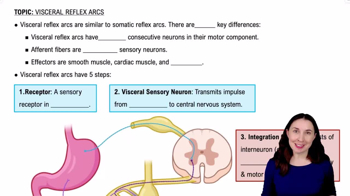
Visceral Reflex Arcs
관련 실천
교과서 질문
664
views
교과서 질문
Collateral sympathetic ganglia are involved with innervating
a. abdominal organs
b. thoracic organs
c. head
d. arrector pili
e. all of these
880
views
교과서 질문
Which ANS fibers release acetylcholine? Which release norepinephrine?
1043
views
교과서 질문
Describe the anatomical relationship of the white and gray rami communicantes to the spinal nerve, and indicate the kind of fibers found in each ramus type.
896
views
1
rank
교과서 질문
Indicate the results of sympathetic activation of the following structures: sweat glands, eye pupils, adrenal medullae, heart, bronchioles of the lungs, liver, blood vessels of vigorously working skeletal muscles, blood vessels of digestive viscera, salivary glands.
961
views
교과서 질문
Where are the cell bodies of visceral sensory neurons?
1120
views