Ch. 1 An Introduction to Anatomy and Physiology
Martini - Fundamentals of Anatomy & Physiology 11th Edition
Martini, Nath, Bartholomew11th EditionFundamentals of Anatomy & PhysiologyISBN: 9780136874089당신이 사용하는 게 아니라요?교과서 변경
1장, 문제 18

The study of the structure of tissues is called (a) gross anatomy, (b) cytology, (c) histology, (d) organology.

검증된 단계별 안내
1
Understand the definitions of each term: Gross anatomy is the study of structures visible to the naked eye, such as organs and organ systems.
Cytology is the study of cells, focusing on their structure and function at the microscopic level.
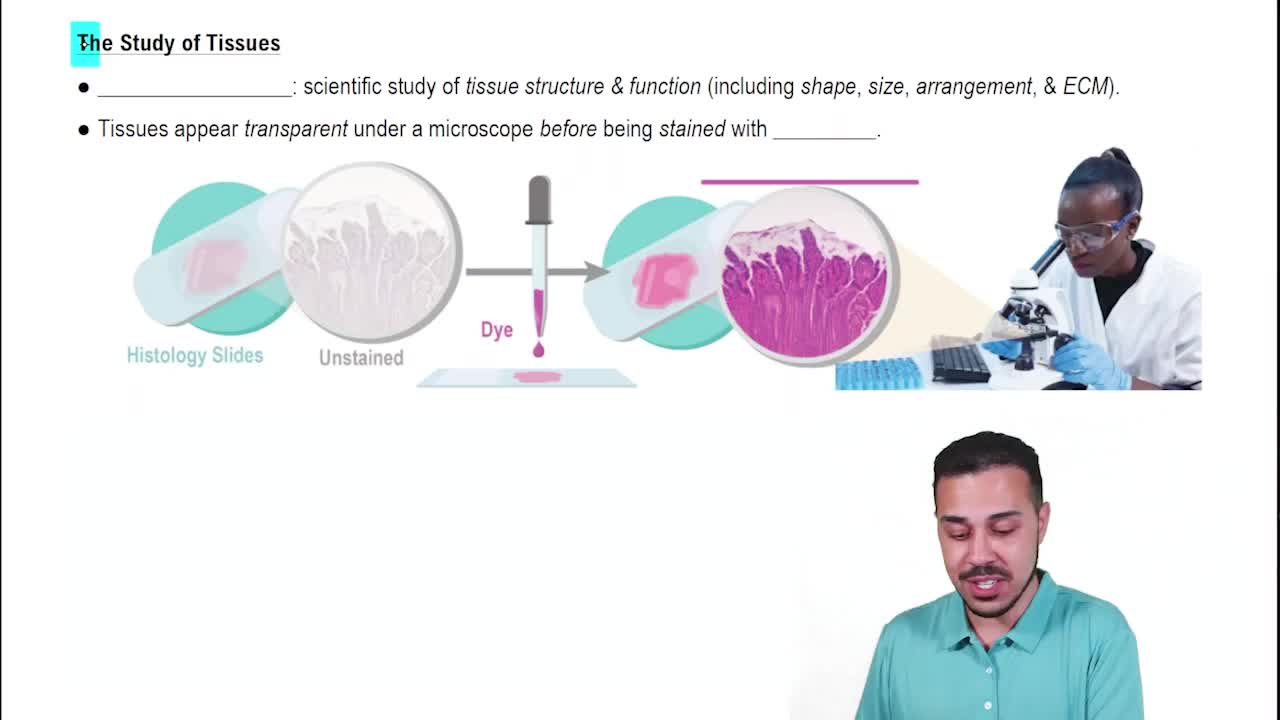
Histology is the study of tissues, which are groups of similar cells working together to perform a specific function.
Organology is the study of organs, their structure, and function within the body.
Since the question asks about the study of the structure of tissues, identify that histology is the correct term because it specifically deals with tissues.

비슷한 문제에 대한 검증된 영상 답변:

이 영상 해법은 위 문제에 도움이 된다고 튜터들이 추천한 것입니다.
영상 길이:
1m

주요 개념

질문에 올바르게 답하기 위해 반드시 이해해야 하는 핵심 개념들은 다음과 같습니다.

Histology

Histology is the branch of biology that studies the microscopic structure of tissues. It involves examining cells and tissues under a microscope to understand their organization and function, which is essential for identifying tissue types and diagnosing diseases.
추천 영상:
02:52
What is Histology?

Gross Anatomy

Gross anatomy refers to the study of the structures of the body that can be seen with the naked eye, such as organs and organ systems. It contrasts with microscopic anatomy and focuses on larger anatomical features.
추천 영상:
2:54
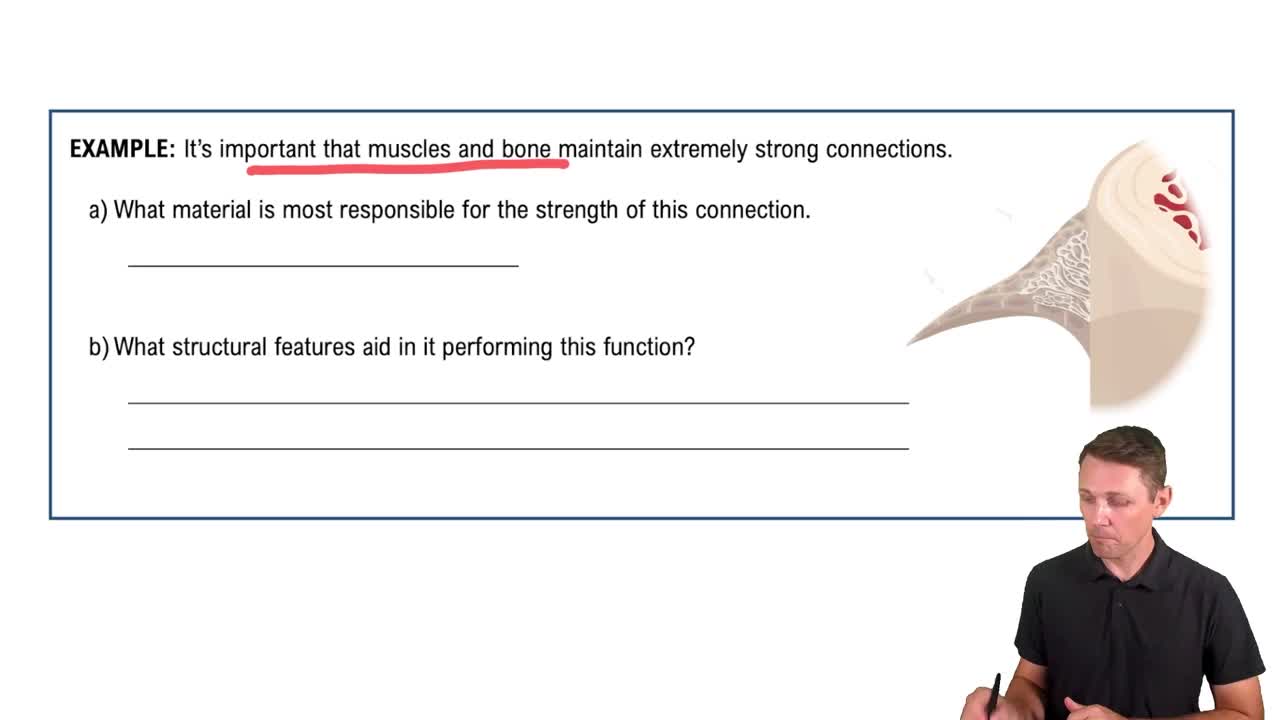
Gross Anatomy of Bone: Periosteum and Endosteum Example 1

Cytology

Cytology is the study of individual cells, including their structure, function, and chemistry. It focuses on cellular components rather than the organization of cells into tissues.
추천 영상:
05:04
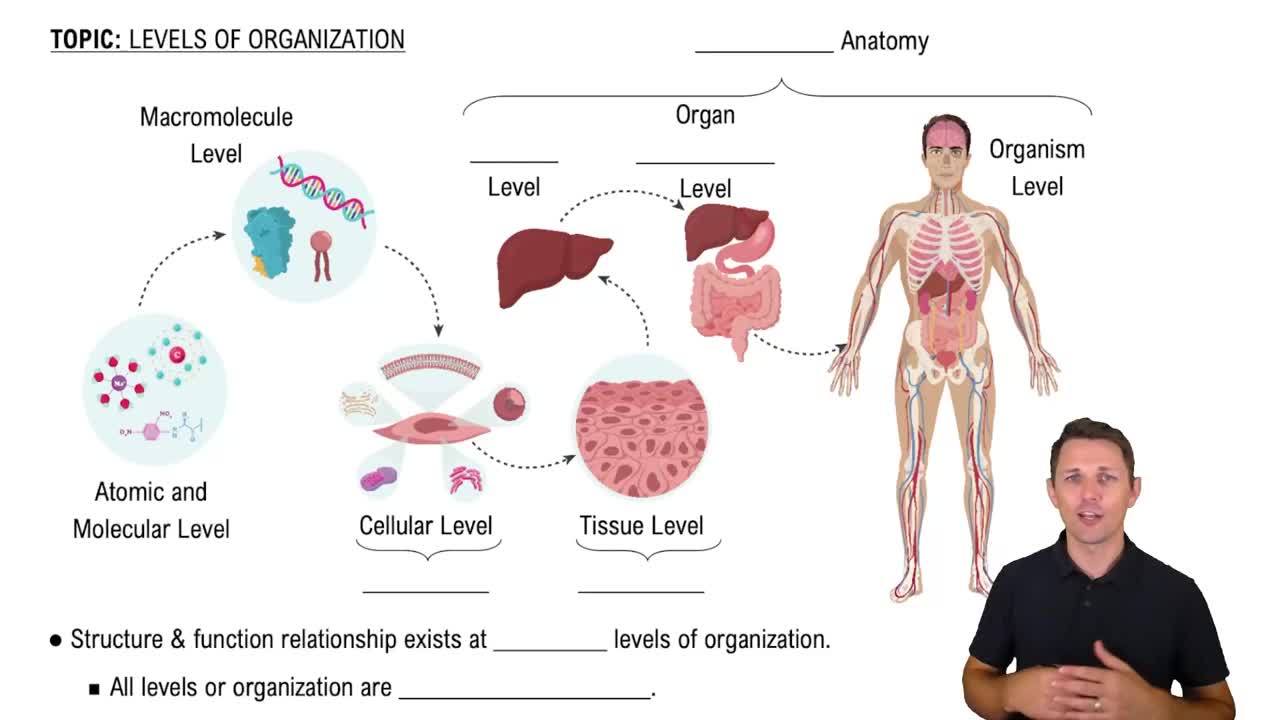
The Levels of Organization
관련 실천
교과서 질문

Match each numbered item with the most closely related lettered item. Use letters for answers in the spaces provided.

_____Abdominopelvic cavity

a. Study of tissues 

b. Constant internal environment 

c. Face-up position 

d. Study of functions 

e. Positive feedback 

f. Organ system 

g. Study of cells 

h. Negative feedback 

i. Serous membrane 

j. Study of internal and external body structures 

k. Diaphragm 

l. Tissue 

m. Peritoneal cavity 

n. Organ 

o. Face-down position

47
views
교과서 질문

A plane through the body that passes perpendicular to the long axis of the body and divides the body into a superior and an inferior section is a

(a) Sagittal section,

(b) Transverse section,

(c) Coronal section,

(d) Frontal section.

86
views
교과서 질문

The following is a list of six levels of organization that make up the human body:

(1) Tissue

(2) Cell

(3) Organ

(4) Chemical

(5) Organism

(6) Organ system

The correct order, from the simplest to the most complex level, is

(a) 2, 4, 1, 3, 6, 5

(b) 4, 2, 1, 3, 6, 5

(c) 4, 2, 1, 6, 3, 5

(d) 4, 2, 3, 1, 6, 5

(e) 2, 1, 4, 3, 5, 6

180
views
교과서 질문

Which body cavity would enclose each of the following organs?

(a) Heart

(b) Small intestine, large intestine

(c) Lung

(d) Kidneys

72
views
교과서 질문

The mediastinum is the region between the

(a) Lungs and heart

(b) Two pleural cavities

(c) Chest and abdomen

(d) Heart and pericardium

34
views
교과서 질문

Match each numbered item with the most closely related lettered item. Use letters for answers in the spaces provided.

______Pericardium

a. Study of tissues 

b. Constant internal environment 

c. Face-up position 

d. Study of functions 

e. Positive feedback 

f. Organ system 

g. Study of cells 

h. Negative feedback 

i. Serous membrane 

j. Study of internal and external body structures 

k. Diaphragm 

l. Tissue 

m. Peritoneal cavity 

n. Organ 

o. Face-down position

40
views