Ch. 15 Sensory Pathways and the Somatic Nervous System
Martini - Fundamentals of Anatomy & Physiology 11th Edition
Martini, Nath, Bartholomew11th EditionFundamentals of Anatomy & PhysiologyISBN: 9780136874089당신이 사용하는 게 아니라요?교과서 변경
15장, 문제 17

Damage to the posterior spinocerebellar tract on the left side of the spinal cord at the L1 level would interfere with the coordinated movement of which limb(s)?

검증된 단계별 안내
1
Step 1: Understand the function of the posterior spinocerebellar tract. This tract carries proprioceptive information from the lower limbs and lower trunk to the cerebellum, which is essential for coordinating movement.
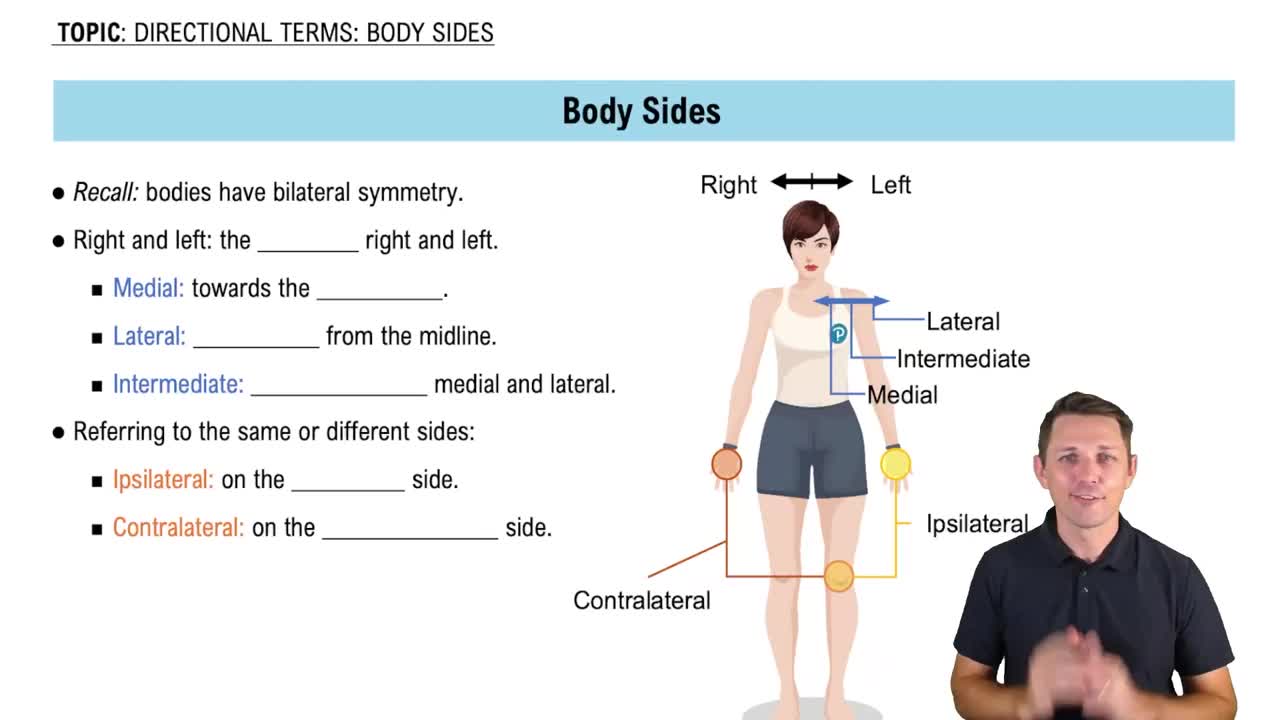
Step 2: Identify the side of the lesion and the pathway's characteristics. The posterior spinocerebellar tract carries information ipsilaterally, meaning it transmits signals from the same side of the body to the cerebellum without crossing over.
Step 3: Locate the lesion level. The damage is at the L1 level of the spinal cord on the left side, which corresponds to the lower limb and lower trunk regions on the left side.
Step 4: Determine which limb(s) would be affected. Since the tract is ipsilateral and the lesion is on the left side, the proprioceptive input from the left lower limb would be disrupted, affecting coordination on that side.
Step 5: Conclude that the coordinated movement of the left lower limb would be impaired due to the damage to the posterior spinocerebellar tract at the L1 level on the left side.

비슷한 문제에 대한 검증된 영상 답변:

이 영상 해법은 위 문제에 도움이 된다고 튜터들이 추천한 것입니다.

주요 개념

질문에 올바르게 답하기 위해 반드시 이해해야 하는 핵심 개념들은 다음과 같습니다.

Posterior Spinocerebellar Tract Function

The posterior spinocerebellar tract carries proprioceptive information from the lower limbs and trunk to the cerebellum, which is essential for coordinating movement and balance. It transmits signals ipsilaterally, meaning it conveys information from the same side of the body to the cerebellum.
추천 영상:
가이드 코스
06:04
Functional Groups

Spinal Cord Anatomy and Laterality

The spinal cord is organized into segments, with each segment corresponding to specific body regions. Damage at the L1 level affects structures related to the lower limbs. Because the posterior spinocerebellar tract does not cross over, injury on the left side impacts proprioceptive input from the left lower limb.
추천 영상:
03:59
Medial and Lateral

Impact of Tract Damage on Motor Coordination

Damage to the posterior spinocerebellar tract disrupts proprioceptive feedback necessary for smooth, coordinated movements. This results in ataxia or uncoordinated movement on the affected side, specifically impairing the limb whose sensory input is compromised—in this case, the left lower limb.
추천 영상:
3:10
Major Regions of the Brain