Ch. 3 The Cellular Level of Organization
Martini - Fundamentals of Anatomy & Physiology 11th Edition
Martini, Nath, Bartholomew11th EditionFundamentals of Anatomy & PhysiologyISBN: 9780136874089당신이 사용하는 게 아니라요?교과서 변경
3장, 문제 5

At resting membrane potential, the cytoplasmic side of the membrane surface of the cell is___, and the cell extracellular membrane surface is___.
(a) slightly negative; slightly positive
(b) slightly positive; slightly negative
(c) slightly positive; neutral
(d) slightly negative; neutral

검증된 단계별 안내
1
Understand that the resting membrane potential refers to the voltage difference across the cell membrane when the cell is at rest, meaning it is not actively sending signals.
Recall that the resting membrane potential is typically negative inside the cell relative to the outside, due to the distribution of ions such as potassium (K+) and sodium (Na+).
Recognize that the cytoplasmic side (inside) of the membrane is more negatively charged because of the higher concentration of negatively charged proteins and ions inside the cell.
Understand that the extracellular side (outside) of the membrane is relatively more positive compared to the inside, due to the higher concentration of positively charged ions like sodium (Na+).
Based on this, conclude that at resting membrane potential, the cytoplasmic side is slightly negative, and the extracellular side is slightly positive, which corresponds to option (a).

비슷한 문제에 대한 검증된 영상 답변:

이 영상 해법은 위 문제에 도움이 된다고 튜터들이 추천한 것입니다.
영상 길이:
3m

주요 개념

질문에 올바르게 답하기 위해 반드시 이해해야 하는 핵심 개념들은 다음과 같습니다.

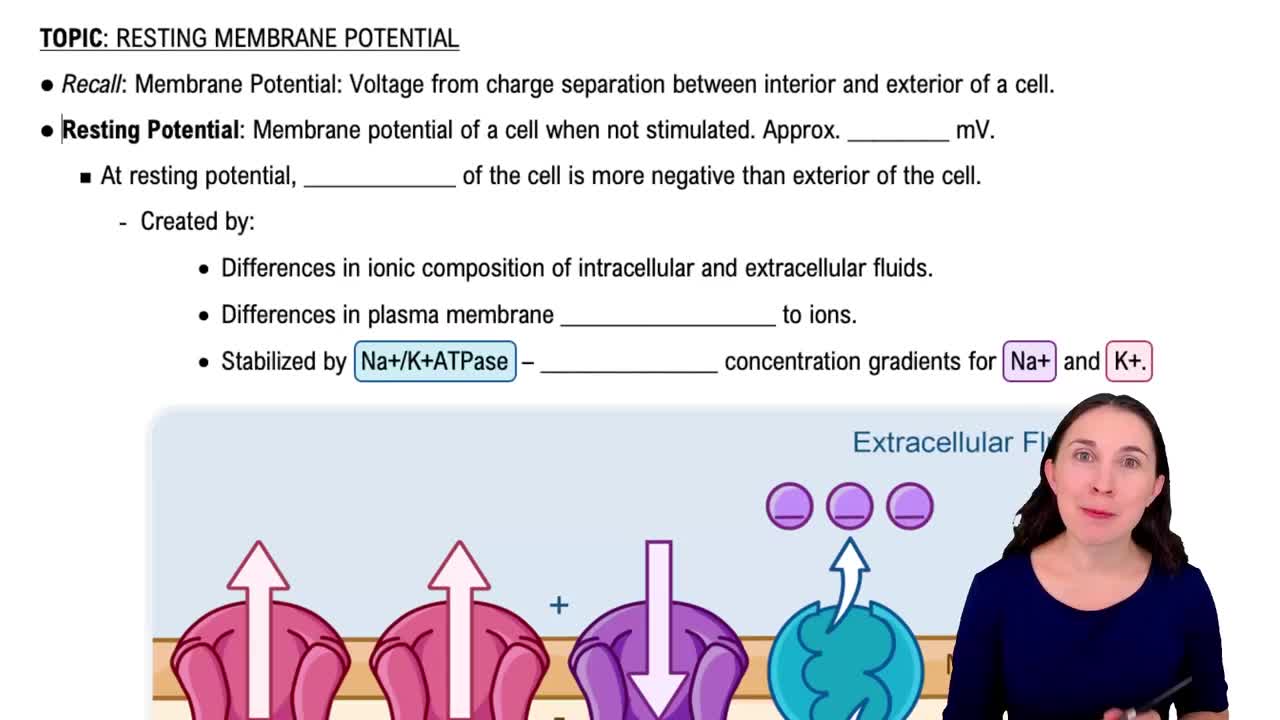
Resting Membrane Potential

The resting membrane potential is the voltage difference across a cell's plasma membrane when the cell is at rest. It typically ranges from -60 to -70 mV in many cells, indicating the inside of the cell is negatively charged relative to the outside. This potential is essential for processes like nerve impulse transmission and muscle contraction.
추천 영상:
07:53
Resting Membrane Potential

Ion Distribution and Membrane Permeability

The resting membrane potential arises mainly due to the unequal distribution of ions, especially potassium (K+), sodium (Na+), and chloride (Cl-), across the membrane. The membrane is more permeable to K+, allowing it to leak out, making the inside more negative compared to the outside, which remains relatively positive.
추천 영상:
01:55
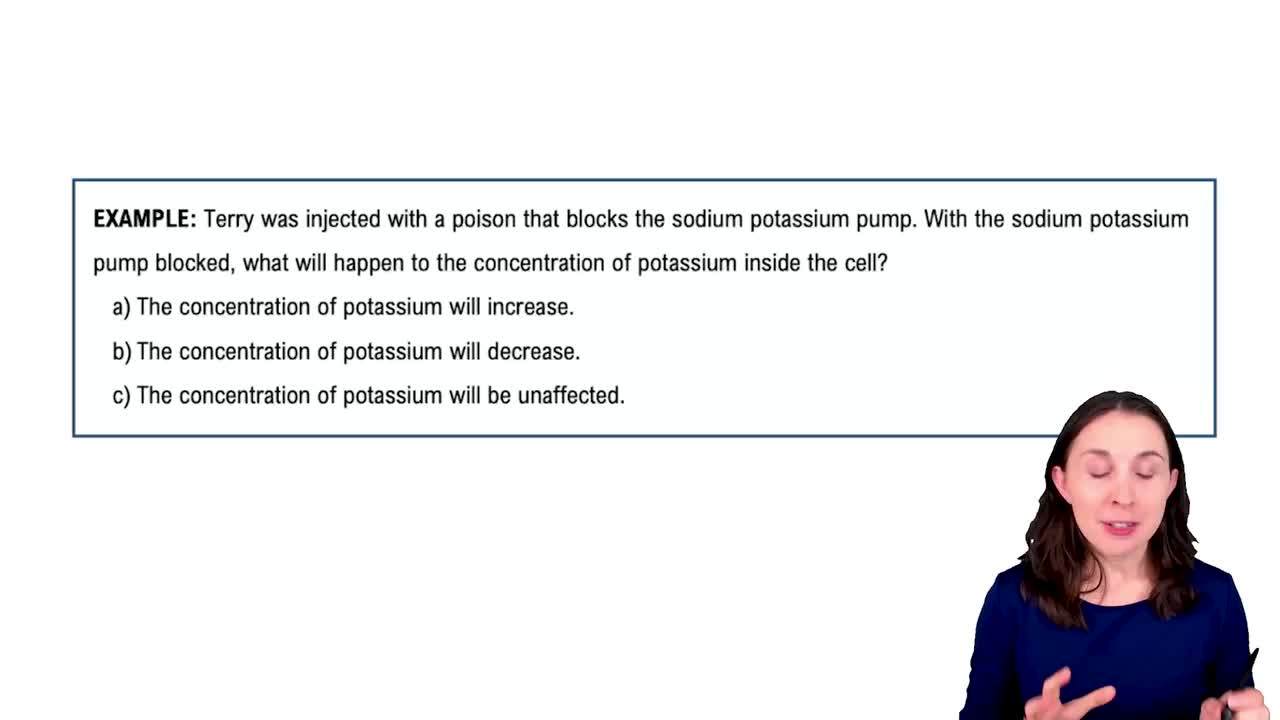
Ions - Sodium and Potassium Example 3

Charge Separation Across the Membrane

At rest, the cytoplasmic side of the membrane is slightly negative due to trapped anions and ion gradients, while the extracellular side is slightly positive. This charge separation creates an electrical potential difference, crucial for cellular excitability and signaling.
추천 영상:
가이드 코스
07:10
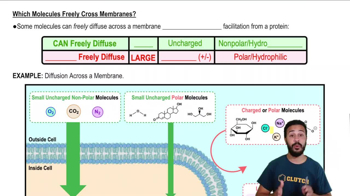
Which Molecules Freely Cross Membranes?