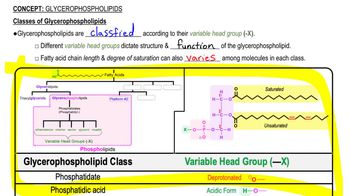
What is the structural difference between glycerophospholipids and triacylglycerols, and how does this difference relate to their function in biological membranes?
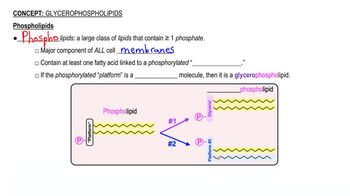
Glycerophospholipids have a glycerol backbone with two fatty acid chains and a phosphate group (often with a variable polar head group) attached to the third carbon, making them amphipathic and suitable for forming cell membranes. In contrast, triacylglycerols have three fatty acid chains attached to glycerol and lack a phosphate group, making them nonpolar and primarily used for energy storage.
 뒤로
뒤로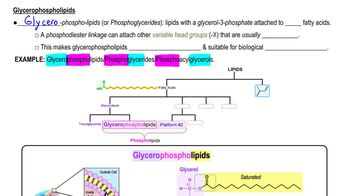
 05:15
05:15